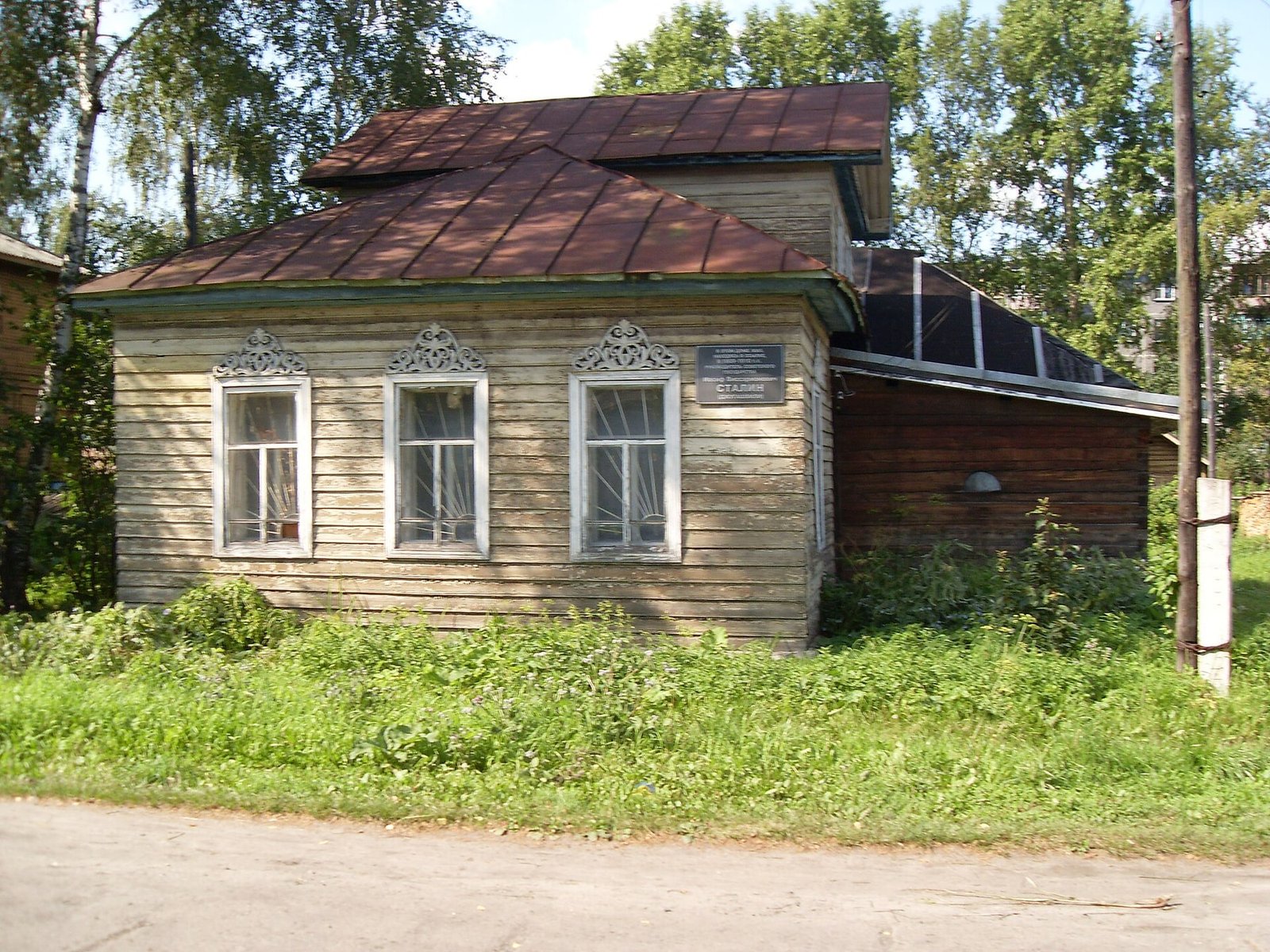
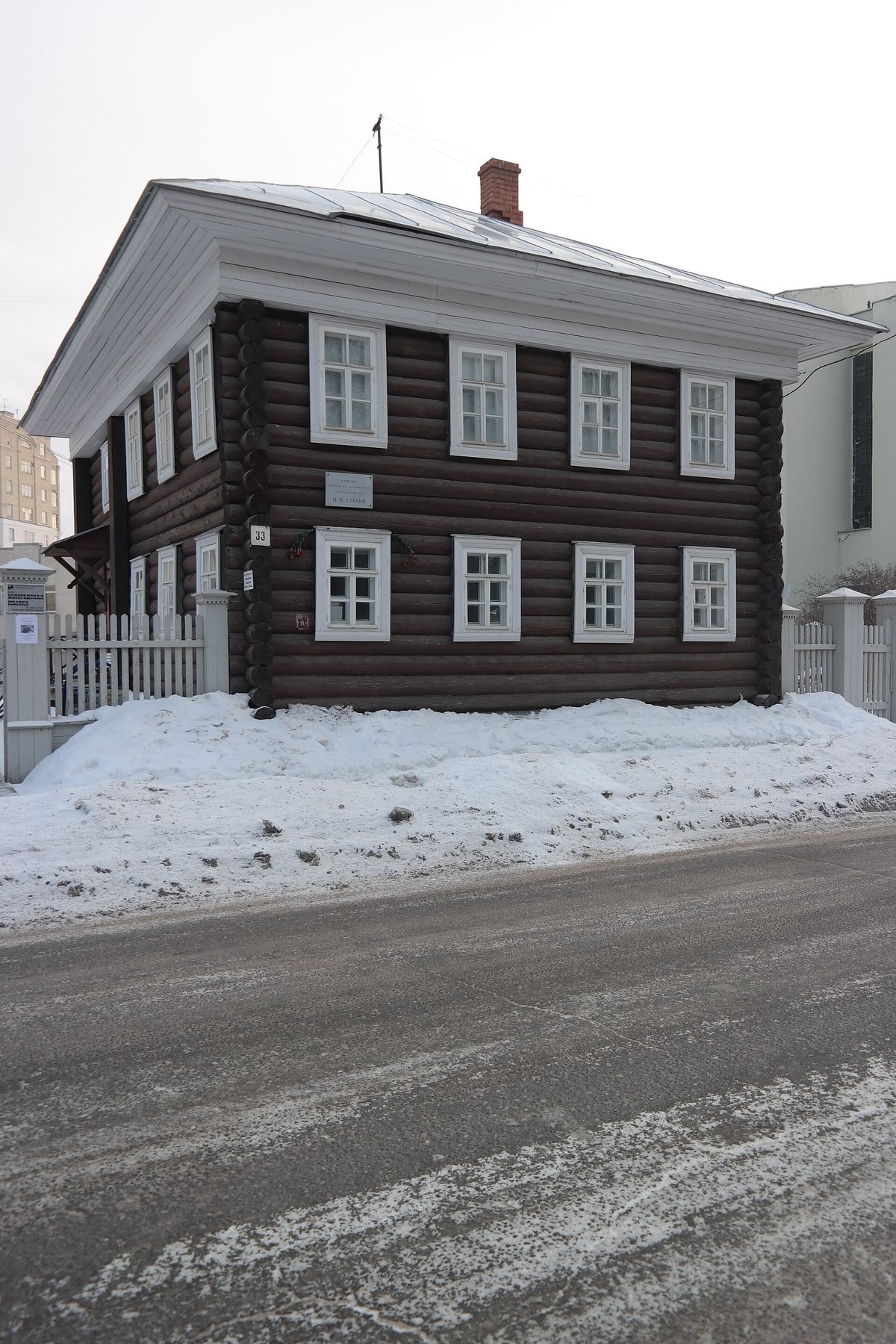
Joseph Stalin’s repeated departures from tsarist exile are easy to turn into a legend. Soviet biographies made them proof of an indomitable revolutionary; later popular accounts sometimes treated them as near-magical prison breaks or as evidence that the imperial police must secretly have been protecting him. The surviving record is less tidy and more revealing.
Between 1909 and 1912, Stalin unquestionably escaped from formal exile three times: from Solvychegodsk on 24 June 1909, from a renewed Vologda exile on 29 February 1912, and from Narym on 1 September 1912. A fourth episode in September 1911 is often counted as an escape in modern biographies, but Stalin had already completed his previous exile term and was then violating restrictions on where he could live rather than fleeing the same legal status recorded in the early police summary. An additional unauthorized journey in early 1911 complicates the count further because Stalin briefly left the area under a medical pretext and then returned.
The ambiguity is not a minor bookkeeping problem. It explains why biographies have produced different totals for Stalin’s arrests, exiles and escapes, and why Stalin-era official histories could manipulate the count without necessarily inventing every underlying movement. The central historical fact is not a single number. It is that late-imperial administrative exile was restrictive but porous, and that Stalin repeatedly exploited the gap between formal police surveillance and the state’s practical ability to control political exiles spread across an enormous empire.
At a Glance
- 24 June 1909: clear escape from Solvychegodsk exile
- Early 1911: unauthorized temporary journey toward St Petersburg under a medical pretext; Stalin returned
- Late June / 6 July 1911: earlier exile term completed; move to Vologda was legal and should not be counted as an escape
- 6–9 September 1911: illegal departure from Vologda to St Petersburg; modern historians often count it as an escape, but the early police summary did not
- 29 February 1912: clear escape from a new Vologda exile sentence
- 1 September 1912: clear escape from Narym exile
- Early police-record total within this period: three explicit formal exile escapes
- Broader modern count: often four when September 1911 is included
Exile Was Not a Prison Cell
The word “exile” can mislead a modern reader. Tsarist administrative exile was a coercive punishment and a form of police control, but it was not automatically imprisonment behind walls. Political suspects could be banished to specified towns or villages, forbidden to live in major cities, required to report to police, searched, watched and restricted in their travel. Yet many lived in rented rooms or private houses rather than guarded compounds.
Contemporary descriptions of administrative exile emphasized the same paradox. An exile could be assigned to a definite place of residence and forbidden to leave without permission, while day-to-day enforcement differed enormously from locality to locality. Some police officers imposed intrusive surveillance; elsewhere the state lacked enough personnel to know precisely where an exile was at every moment.
Modern scholarship on the final tsarist decades has described eastern Siberian exile as something close to a “prison without walls.” The phrase should not minimize the punishment. Distance, isolation, poverty, restrictions and arbitrary police power were real. It does explain why flight could be more a problem of money, paperwork, transport and avoiding surveillance than of physically breaking through a prison perimeter.
That system helps explain Stalin’s record. Simon Sebag Montefiore notes that escape from exile was widespread after the 1905 Revolution. Stalin was persistent and well connected, but he was not the only political exile exploiting an overextended state.
Solvychegodsk, 1909
Stalin reached Solvychegodsk in the Vologda region in February 1909 after his 1908 arrest in Baku and months of imprisonment and transport. The Ministry of the Interior had ordered him into two years of exile under police surveillance.
The earliest police-derived record is concise: he was sent to Solvychegodsk and escaped. Later biographies supply the mechanics.
According to the memoir tradition synthesized by Montefiore, Stalin began planning almost immediately. Money was the main practical obstacle. Political exiles depended on party contacts, friends and one another, and the Solvychegodsk group reportedly staged a card game that allowed Stalin to “win” a pool of about seventy rubles. Tatiana Sukhova, a fellow exile, later figured prominently in accounts of his departure.
The most memorable detail is that Stalin left disguised in a sarafan, a long Russian women’s garment. Later retellings describe Sukhova helping with the disguise before Stalin traveled toward Kotlas and then the railway. That image has become one of the best-known scenes of the young Stalin’s underground career.
It also belongs to the later recollection layer. The date of escape—24 June 1909—is firmly embedded in police-derived and later chronologies. The fact that Stalin successfully left the assigned locality and returned to the underground is secure. The sarafan, staged card game and some interpersonal details come from memories recorded long afterward rather than a contemporary escape report.
The broad outcome is well supported. Stalin moved south through revolutionary networks and returned to Baku, where he resumed illegal political activity. His freedom lasted less than a year. Police arrested him there on 23 March 1910.
Returned to Exile, but Not Continuously Confined
After the 1910 arrest, Stalin was again sent north and returned to the Solvychegodsk area under police restrictions. The following year produces the first serious counting problem.
Modern archival biography describes Stalin obtaining permission to travel for medical reasons early in 1911 and using the opportunity for an unauthorized journey toward St Petersburg. The trip was temporary. The money or logistical support he expected did not work out as planned, and he returned rather than turning the absence into a permanent escape.
A broad tally of every time Stalin evaded the intended limits of police supervision can include this event. A narrower count of formal escapes that permanently broke an active exile term usually does not.
The distinction becomes even more important a few months later. Stalin’s Solvychegodsk term expired in late June 1911. He remained subject to other restrictions, including prohibitions on living in the Caucasus and imperial capitals, but the specific term of exile had ended.
On 6 July he moved to Vologda under authorization.
Some Stalin-era chronologies later called 6 July 1911 an “escape.” Modern reconstruction makes that label difficult to sustain. Leaving after the expiration of the sentence and traveling with official papers was not the same event as slipping away from an uncompleted exile term in 1909.
The mislabeling is historically useful because it shows how the later source tradition worked. Soviet biographies did not merely list dates. They arranged Stalin’s prerevolutionary life into a repeated heroic rhythm: arrest, exile, escape, revolutionary work.
Vologda and the Three-Day Flight of September 1911
Stalin’s status in Vologda was restrictive even after the earlier exile term ended. He was barred from living in the capitals and expected to remain where his residence papers allowed him to live.
On 6 September 1911, he violated those restrictions.
He traveled illegally to St Petersburg using documents associated with Petr Chizhikov. His goal was political contact with Bolshevik organizers in the capital. Police surveillance caught up quickly. Three days later, on 9 September, he was arrested.
Was that an escape?
Modern biographies commonly say yes. Ronald Grigor Suny counts a brief early-September 1911 episode among Stalin’s repeated escapes, and Robert Service treats the illegal flight as part of the same pattern of evading exile and police restriction.
An early police biographical note did not list September 1911 among the formal exile escapes in this period. It recorded the Solvychegodsk escape, the February 1912 Vologda escape and the September 1912 Narym escape.
The difference makes sense if legal status is kept in view. Stalin had completed the previous Solvychegodsk term. His September journey broke residence restrictions and police supervision, but it was not administratively identical to absconding from a current sentence of exile.
For a history of Stalin’s escapes, the episode belongs because he deliberately left a place where he was required to remain and traveled under another identity. For count reconciliation, it should remain a borderline case rather than being silently folded into a supposedly universal total.
His freedom lasted only three days.
A New Sentence
The September arrest changed the legal situation again. Stalin spent about three months in confinement in St Petersburg. On 14 December 1911, the authorities ordered him into another three years of exile in the Vologda region.
By early 1912, his place inside the Bolshevik movement had also changed. The Prague Conference reorganized the leadership, and Lenin’s circle moved to bring Stalin onto the Central Committee. Sergo Ordzhonikidze traveled to Vologda to inform him of his new responsibilities.
The party wanted him active outside exile, and Stalin had no intention of serving the full term.
The Vologda Escape, 29 February 1912
On 29 February 1912, Stalin left Vologda without permission.
This is one of the least ambiguous episodes in the sequence. The early police summary gives the date explicitly. Robert Service’s reconstruction likewise describes Stalin leaving on 29 February with false papers after Ordzhonikidze had informed him of his new Central Committee role.
Unlike the colorful 1909 disguise story, the February 1912 escape does not require elaborate mechanics. Administrative exile relied on assigned residence, paperwork and police observation rather than a continuous wall. Once Stalin got beyond local supervision and onto the transport network under a false identity, the police had to locate a fugitive who already possessed underground contacts.
He returned to Bolshevik activity and eventually to St Petersburg, where he wrote for and helped organize party newspapers during the period in which Pravda emerged. The escape therefore had a direct political consequence: a newly promoted party operative reentered the underground at an important moment for Bolshevik organization.
It did not produce durable freedom. Police arrested Stalin again on 22 April 1912. He was imprisoned and ordered into a new exile much farther east, in the Narym district of Siberia.
Narym Was Farther Away, Not Escape-Proof
Narym posed a harsher logistical problem than Vologda. Distance itself was part of the punishment. Reaching the district involved deep travel into Siberia through Tomsk and river routes.
Stalin arrived during the summer of 1912 and remained only a matter of weeks before leaving on 1 September.
The early police record again supplies the essential fact and date: he had been exiled to Narym and escaped on 1 September 1912. Later biographies agree on the basic chronology but diverge over the physical story.
One tradition places Stalin and fellow Bolshevik Yakov Sverdlov together in an escape involving concealment and bribery. Service recounts a later story in which Sverdlov was hidden in a laundry basket and a gendarme was bribed away from searching it, while explicitly warning that the story, told decades afterward, cannot be verified.
Material centered on Sverdlov gives a different sequence. It describes his own separate escape attempts and recapture, making a single, confidently reconstructed joint flight unsafe.
The secure version is narrower. Stalin left Narym on 1 September and made his way through Siberian transport routes toward European Russia. He was back in the St Petersburg underground within roughly two weeks. Whether Sverdlov shared the decisive journey, and precisely how concealment or bribery worked, belongs to the disputed memoir layer.
A laundry basket makes a memorable story. A terse police notation saying that an exile disappeared is less cinematic, but on this point it is more secure.
How Many Escapes?
The most famous official number is five.
A Stalin-era short biography published in 1947 said that between 1902 and 1913 Stalin had been arrested seven times, exiled six times and escaped five times. Stalin himself helped shape the official biographical tradition, and later archival scholarship has shown how heavily he edited the Soviet master narrative of party history.
Earlier official chronologies did not always agree. Lavrentii Beria’s 1935 chronology, for example, called 6 July 1911 an escape even though modern reconstruction indicates that Stalin’s prior Solvychegodsk term had ended. Stalin-era publications also changed totals across versions.
Modern biographers have not converged on one universal number either. Montefiore uses a broader definition and argues that Stalin got away from police restrictions more often than his final official total admitted. Suny uses a narrower sequence but counts the brief September 1911 flight. The early police note reproduced by Boris Souvarine records only three explicit exile escapes inside the 1909–1912 window.
These are not always disputes over whether Stalin physically traveled. They are often disputes over classification.
A useful count therefore needs categories. The categories are more informative than a single total and are listed below.
Clear escape from an active exile term: 24 June 1909, 29 February 1912, 1 September 1912.
Illegal flight from residence restrictions, commonly counted as escape: 6 September 1911.
Unauthorized temporary travel followed by return: early 1911.
Legal departure after a term ended: late June / 6 July 1911.
Once the categories are separated, much of the numerical contradiction disappears.
Did Easy Escapes Mean Stalin Worked for the Okhrana?
The apparent ease of Stalin’s escapes later fed a larger allegation: that the tsarist political police had secretly employed him as an informer or agent and therefore allowed him to get away.
The claim has a long history. Revolutionary organizations were genuinely infiltrated by police agents, and underground activists often suspected one another. After Stalin became dictator, accusations about his prerevolutionary past acquired obvious political significance. In 1956, the so-called Eremin letter was publicized as documentary proof that he had worked for the Okhrana.
The document did not become accepted proof in mainstream scholarship. Its authenticity was challenged on documentary and signature grounds, and major modern biographers such as Service and Montefiore have not accepted frequent escape as evidence that Stalin was a police agent. Montefiore stresses that surviving Okhrana records treat Stalin as a revolutionary target rather than an acknowledged operative.
The escape record itself is especially weak evidence for the allegation. A porous administrative-exile system produced many fugitives who had no secret arrangement with police. Stalin also kept getting arrested again. In 1909, 1911 and twice in 1912, escape did not produce permanent immunity.
That does not require claiming that every rumor about prerevolutionary contacts can be disproved in every detail. It means that “he escaped often, therefore the Okhrana must have protected him” is not a defensible historical inference.
Repeated Escape Did Not Mean Repeated Victory
It is tempting to tell these years as a string of successes: Stalin leaves exile, rejoins the underground, and outwits the police again.
The pattern changes when recapture is included.
The June 1909 escape returned him to Baku, but he was arrested in March 1910. The September 1911 flight lasted three days. The February 1912 escape ended in arrest in April. The September 1912 escape returned him to political work, but he was arrested again in February 1913.
The state adapted. After the 1913 arrest, Stalin was eventually sent to the much more remote Turukhansk region and then farther north. He did not escape that final exile. The February Revolution of 1917 released him.
That ending puts the earlier episodes in proportion. Stalin was persistent, willing to travel illegally and adept at using revolutionary support networks, but the imperial police repeatedly found him. His escapes were successful departures, not permanent defeats of the security system.
What the Escapes Actually Show
The strongest historical lesson is institutional rather than heroic.
Tsarist Russia used exile to remove political activists from strategic places, disrupt their networks and impose surveillance at a distance. Yet the system depended on local police, paperwork and geography more than continuous physical confinement. Determined exiles with money, documents and contacts could sometimes disappear into rail and river networks.
Stalin exploited those weaknesses repeatedly. In 1909, later accounts place fellow exiles and a disguise at the center of his departure. In 1911, the line between legal movement, unauthorized absence and formal escape became blurred. In February and September 1912, he broke active exile orders and returned to underground politics.
The record also demonstrates why source criticism matters. Police summaries reduce lives to terse administrative events. Memoirs add human mechanics but can become more dramatic with time. Soviet official biographies reorganized the same material into a heroic sequence. Modern biographers reopened archival evidence and often discovered not wholly different events, but different categories.
There is no need to choose between “Stalin escaped five times” and a larger total as if one number alone can settle the history. For 1909–1912, three formal exile escapes are explicit in the early police-derived record. A fourth, very brief illegal flight in September 1911 is reasonably included when “escape” is defined more broadly. Other 1911 movements should be described for what they were rather than forced into the same box.
That answer is less dramatic, but more useful. It explains not only how Stalin repeatedly got away, but why the late-tsarist exile system allowed so many revolutionaries to try.
Evidence discipline
What the record supports
Status labels distinguish secure conclusions from uncertainty and rejected claims. Color is never the only signal.
MYTH
There is one uncontested total number of Stalin's prerevolutionary escapes.
Police summaries, Stalin-era official biographies and modern biographies use different definitions. Unauthorized trips, legal departures and formal escapes must be separated before counting.
Sources: SRC-001, SRC-002, SRC-006, SRC-007, SRC-008DOCUMENTED
Stalin escaped from formal exile on 24 June 1909, 29 February 1912 and 1 September 1912.
All three episodes are listed in the early police-derived biography reproduced by Souvarine and corroborated by later scholarship.
Sources: SRC-001, SRC-002, SRC-003MYTH
Stalin's 6 July 1911 departure from Solvychegodsk was another escape.
Some Stalin-era chronologies label July 1911 an escape, but modern archival reconstruction places the completion of his exile term in late June and treats his 6 July move to Vologda as authorized.
Sources: SRC-001, SRC-008DISPUTED
The 6–9 September 1911 flight should be counted as an escape from exile in exactly the same sense as February 1912.
Modern biographers often count it because Stalin deliberately violated residence restrictions and used another man's papers. The early police summary does not list it as a formal exile escape.
Sources: SRC-001, SRC-002, SRC-003, SRC-005LATER CLAIM
Stalin escaped Solvychegodsk in 1909 disguised in a sarafan.
The disguise appears in later memoir-based reconstructions and is plausible, but the contemporary police-derived record establishes the escape without documenting the costume.
Sources: SRC-002, SRC-004DISPUTED
Stalin and Yakov Sverdlov certainly escaped Narym together using a laundry-basket scheme.
Some biographies repeat a later joint-escape story, but Sverdlov-specific material describes separate attempts and capture. Stalin's own 1 September departure is the secure fact.
Sources: SRC-002, SRC-003, SRC-009MYTH
Stalin's repeated escapes prove that he was an Okhrana agent deliberately allowed to flee.
The inference is unsupported. Late-tsarist exile was widely porous, Stalin was repeatedly rearrested, mainstream modern biographers do not accept frequent escape as proof of agent status, and the famous Eremin letter has been widely treated as a forgery.
Sources: SRC-001, SRC-003, SRC-004, SRC-011Evidence diagram
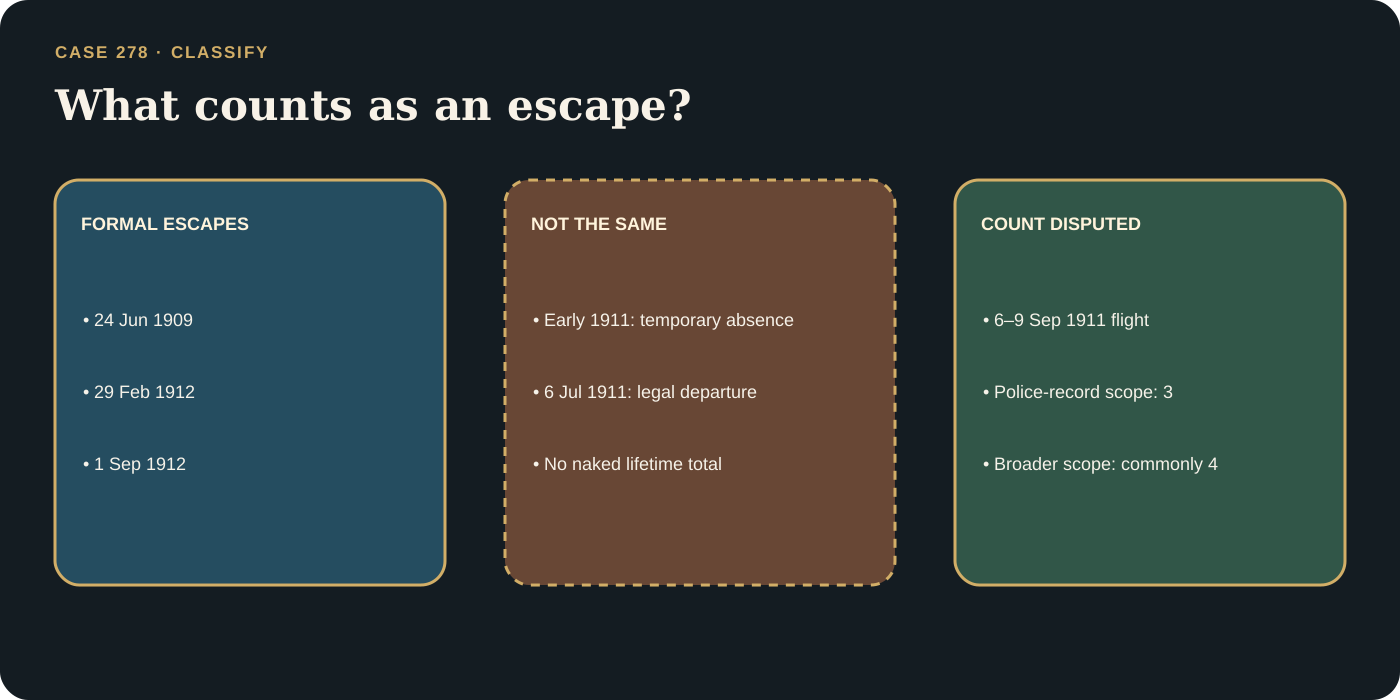
What counts as an escape?
The evidence distinguishes three formal exile escapes from legal travel and a disputed fourth illegal departure.
The evidence distinguishes three formal exile escapes from legal travel and a disputed fourth illegal departure.