Czesław Mordowicz and Arnošt Rosin escaped from Auschwitz-Birkenau on 27 May 1944 while the mass deportation and murder of Hungarian Jews was accelerating. Their escape mattered for more than their own survival. After reaching Slovakia, the two men gave Jewish representatives a new eyewitness account of what had happened inside Auschwitz during April and May. Their testimony extended and reinforced the report already produced after Rudolf Vrba and Alfred Wetzler escaped in April, adding direct information about the Hungarian transports then arriving at Birkenau.
The physical escape was dangerous, but it should not be turned into an instructional story about defeating camp security. Auschwitz-Birkenau State Museum records show that Mordowicz and Rosin used a prepared hiding place in the gravel-pit area outside Birkenau’s inner camp. They survived the SS search, emerged after the hiding place partly collapsed, and then moved away from the camp toward Slovakia. The historical center of the case is what they carried out with them: knowledge of mass murder that the SS was trying to keep inside Auschwitz.
At a Glance
- Escapees: Czesław Mordowicz and Arnošt Rosin
- Camp: Auschwitz II-Birkenau
- Escape date: 27 May 1944
- Prisoner numbers: Mordowicz 84216; Rosin 29858
- Starting area: work detail near the gravel plant east of Birkenau
- Core method: concealment in a previously prepared hiding place, followed by flight after the search period
- Destination: Slovakia
- Arrival in Slovakia: widely dated to 6 June 1944
- Warning role: testimony on Auschwitz during April–May 1944, especially the deportation and murder of Hungarian Jews
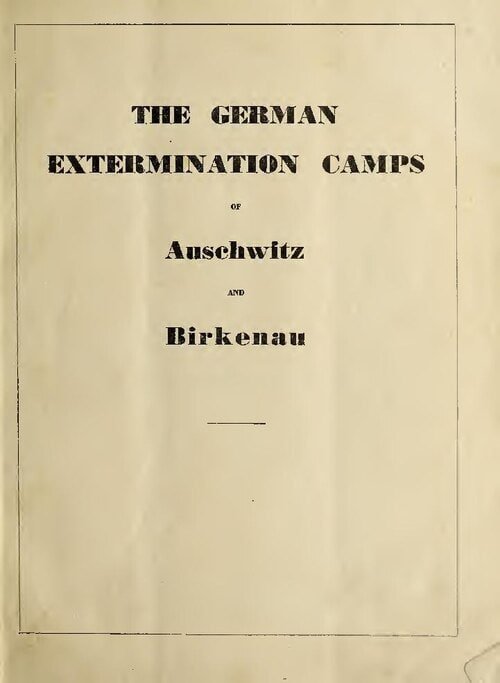
- Later publication: incorporated into the November 1944 U.S. War Refugee Board publication German Extermination Camps—Auschwitz and Birkenau
- Later fate: Rosin remained hidden under an assumed identity; Mordowicz was arrested again in 1944, returned to Auschwitz without being recognized as an escapee, and survived
Two prisoners shaped by earlier escapes
Mordowicz was a Polish Jew born in Mława in 1919. German authorities confined him in the Płońsk ghetto before deporting him to Auschwitz on 17 December 1942. He received prisoner number 84216 and later worked as a recorder in Birkenau.
Rosin was a Slovak Jew born in Snina in 1915. He was arrested in Slovakia in 1942, held at Žilina, and deported to Auschwitz on 17 April. His prisoner number was 29858. By the spring of 1944 he served as a block elder in sector BIId.
Both men were affected by the April escape of Rudolf Vrba and Alfred Wetzler. The SS reacted to that escape by interrogating and punishing prisoners associated with record-keeping positions. Auschwitz Museum material says Mordowicz lost his recorder function and was sent to work near the gravel plant. Rosin, who had known the earlier escapees, also found himself under greater pressure.
That punishment unintentionally helped create the conditions for another escape. Mordowicz’s new work detail brought him into contact with the gravel-pit area outside the central prisoner compound and with Polish prisoner functionary Adam Różycki. According to Mordowicz’s later testimony preserved by the Auschwitz-Birkenau State Museum, Różycki knew of escape preparations and helped facilitate access to a previously constructed hiding place.
The gravel-pit hiding place
The hiding place had been built into the slope of the gravel-pit area by prisoners connected with Różycki’s work detail. It had already been used in an earlier escape attempt and had not been discovered by the SS. Mordowicz therefore believed it could be used again and asked Rosin to join him.
The museum’s reconstruction places the escape on 27 May 1944. Mordowicz later recalled that he and Rosin met near the work area in the afternoon and entered the concealed space while other prisoners covered the entrance. The purpose was to disappear during the period when the SS would discover missing prisoners and activate an intensive search.
The exact physical details should remain in the archival record rather than be reproduced as a guide. What matters historically is that the two men hid close enough to Birkenau for the search to pass around them while they remained concealed.
The SS did discover that prisoners were missing. A camp telegram sent the next day listed Mordowicz and Rosin among the escapees being sought. A further police notice circulated on 6 June. Those documents independently anchor the escape date.
A hiding place that nearly killed them
The concealment did not work as smoothly as intended. Mordowicz later testified that the hiding place became dangerously unstable. They lost access to water, part of the structure gave way, and earth and boards trapped them.
The two men had planned to remain hidden until the search conditions changed. Instead, they were forced to struggle out earlier because the space itself had become life-threatening.
That detail is significant because later accounts can make successful Auschwitz escapes look like carefully executed plans that unfolded on schedule. This one did not.
The escape succeeded despite the failure of part of the plan. Once they emerged and found that they had not been caught, Mordowicz and Rosin moved away from Birkenau. Auschwitz Museum material includes a probable route reconstructed from postwar evidence and wartime aerial photography, but it is explicitly described as probable rather than exact. The route therefore remains probable rather than exact.
27 May—or another date?
The best documentary evidence supports 27 May 1944. The Auschwitz-Birkenau State Museum titles its case study “Escape on 27 May 1944,” and its collection includes a telegram from 28 May reporting Mordowicz and Rosin missing.
Some later publications give a different date, including 24 May. Those variants should not displace the camp documentation.
There is also a small internal oddity in Mordowicz’s later testimony: the English museum transcription refers to “Sunday 27 May,” but 27 May 1944 fell on a Saturday. That is best treated as a memory, translation, or transcription slip rather than evidence for a different escape date. The date itself is secure.
Toward Slovakia
After leaving the Auschwitz area, the men headed south. Later accounts describe uncertainty over the route and a change in intended destination before they committed to reaching Slovakia, Rosin’s homeland. Their exact path cannot be reconstructed to the level of modern mapping.
The widely accepted chronology places their arrival in Slovakia on 6 June 1944, the day Allied forces landed in Normandy. The journey had therefore taken roughly ten days.
Reaching Slovakia did not automatically make them safe. The Slovak state remained allied with Nazi Germany, antisemitic persecution continued, and Jewish underground activity operated under constant threat.
Their value to the underground, however, was immediate. They had left Auschwitz while the destruction of Hungarian Jewry was visibly underway.
What they had witnessed
Germany occupied Hungary in March 1944. Systematic deportations of Hungarian Jews began in May.
The United States Holocaust Memorial Museum estimates that from 15 May to 9 July approximately 440,000 Jews were deported from Hungary, most of them to Auschwitz-Birkenau. The majority were murdered after arrival.
Mordowicz and Rosin had escaped on 27 May—less than two weeks into that mass deportation campaign. Their testimony therefore supplied something the earlier Vrba-Wetzler report could not: eyewitness information from the first phase of the Hungarian transports actually arriving at Birkenau.
The later U.S. War Refugee Board publication says that the Rosin-Mordowicz report covered events between 7 April and 27 May and “particularly” supplemented the earlier report on the arrival of Hungarian Jews.
The figures they gave were estimates made under camp conditions and should not be treated as precise modern statistical totals. Their essential warning was correct: enormous transports were arriving, only a minority of deportees were being registered into the camp system, and mass killing was taking place on arrival.
The report in Slovakia
Mordowicz and Rosin met representatives of the Slovak Jewish Council and gave testimony about what they had seen. Sources differ slightly over the exact date of the formal interview and compilation process; the evidence supports only mid-June 1944.
Their account became the report usually called the Rosin-Mordowicz Report. It did not replace the Vrba-Wetzler Report. It supplemented it.
That distinction is important because the phrase “Auschwitz Protocols” is often used loosely to mean only the Vrba-Wetzler document. In the form later published by the U.S. War Refugee Board, the broader collection incorporated testimony from Vrba and Wetzler, Mordowicz and Rosin, and Jerzy Tabeau. The Rosin-Mordowicz section appears as an additional Birkenau report describing developments after the April escape.
From testimony to the West
Auschwitz Museum material says the report was transmitted westward and presented through channels reaching Allied governments, the World Jewish Congress, the International Committee of the Red Cross, and the media. Yad Vashem likewise describes the information supplied by Mordowicz and Rosin as being added to the earlier Auschwitz reports and sent west through multiple channels.
The Franklin D. Roosevelt Presidential Library identifies their text as “Death Camp at Oswiecim” within the Auschwitz Protocols preserved in the War Refugee Board records.
In November 1944, the War Refugee Board published German Extermination Camps—Auschwitz and Birkenau in Washington. The document included the expanded Auschwitz testimony, and American newspapers publicized it nationally later that month. By then, the mass deportation of Jews from the Hungarian provinces had already devastated Jewish communities across the country.
Did their report stop the Hungarian deportations?
This question requires more caution than many commemorative accounts allow. Auschwitz Museum educational material connects the escapee reports to the mounting international pressure placed on Hungarian regent Miklós Horthy. It states that the dissemination of these reports contributed to pressure that helped bring about the halt in deportations in July.
USHMM gives a broader explanation. It says Horthy ordered the deportations halted on 7 July because of Germany’s worsening military position, international threats, and pressure from his inner circle. Deportations from cities around Budapest continued for two more days before stopping on 9 July.
The evidence does not support a claim that Rosin and Mordowicz “stopped the trains” by themselves. Their report became part of a wider flow of evidence and pressure concerning the destruction of Hungarian Jewry. That information contributed to the international environment in which Horthy was pressed to halt further deportations. The distinction preserves the importance of their testimony without assigning a single cause to a complicated political decision.
Rosin after the escape
Rosin remained in Slovakia under an assumed identity. Auschwitz Museum material says he used the name Jan Rohač and worked in a Slovak office. He was not exposed as an Auschwitz escapee before the end of the war.
His survival meant that one of the men who had carried the warning out of Birkenau remained free. He later gave testimony about Auschwitz and the escape.
Mordowicz returns to Auschwitz
Mordowicz’s post-escape story took a different turn. After the Slovak National Uprising and the German occupation of Slovakia intensified persecution in late 1944, he was arrested again.
Auschwitz Museum records say he was sent through the Sered camp and returned to Birkenau. The SS did not recognize him as the prisoner who had escaped in May.
That failure saved his life. He was later transferred away from Auschwitz and survived the war. The result is one of the most extraordinary reversals in the case: Mordowicz escaped Auschwitz, warned the outside world, was captured again, entered the Auschwitz system a second time, and survived without his earlier identity being discovered.
What the evidence supports
Czesław Mordowicz and Arnošt Rosin escaped Auschwitz-Birkenau on 27 May 1944. Mordowicz’s punishment after the Vrba-Wetzler escape placed him in a work detail near the gravel pit. With assistance from prisoners connected to that work group, he and Rosin used an existing concealed space there.
They survived the SS search but were forced out after the hiding place partly collapsed and became dangerous. They then fled away from Auschwitz and reached Slovakia, widely dated to 6 June 1944.
In Slovakia they gave a new report on events in Auschwitz during April and May, most importantly the beginning of the mass deportation and murder of Hungarian Jews. Their testimony supplemented the Vrba-Wetzler report and became part of the body of evidence later known as the Auschwitz Protocols.
The report was transmitted west and ultimately incorporated into the U.S. War Refugee Board’s November 1944 publication.
Its historical importance does not depend on claiming that the two men alone stopped the Hungarian deportations. Their achievement was more fundamental: they escaped a killing center designed to isolate its victims, carried current eyewitness information beyond its perimeter, and helped place the ongoing mass murder of Hungarian Jews before people and institutions outside the camp.
Evidence discipline
What the record supports
Status labels distinguish secure conclusions from uncertainty and rejected claims. Color is never the only signal.
MYTH
Rosin and Mordowicz escaped on 24 May 1944.
Some later retellings use other dates, but Auschwitz Museum documentation and a 28 May camp telegram support 27 May.
Sources: SRC-001DISPUTED
The escape date was Sunday, 27 May 1944.
Mordowicz’s later testimony as transcribed by the museum uses 'Sunday 27 May,' but the calendar date was Saturday. The documentary date of 27 May remains secure; the weekday is a testimony/transcription inconsistency.
Sources: SRC-001UNKNOWN
Their precise route from Birkenau to Slovakia is known.
Auschwitz Museum presents a probable route, not a fully documented itinerary. Public reconstruction should remain broad.
Sources: SRC-001MYTH
The Rosin-Mordowicz Report was identical to the Vrba-Wetzler Report.
Their report supplemented the earlier report with developments through 27 May, particularly the beginning of the Hungarian deportation and murder campaign.
Sources: SRC-004, SRC-005, SRC-006MYTH
Rosin and Mordowicz alone caused Horthy to stop the deportations.
Their testimony contributed to the evidence circulating internationally, but USHMM attributes Horthy’s decision to multiple pressures including Germany’s deteriorating position, international threats, and pressure from his inner circle.
Sources: SRC-003, SRC-007DISPUTED
The estimates in the 1944 report should be read as exact modern totals.
The escapees reported what they observed and estimated under camp conditions. Modern Holocaust scholarship provides more systematic deportation totals and should control exact aggregate numbers.
Sources: SRC-005, SRC-007MYTH
Mordowicz remained free after his 1944 escape.
He was arrested again later in 1944 and returned to Birkenau, where the SS failed to recognize him as the earlier escapee.
Sources: SRC-001Evidence diagram
Escape, testimony, and warning
The sequence connects the 27 May escape to testimony in Slovakia and wider dissemination through the Auschwitz Protocols.
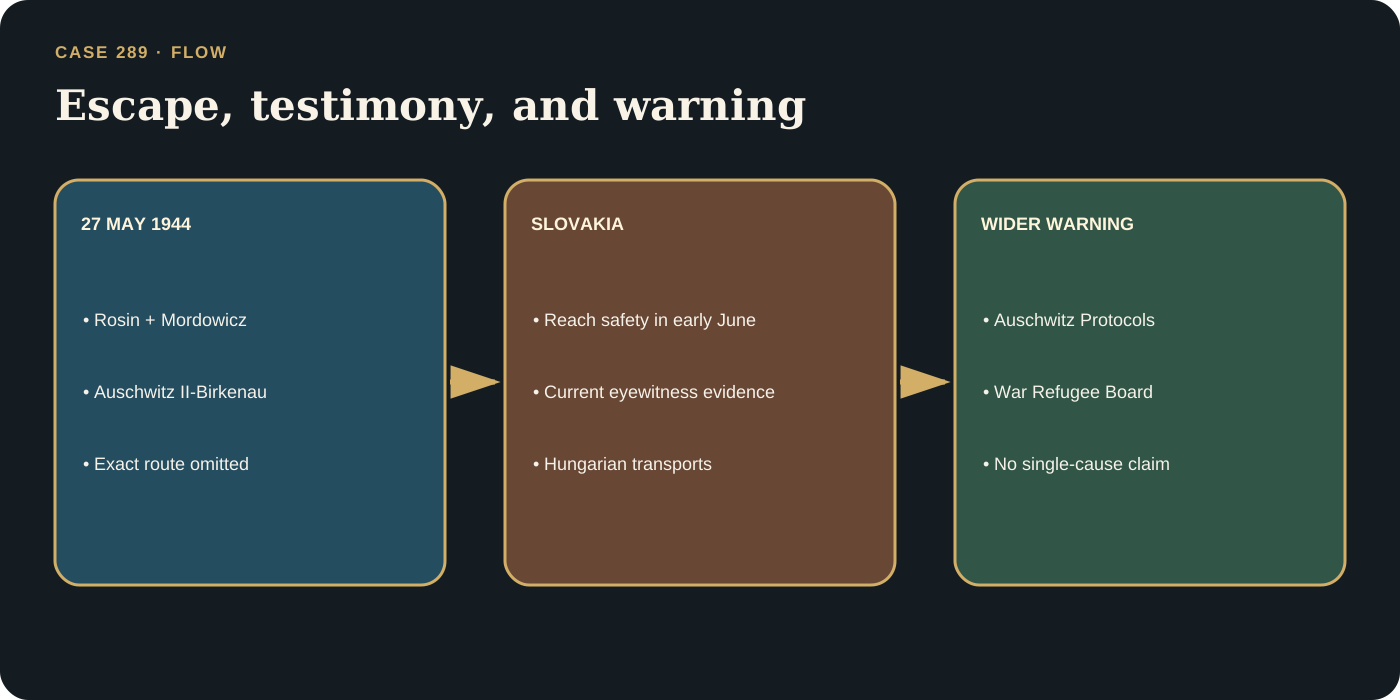
The sequence connects the 27 May escape to testimony in Slovakia and wider dissemination through the Auschwitz Protocols.