Rajyashri escaped captivity before her brother Harsha reached the Vindhya forest. That sequence is easy to lose because the principal surviving narrative, Bāṇabhaṭṭa’s Harṣacarita, is centered on Harsha. In modern summaries the episode is often compressed into a story in which the new king “rescued” his widowed sister after her husband and elder brother were killed. Bāṇa’s own account is more revealing: Rajyashri was imprisoned at Kanyakubja in iron fetters, later got out during the political crisis that followed Rajyavardhana’s death, and entered the Vindhya forest with attendants. Harsha went searching only after she had already escaped.
What Bāṇa does not tell us securely is how she passed from a guarded royal prisoner to a fugitive in the forest. One later passage within the same work says a noble named Gupta helped send her away from her confinement. There is no prison plan, route, guard sequence, or detailed breakout mechanism. The historical strength of the case therefore lies in Rajyashri’s successful removal from coercive custody—not in a reconstructed jailbreak the sources cannot support.
At a Glance
- Escapee: Rajyashri, princess of the Pushyabhuti house and queen of the Maukhari ruler Grahavarman
- Captor: the Malwa power that killed Grahavarman, usually identified by modern historians with Devagupta
- Place of confinement: Kanyakubja, modern Kannauj
- Custody: Bāṇa says she was imprisoned with iron fetters on her feet
- Escape date: approximately 606 CE; exact date unknown
- Destination: the Vindhya forest region
- Companions: Bāṇa says she entered the forest with her train or attendants
- Possible helper: a noble named Gupta appears in the later retrospective account
- Exact escape mechanism: unknown
- Harsha’s role: he searched for Rajyashri after her escape and later found her during a severe personal crisis in the forest
A marriage at the center of northern politics
Rajyashri was the daughter of Prabhakaravardhana of Thanesar and sister of Rajyavardhana and Harsha. Her marriage to Grahavarman, ruler of the Maukhari kingdom centered on Kanyakubja, linked two important north Indian dynasties.
The alliance also placed her directly inside the political struggles that followed the decline of Gupta imperial power. Modern historical syntheses identify Grahavarman’s attacker as Devagupta of Malwa, acting in the wider conflict that also involved Shashanka of Gauda. Bāṇa’s text is less specific at the moment the news reaches Rajyashri’s family: it refers to the ruler of Malwa rather than naming Devagupta in the passage itself.
The political sequence is nevertheless clear. Grahavarman was killed. Rajyashri was seized.
For a royal widow, the loss was personal and dynastic at once. Her husband’s death removed the Maukhari ruler; her captivity placed a member of the allied Pushyabhuti house under enemy control.
Imprisoned at Kanyakubja
The Harṣacarita gives unusually concrete language for Rajyashri’s confinement. When the news arrives, Bāṇa says she had been placed in Kanyakubja under harsh restraint, with a pair of iron fetters on her feet, and cast into prison.
The passage is important because it establishes real coercive custody rather than a vague condition of political dependence. At the same time, Bāṇa was writing a court biography whose literary purpose was to magnify Harsha’s dynasty and dramatize the disasters preceding his rise. His descriptions should not be read as if they were a neutral prison register.
The iron fetters are therefore best treated as a specific claim in a near-contemporary court narrative. The broader fact that Rajyashri was imprisoned after Grahavarman’s death is also accepted in modern historical summaries. No surviving source describes the building, her chamber, the number of guards, or how long she remained there.
Rajyavardhana marches—and dies
Rajyashri’s elder brother Rajyavardhana responded militarily. The broad historical tradition says he defeated the Malwa ruler responsible for Grahavarman’s death. He was then killed in the conflict involving Shashanka of Gauda.
That second death transformed Rajyashri’s situation again. Harsha now faced the deaths of his father, brother-in-law, and brother in rapid succession. He also faced a missing sister whose location was uncertain.
Bāṇa’s narrative has the commander Bhandi bring Harsha news of what had happened after Rajyavardhana’s death. In that report appears the crucial sentence for this case: Rajyashri had broken out of her confinement and entered the Vindhya forest with her attendants.
Harsha did not arrive at Kanyakubja and open her prison. She was already gone.
“Burst from her confinement”
The phrase in the English translation is dramatic. Rajyashri had “burst from her confinement.”
It should not be mistaken for a technical description. Bāṇa supplies no corresponding scene showing Rajyashri breaking a lock, defeating guards, cutting restraints, climbing a wall, or disguising herself. The sentence communicates a change of status: she had been a captive and was no longer under that control.
That is enough to classify the event as an escape. It is not enough to reconstruct a prison break.
The fact that Bāṇa adds that Rajyashri entered the Vindhya forest with her train also corrects another easy simplification. She was not necessarily a lone fugitive moving without assistance. Some members of her household or attendant circle were with her. Their number is not given.
The noble named Gupta
Later in the Harṣacarita, after Harsha has found Rajyashri, her attendants recount what had happened since her imprisonment. This version adds a detail absent from Bhandi’s earlier report. Rajyashri, they say, had been sent away from her confinement at Kanyakubja during the Gauda crisis through the action of a noble named Gupta.
The identity of this Gupta is not securely established. The name should not be silently expanded into Devagupta, nor should it be treated as proof that a specific Gauda or Malwa official defected. Cowell and Thomas’s index simply identifies “Gupta” as a noble in the relevant passages.
The strongest interpretation is modest: Bāṇa preserves a tradition that elite assistance helped Rajyashri leave custody. Whether Gupta arranged access, transport, release, concealment, bribery, or some other intervention is unknown.
This detail changes the character of the event. Rajyashri’s escape may have depended less on overcoming a physical prison obstacle than on a breakdown of political control and help from someone able to move her out during a rapidly changing crisis.
Into the Vindhya forest
Once outside Kanyakubja, Rajyashri moved toward the Vindhya region. Bāṇa depicts the Vindhya forest as vast, difficult terrain inhabited by ascetics, forest peoples, travelers and local communities. The text is highly literary, but the geography serves a clear narrative function: Rajyashri had moved beyond the political center and into an area where locating one fugitive party was difficult.
She was not simply “free” in the modern sense. Her husband was dead. Her brother Rajyavardhana was dead. Her former political position had collapsed. Bāṇa’s later account says she refused food after hearing of Rajyavardhana’s death and wandered in increasingly desperate condition.
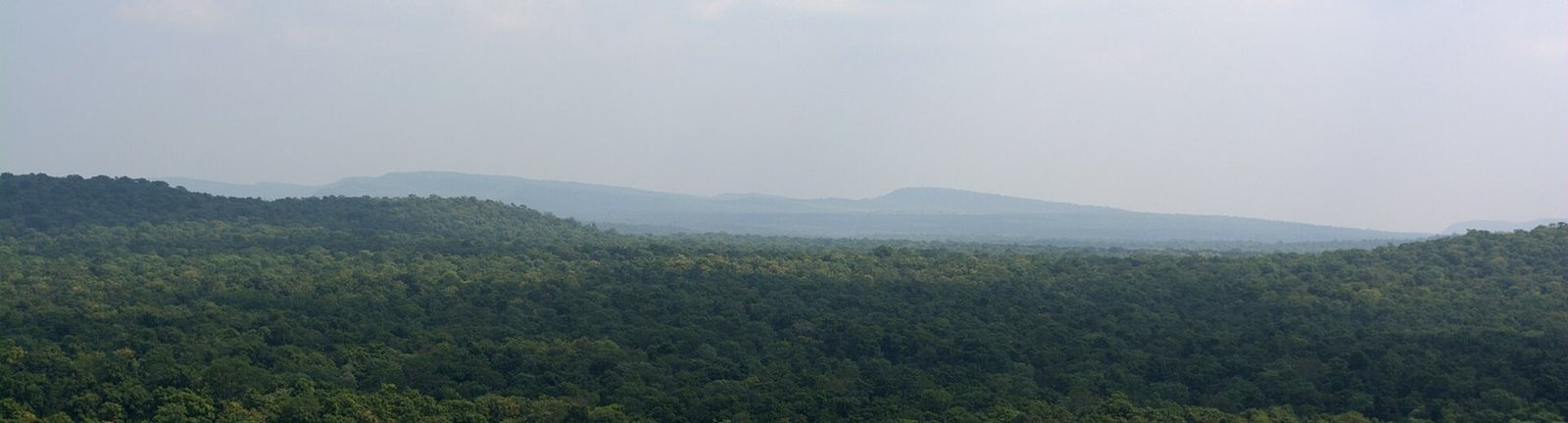
The forest stage was therefore a continuation of crisis after escape, not a triumphant endpoint. Modern landscape photographs of the Vindhya range can help readers understand the broad environmental setting, but they cannot identify Rajyashri’s actual route. No secure itinerary survives.
Harsha’s search
Harsha’s role begins after the prison escape. According to Bāṇa, he entered the Vindhya region looking for Rajyashri and relied on local knowledge rather than following a known royal road directly to her.
The text introduces Nirghata, a young forest-dweller connected with the local Shabara chief Bhukampa. Harsha asks for information about a high-born woman moving through the region. The search eventually intersects with the community around the Buddhist teacher Divakaramitra.
This part of the story matters because it shows the limits of royal power. Harsha had become the central figure in a major northern dynasty, but in the forest he still needed people who knew the terrain, settlements, paths, and movement of strangers.
A Buddhist mendicant then brings word of a young woman in immediate danger. The narrative moves from political search to personal crisis.
The funeral-pyre episode
Bāṇa says Harsha reached Rajyashri as she was preparing to enter a funeral pyre. The scene is one of the most elaborate passages in the Harṣacarita. Attendants lament, messengers race, Harsha approaches, and Rajyashri collapses as the reunion occurs.
The broad episode belongs to Bāṇa’s account and should not simply be deleted because it is dramatic. It reflects the depth of grief the court biography associates with Rajyashri after the deaths of her husband and brother.
But the scene is also exactly where the literary nature of the source is strongest. The speeches, emotional staging, omens, gestures, and sequence of reactions cannot be independently verified. No second contemporary witness gives a parallel description.
The best historical treatment therefore distinguishes the broad claim from the literary performance: Bāṇa says Rajyashri had resolved to die and was found shortly before the pyre episode reached its conclusion. The exact scene belongs to court literature.
Rajyashri was not merely “rescued by Harsha”
Later summaries naturally center Harsha because he became the great king and Bāṇa wrote his biography. That perspective can erase Rajyashri’s own movement through the crisis.
The sequence is more precise when separated into two acts. First, Rajyashri escaped or was extracted from confinement at Kanyakubja. A noble named Gupta may have helped. She left with attendants and entered the Vindhya region.
Second, Harsha learned she was missing, went searching, used local networks to locate her, and reunited with her during the forest crisis. Calling the entire episode “Harsha rescues Rajyashri from prison” merges those acts and changes the agency.
He rescued or recovered his sister from danger in the forest. He did not perform the prison escape described by Bāṇa.
What Bāṇa can—and cannot—tell us
The Harṣacarita is unusually valuable because Bāṇa wrote at Harsha’s court during the seventh century and drew on the political world he describes. It is also explicitly literary.
Cowell and Thomas, its nineteenth-century translators, called it a historical romance and emphasized both its basis in real events and its elaborate poetic atmosphere. That combination is exactly why it must be handled carefully.
The dynastic sequence around Harsha’s accession is supported broadly by later historical reconstruction: Prabhakaravardhana’s death, Grahavarman’s killing, Rajyashri’s imprisonment, Rajyavardhana’s campaign and death, Harsha’s accession around 606, and Rajyashri’s flight into the Vindhyas. The physical mechanics of her escape are not similarly corroborated.
The later reference to Gupta is useful because it hints at assistance. It does not supply enough evidence to draw a route or describe how the fetters came off.
What the evidence supports
Rajyashri was the Maukhari queen and sister of Rajyavardhana and Harsha. After Grahavarman was killed by the Malwa power usually identified as Devagupta, Rajyashri was imprisoned at Kanyakubja. Bāṇa says her feet were placed in iron fetters.
Rajyavardhana marched against Malwa and was then killed during the wider conflict involving Gauda. Around the time Harsha succeeded in 606, Rajyashri got out of confinement.
Bāṇa first reports that she broke from captivity and entered the Vindhya forest with her attendants. Later he adds that a noble named Gupta had helped send her away from Kanyakubja during the political disorder.
The exact mechanism is unknown. Harsha subsequently searched the Vindhya region with local assistance and found Rajyashri during the severe crisis that Bāṇa describes as an attempted entry into a funeral pyre.
The escape should therefore be remembered as Rajyashri’s own passage from royal captivity into fugitive flight. Harsha’s intervention came later. That distinction makes the story more accurate—and restores agency to the person who actually escaped.
Evidence discipline
What the record supports
Status labels distinguish secure conclusions from uncertainty and rejected claims. Color is never the only signal.
MYTH
Harsha broke Rajyashri out of prison at Kanyakubja.
Bāṇa says Rajyashri had already escaped confinement and entered the Vindhya forest before Harsha began the search that eventually located her.
Sources: SRC-001, SRC-002MYTH
Rajyashri fled completely alone.
Bāṇa’s report says she entered the Vindhya forest with her train or attendants.
Sources: SRC-001UNKNOWN
The exact physical mechanism of the Kanyakubja escape is known.
No source describes locks, guards, route, removal of fetters, disguise, transport, or a specific prison exit.
Sources: SRC-001LATER CLAIM
A noble named Gupta assisted Rajyashri’s departure from confinement.
The claim appears in Bāṇa’s retrospective report from Rajyashri’s attendants. The noble’s identity and exact action are not recoverable.
Sources: SRC-001WELL-SUPPORTED
The Malwa ruler responsible for Grahavarman’s death was Devagupta.
Modern historical reconstruction commonly identifies Bāṇa’s Malwa ruler with Devagupta, although the key Harṣacarita capture passage itself calls him only the lord of Malwa.
Sources: SRC-001, SRC-002DISPUTED
Every detail of Rajyashri’s funeral-pyre scene is historical fact.
The attempted self-immolation belongs to Bāṇa’s court narrative, but the elaborate speeches, gestures, messengers, and emotional staging are literary and lack independent corroboration.
Sources: SRC-001UNKNOWN
Rajyashri’s escape can be fixed to an exact day in 606.
The political sequence makes c. 606 a strong date, but no day or month is preserved.
Sources: SRC-001, SRC-002Evidence diagram
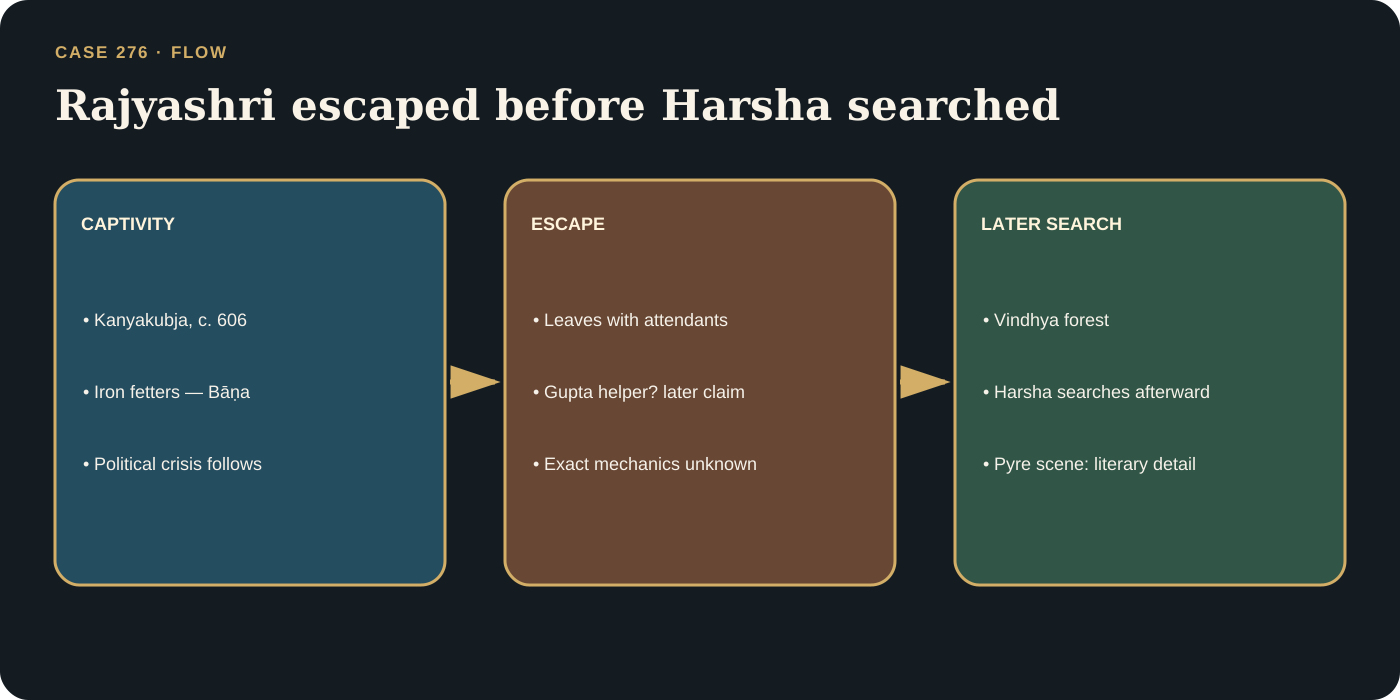
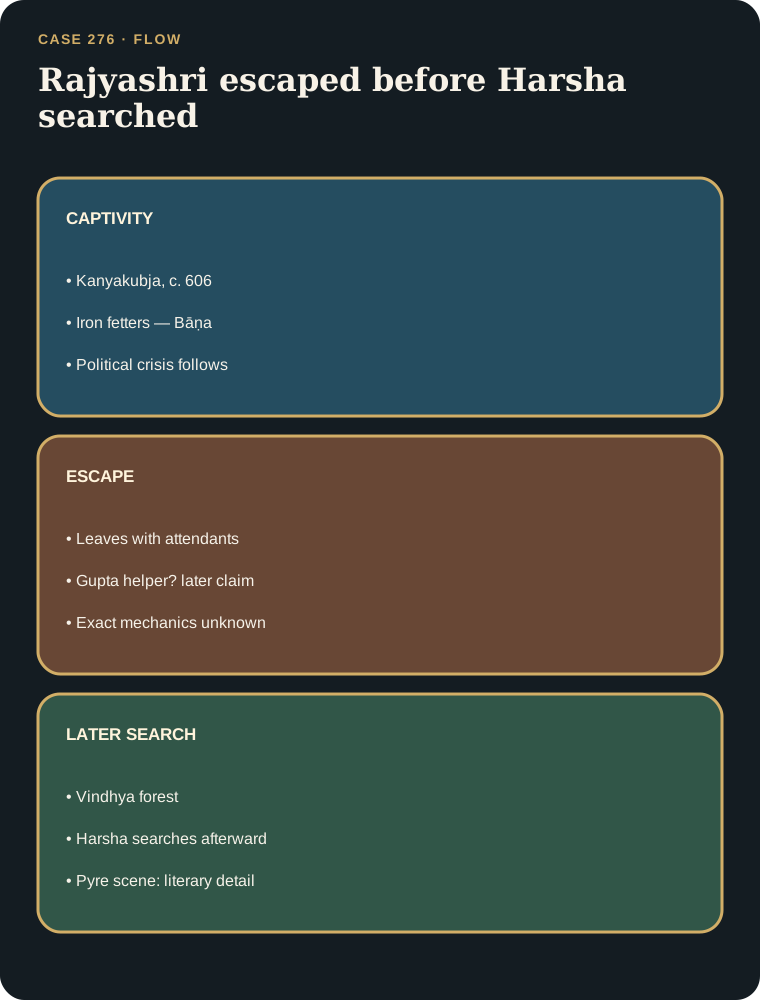
Rajyashri escaped before Harsha searched
Bāṇa's sequence separates Rajyashri's departure from confinement from Harsha's later search while leaving the physical mechanics unknown.
Bāṇa's sequence separates Rajyashri's departure from confinement from Harsha's later search while leaving the physical mechanics unknown.