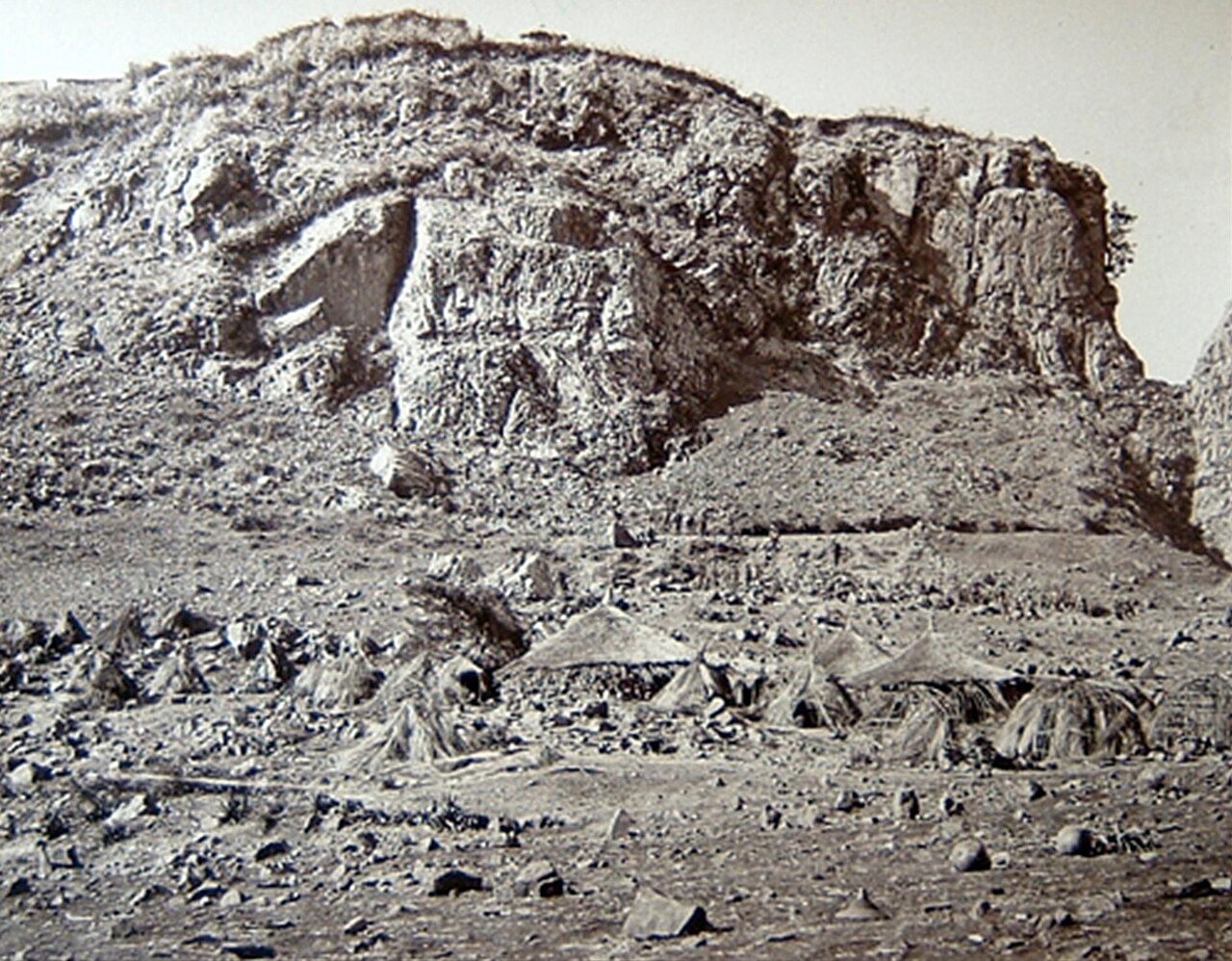
Menelik II's escape from Maqdala in 1865 was not a prison break in the ordinary sense. The young Shewan prince had spent nearly a decade in the custody of Emperor Tewodros II, but he was not chained in a dungeon. He lived within the emperor's political world, received an elite education, married Tewodros's daughter Alitash, and moved among other noble captives and courtiers. His captivity was comfortable by the standards of nineteenth-century imprisonment, but it was still captivity: he could not return to Shewa or claim the throne his father had intended for him.
During the night of 30 June–1 July 1865, that changed. Menelik and a small group of Shewan allies got out of Maqdala and moved toward Wollo. Queen Worqitu's forces then helped him continue toward Shewa, where he reclaimed his father's kingdom. The escape became a turning point in both Menelik's career and Tewodros's decline.
The broad outcome is secure. The precise mechanics are not. A near-contemporary European captive described Menelik and his followers slipping quietly across the great ravine separating Maqdala from Wollo. A later Ethiopian biographical tradition gives Dejazmach Garmame a much larger role, saying he cultivated secret contacts, got the gate guards drunk at a feast, and led the prince out through the fortress gate. Those accounts may preserve different parts of the same operation, but they should not be merged into a seamless scene that no single source actually records.
At a Glance
- Escape: Night of 30 June–1 July 1865
- Place: Maqdala, the mountain stronghold of Emperor Tewodros II
- Escapee: Sahle Maryam, later Menelik II
- Status: Dynastic hostage / political captive, not an ordinary criminal prisoner
- Captivity began: After Tewodros's conquest of Shewa, around early 1856
- Key inside helper in one major Ethiopian tradition: Dejazmach Garmame
- Key outside protector: Queen Worqitu of Wollo
- Immediate route: From Maqdala into Wollo, then south toward Shewa
- Outcome: Menelik returned to Shewa and reestablished himself as its legitimate ruler
- Source problem: Later traditions disagree over the exact gate, number of companions, role of Garmame, and how Worqitu first intended to receive Menelik
A prince taken into the emperor's custody
Menelik was born Sahle Maryam, heir to the royal house of Shewa. His father, Negus Haile Melekot, died during Tewodros II's campaign to end Shewa's semi-independent position.
The chronology of Menelik's actual capture is sometimes compressed into 1855, the year his father died. More detailed reconstructions place his surrender to Tewodros around February 1856, after Shewan leaders found themselves surrounded and unable to continue resistance. Menelik was about eleven or twelve years old.
Tewodros did not treat him as a common rebel. Menelik later remembered that the emperor cared for him like a son. He was educated alongside noble youths, exposed to the workings of an ambitious centralizing court, and eventually married Tewodros's daughter Alitash.
That relative privilege is crucial to understanding the escape. Menelik was a hostage whose dynastic identity made him useful. Keeping the heir of Shewa at court prevented him from becoming the center of a rebellion while also allowing Tewodros to present himself as the protector and overlord of the Shewan royal family.
The system worked only as long as Menelik had no realistic political opening at home.
Why Shewa pulled him back
Shewa remained unstable after Tewodros's conquest. Governors appointed or recognized by the emperor struggled to control the province. Eventually Ato Bezabeh, who had risen within the Tewodros-era order, declared himself ruler.
For Shewan royalists at Maqdala, this changed the calculation. A member of their own dynasty was no longer administering Shewa. Menelik's absence now created the possibility that the royal house itself could lose its political base.
Brian Yates's modern study places Menelik's decade at Maqdala in the larger formation of the Shewan political network that would later support him. He was surrounded by nobles, advisers, relatives, and other future power brokers. Communication with Shewa appears to have continued despite Tewodros's custody.
Bairu Tafla's biography of Dejazmach Garmame gives the most elaborate version of that underground political work. In this tradition, Garmame pretended to be ill so that people could come and go under the guise of helping him medically, while he actually used some of those visits to maintain secret contacts.
The broad claim—that Menelik's escape was planned and had political support—is well supported. The theatrical details of how Garmame disguised communications belong to a later biographical tradition and should be treated as such.
What captivity at Maqdala looked like
The word "prison" can mislead here.
Bairu Tafla emphasizes that the Shewan captives lived in houses, kept wives and servants, and prepared their own food and drink. They were guarded, but their confinement was socially very different from a cell block.
Henry Stern, a European missionary who was himself held at Maqdala, described a broader system in which high-status political prisoners could live in compounds or huts while guards and gate controls prevented escape. His account also makes clear that Tewodros worried about coordinated breakouts and periodically tightened restrictions.
This mixture of domestic life and coercive control explains how an escape network could develop inside Maqdala. The captives had access to one another and to servants, food, visitors, and social gatherings. Yet the mountain stronghold remained difficult to leave without passing guards or negotiating the terrain below the plateau.
Menelik's escape therefore depended less on defeating a physical lock than on finding a moment when the human system of custody failed.
The Garmame tradition
The most detailed Ethiopian reconstruction gives Dejazmach Garmame the decisive role.
According to Bairu Tafla's 1969 biography, based largely on an unpublished Ethiopian biographical manuscript and related traditions, Garmame invited friends and guards associated with the fortress gate to eat and drink at his house. The gathering continued into the night. After the guests became heavily intoxicated or fell asleep, Garmame and his allies slipped through the gate with Menelik and Menelik's mother, Ejigayehu.
The source names Garmame and Ato Habta-Sellase Desta among the party and adds unnamed officials and servants. It also says Garmame bought available horses along the route at high prices so that rapid messengers could not easily overtake the fugitives.
This version has several strengths. It comes from an Ethiopian scholarly reconstruction focused specifically on Garmame, and it preserves names and internal court traditions absent from most European accounts.
It also has limitations. Tafla explicitly notes that Garmame's nineteenth-century biography was itself based partly on tradition and that eyewitness material for his life was thin. The drinking feast, precise gate manipulation, and horse-buying strategy should therefore be described as a strong later tradition rather than as a surviving guard report.
The ravine account
Henry Stern supplied a different near-contemporary view.
Writing only a few years after the event and as a captive who had been living in Tewodros's world, Stern said Menelik and his followers left during a dark night, moved quietly across the wide chasm separating Maqdala from the Wollo country, climbed a steep bank to the southeast, and reached the Wollo highlands by dawn.
Stern's geography is valuable because it places the escape in the actual landscape. It also fits the obvious strategic requirement: once the fugitives got beyond the controlled summit and into Wollo, Tewodros's ability to recapture them fell sharply.
But Stern did not present himself as an eyewitness to the moment Menelik crossed the gate. His account is strongest for what people at Maqdala understood had happened and for the immediate reaction afterward.
The Garmame and Stern accounts are therefore not necessarily contradictory. One may describe how the custodial gate was compromised; the other describes the fugitives' movement after they were outside. What cannot be justified is filling the gap between them with invented exact routes, numbers, or timing.
June 30 or July 1?
The date itself illustrates the same problem.
Some modern Ethiopian references give 30 June 1865. Others, drawing on Menelik's later chronicle and major biographical scholarship, give 1 July 1865.
Those dates are easier to reconcile than they first appear. Every major version places the departure in the middle of the night. An operation beginning late on June 30 and continuing after midnight into July 1 naturally produces both dates in later summaries.
The evidence therefore supports the night of 30 June–1 July 1865.
No historical value is gained by pretending that one side of midnight can be proven to the minute.
Worqitu and the Wollo corridor
Getting off Maqdala did not automatically get Menelik home. He still had to cross Wollo, a politically complex region in which Tewodros had both enemies and hostages.
Queen Worqitu was the crucial figure. Her son Ahmadé had been held by Tewodros, and her own relations with the emperor were deeply hostile.
Sources agree that Menelik moved toward Worqitu and that her forces ultimately provided protection and an escort toward Shewa. Paul Henze summarizes the operation as a planned route in which Worqitu's troops met the fugitives at the edge of her domain and helped them onward.
What Worqitu intended at the first moment is disputed.
Menelik's chronicle, as discussed by Bairu Tafla, preserves a story that she considered trading Menelik back to Tewodros in exchange for her imprisoned son. Another tradition says the idea came from her counselors rather than from Worqitu herself. Other accounts emphasize her longstanding friendship with Menelik's father and portray her reception as supportive from the start.
The secure outcome is simpler: Menelik was not returned to Tewodros. Worqitu received him, protected his onward journey, and supplied an armed escort toward Shewa.
Retaliation at Maqdala
The escape had deadly consequences for people who remained in Tewodros's custody.
Stern says the emperor learned the direction Menelik had taken and looked toward the Wollo side of the mountain. He then linked Menelik's freedom to the fate of Worqitu's captive son.
Ethiopian traditions recorded by later scholars say Tewodros ordered Ahmadé and other hostages killed. Encyclopaedia Africana notes that the deaths are reported by contemporary Ethiopian chroniclers Zannab and Walda Maryam.
The exact number of victims varies across later retellings. Some modern histories give twenty-nine Oromo hostages and twelve Amhara notables. Because the denominators and source chains are not always identical, no single combined victim total should be treated as uncontested.
What is secure is the retaliation itself. Tewodros responded to Menelik's escape with lethal punishment against hostages linked to Wollo and other political enemies.
Returning to Shewa
Menelik and his companions continued south after their Wollo refuge.
Bairu Tafla says Worqitu assigned Dejazmach Berreyye and men from her forces to escort the fugitives toward the Shewan border. At Efrata in Menz, another armed group met them.
The return was politically transformative. Menelik had left Shewa as a child under the protection of his father's officials. He returned almost a decade later as the living dynastic alternative to Bezabeh.
Bezabeh's support weakened quickly. Menelik's hereditary claim attracted nobles, clergy, soldiers, and regional leaders who had little reason to risk themselves for a ruler whose legitimacy was much weaker.
Within a short period Menelik reestablished the Shewan monarchy. From that base he would spend the next two decades building power before eventually becoming emperor of Ethiopia in 1889.
The escape did not make that later career inevitable. But without the escape, Menelik could not have become king of Shewa when he did.
The limits of the heroic version
Later Menelik-centered history naturally made the Maqdala episode into a founding story: the rightful prince escapes captivity, crosses hostile territory, returns to his people, and takes back his crown.
The structure is broadly true, but the sources complicate it.
Menelik had collaborators. Garmame and other Shewan captives appear to have organized the internal network. Worqitu controlled the crucial external corridor. Other local leaders supplied escorts and recognition. Menelik's return succeeded because a political coalition already existed.
His relationship with Tewodros was also more complicated than the image of tyrant and prisoner. Menelik later spoke with gratitude about the education and affection he received at Tewodros's court. His wife Alitash remained behind when he fled.
Nor should Tewodros's brutality after the escape erase the fact that Maqdala captivity had often been privileged rather than physically harsh for Menelik himself. Political captivity can be comfortable and still be coercive.
The most defensible reconstruction therefore keeps two truths together. Menelik was treated as a valued royal dependent inside Tewodros's court, and he still had to escape in secret to recover his freedom of political action.
That successful flight, across the night of 30 June–1 July 1865, restored him not merely to a place but to a dynasty.
Evidence discipline
What the record supports
Status labels distinguish secure conclusions from uncertainty and rejected claims. Color is never the only signal.
MYTH
Menelik escaped from a conventional locked prison cell at Maqdala.
The Shewan captives lived under guarded political confinement in houses with domestic privileges. The coercion was real, but it was not ordinary cell imprisonment.
Sources: SRC-001, SRC-002DISPUTED
The escape occurred on exactly 30 June 1865.
Some sources use June 30 and others July 1. Because the departure occurred at night, the most defensible chronology is the night of June 30–July 1.
Sources: SRC-004, SRC-005LATER CLAIM
Garmame got the fortress guards drunk at a feast and led Menelik through the gate.
Bairu Tafla preserves this detailed Ethiopian biographical tradition. It is a strong later reconstruction but not independently duplicated in Stern's near-contemporary account.
Sources: SRC-001, SRC-002WELL-SUPPORTED
Menelik and his followers crossed the ravine below Maqdala into the Wollo highlands during the night.
Henry Stern, writing shortly after the event from the milieu of the Maqdala captives, gives this geographic account; it is consistent with the secure Wollo aftermath.
Sources: SRC-002, SRC-005DISPUTED
Queen Worqitu intended from the beginning simply to rescue Menelik.
Some traditions emphasize friendship and planned protection; Menelik's chronicle preserves a claim that she considered exchanging him for her imprisoned son, while another source attributes that idea to her advisers. Her eventual protection and escort are secure.
Sources: SRC-001, SRC-005MYTH
Menelik escaped alone.
Every serious tradition describes a small support party. Sources disagree on exactly who and how many accompanied him.
Sources: SRC-001, SRC-002, SRC-004MYTH
The escape immediately made Menelik emperor of Ethiopia.
The escape restored his position in Shewa. He became emperor only in 1889 after more than two decades as king of Shewa.
Sources: SRC-003, SRC-004Evidence diagram
Three traditions around one secure escape
Garmame, Henry Stern, and the Worqitu tradition illuminate different parts of Menelik's flight without forming one exact route.
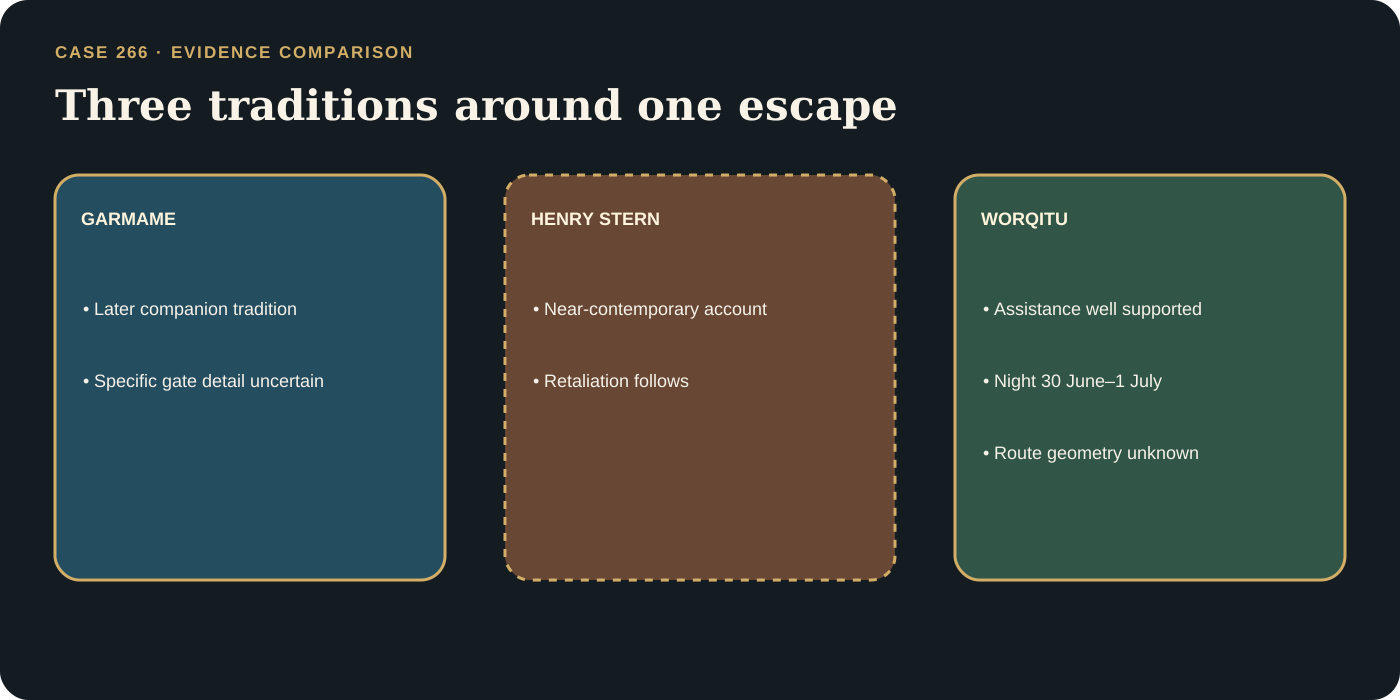
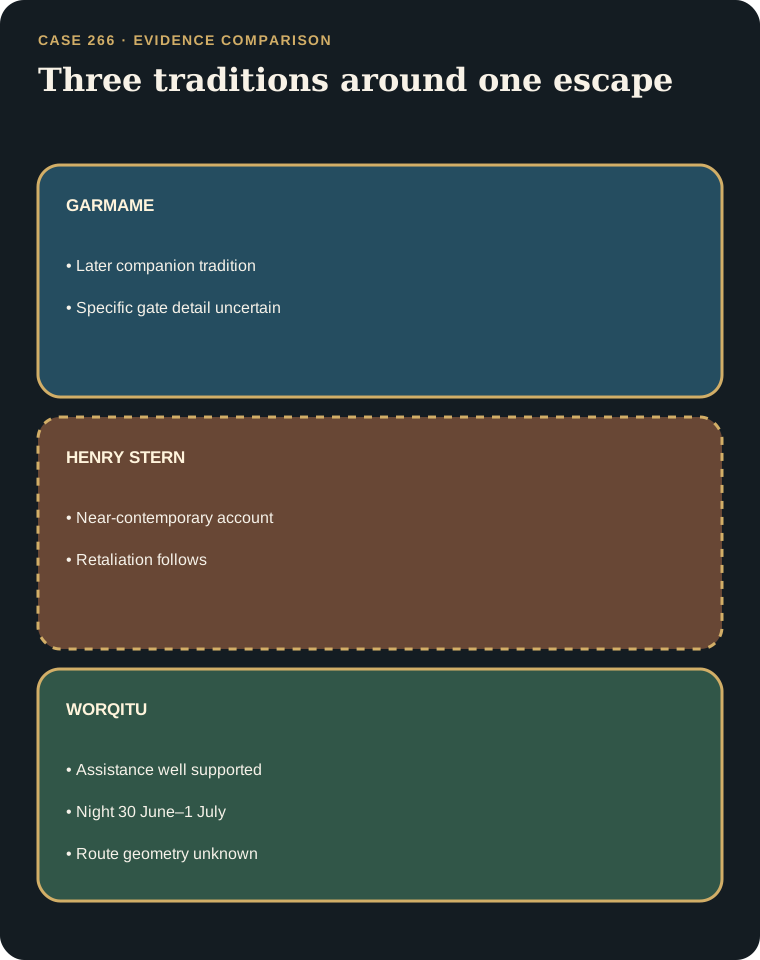
Garmame, Henry Stern, and the Worqitu tradition illuminate different parts of Menelik's flight without forming one exact route.