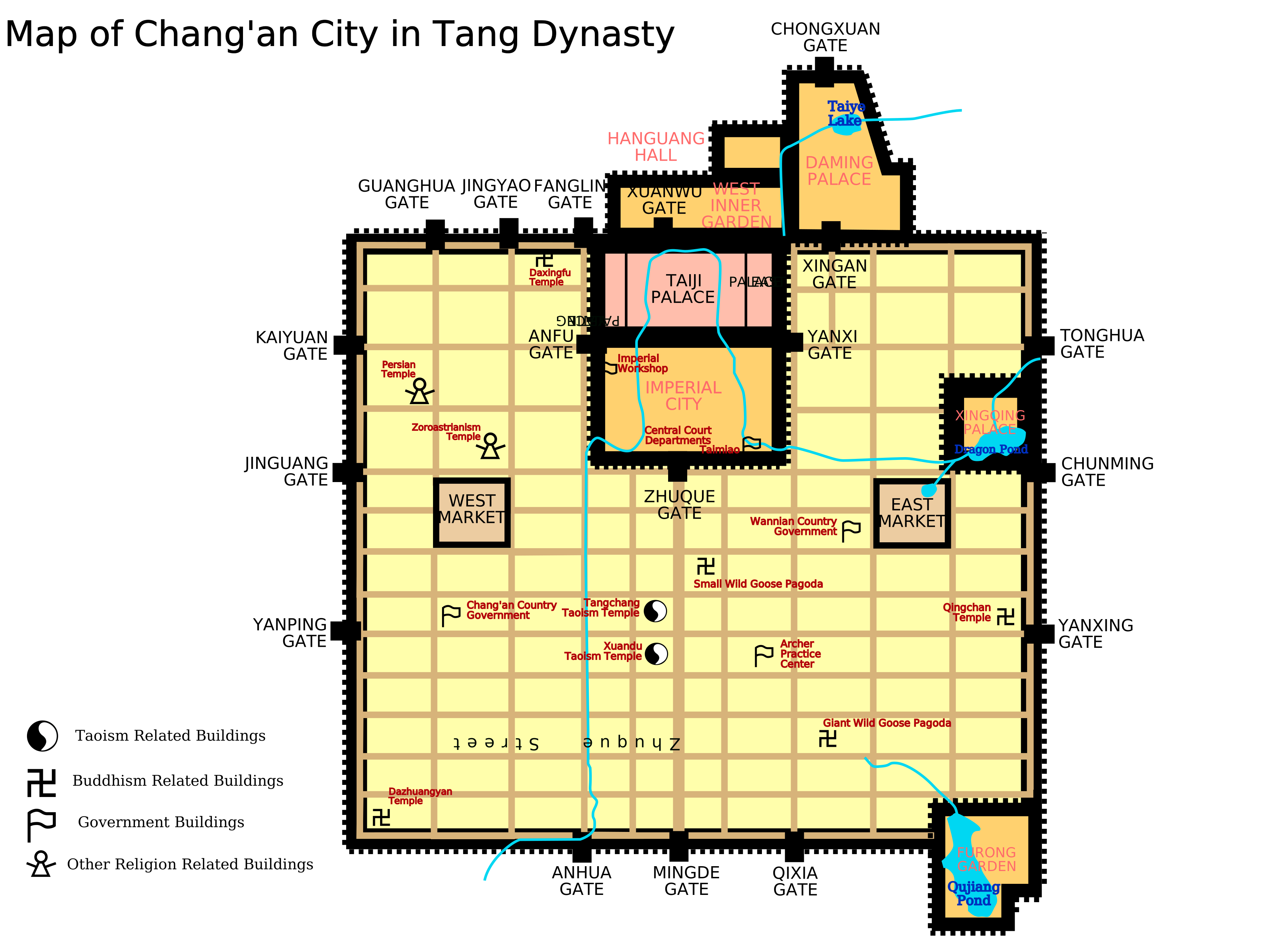
Du Fu’s escape from rebel-held Chang’an in 757 was not a jailbreak in the ordinary sense. There is no reliable story of a broken lock, a bribed guard, a disguise, or a midnight climb over the city wall. The strongest evidence points to something quieter and politically more dangerous: a low-ranking Tang official, captured by rebel forces but not held under close confinement, slipped out of an occupied capital and made his way west to the loyalist court.
That distinction matters because Du Fu’s captivity occurred during one of the most destructive political crises in Chinese history. The An Lushan rebellion had driven the Tang emperor from Chang’an in 756 and created a rival Yan regime. Officials trapped in rebel territory faced difficult choices about survival, collaboration, and loyalty. Du Fu had already tried once to reach the Tang court and had been captured for it.
In the fourth lunar month of 757, he tried again. This time he succeeded.
At a Glance
Who: Du Fu, poet and minor Tang official.
Captured: In 756 while attempting to reach Emperor Suzong’s loyalist court.
Held: Rebel-occupied Chang’an.
Custody: Genuine captivity under rebel control, but apparently not close imprisonment.
Escape: Fourth lunar month of 757.
Route evidence: Du Fu later remembered leaving through Jinguang Gate and taking a side route west.
Destination: Fengxiang, where Suzong’s court was then based.
Outcome: Du Fu reached the emperor and soon received a court appointment as a Reminder, usually identified in modern scholarship as Reminder of the Left.
Chang’an Falls
The crisis began in late 755, when the frontier commander An Lushan revolted against the Tang dynasty. His armies advanced rapidly through northern China, captured Luoyang, and proclaimed a rival Yan regime.
By the summer of 756, rebel forces threatened Chang’an itself. Emperor Xuanzong fled southwest toward Sichuan. During the retreat, his son Li Heng separated from him and was proclaimed Emperor Suzong at Lingwu.
Du Fu was caught in the political rupture. His family had moved away from the capital region, and Du Fu set out to find Suzong and join the loyalist government. Daniel Hsieh’s modern chronology places that attempt in the eighth lunar month of 756. Rebel forces intercepted Du Fu before he reached the emperor and brought him back to Chang’an.
The city he returned to was no longer the Tang capital in any normal sense. It was an occupied imperial metropolis controlled by the Yan rebellion.
Captive, but Not in a Cell
Later shorthand sometimes makes Du Fu sound like a conventional prisoner confined in Chang’an. The evidence suggests a looser form of captivity.
Hsieh notes that higher-ranking Tang officials seized by the rebels could be imprisoned or compelled to serve the Yan government. Du Fu’s low rank appears to have worked in his favor. He was not important enough to receive the same treatment and seems to have retained considerable freedom of movement.
That does not mean he was free. He had been forcibly brought back after trying to reach the loyalist court. The city was held by an enemy regime. Leaving it for Tang-controlled territory carried political and physical risk. What Du Fu lacked was not movement inside a prison compound but the ability to move safely out of rebel jurisdiction.
His poetry from this period preserves the atmosphere of occupation more vividly than any administrative record. “Spring View,” written in Chang’an, begins from the contrast between a ruined state and the continued existence of mountains and rivers. It moves through war, separation, and the strain of being cut off from family.
The poem is not an escape report. It is evidence for the world in which the escape had to occur.
A City Still Under Rebel Rule
The timing needs one further correction. Du Fu is often linked so closely with An Lushan that the escape can be imagined as a flight from An Lushan personally. By the spring of 757, however, An Lushan was dead. His son An Qingxu had succeeded him as emperor of the rebel Yan regime.
Chang’an was still in rebel hands. That means Du Fu escaped before loyalist armies recovered the capital later in the year. He did not simply wait for the military front to move past him. He left a city still controlled by the regime that had captured him and headed toward Suzong’s court while the war remained unresolved.
This is the political core of the episode.
Fourth Lunar Month, 757
Du Fu’s own poetry supplies the clearest evidence for the act of getting away. In the autobiographical poem usually translated as “Statement of My Feelings” or “Narrating My Feelings,” Du Fu looks back on the spring and summer of 757 and says, in essence, that when the vegetation had grown high he got free and went west.
The same poem then describes the condition in which he reached the emperor: wearing rough hemp shoes, his sleeves so worn that his elbows showed. He also records receiving the office of Reminder.
The poem does not say how he passed the rebel authorities or how many days the journey took. There is no secure helper, disguise, password, or guard story.
What it does establish is direction and outcome. Du Fu got away from Chang’an and moved west until he reached the loyalist court.
Modern chronology places this in the fourth lunar month of 757.
Jinguang Gate
A second poem gives the strongest surviving route detail. In 758, roughly a year after the escape, Du Fu passed again through one of Chang’an’s western gates. The long title he gave the poem explicitly looks back to the previous year and says that he had left the capital through Jinguang Gate and returned to Fengxiang by a side route.
The title matters almost as much as the poem. Du Fu was identifying a specific gate with a specific personal memory: this was the way he had gone out when returning to the loyalist side. In the poem itself, he recalls the danger beyond the western suburbs and contrasts the earlier wartime passage with his later circumstances.
This is strong near-contemporary evidence, but it has limits. It does not produce a complete itinerary. “Side route” should not become a modern mapped trail. We do not know the exact roads he followed once outside the city, where he slept, what checkpoints he encountered, whether anyone guided him, or how he avoided rebel patrols.
Jinguang Gate is evidence. A detailed escape map would be reconstruction beyond the sources.
What the Official Histories Say
The later official histories agree that Du Fu escaped, but their versions do not line up perfectly.
The Old Book of Tang says that when Chang’an fell, Du Fu escaped the capital by night and went to the emperor. Its compressed chronology is difficult to reconcile exactly with the fuller sequence preserved elsewhere.
The New Book of Tang gives the clearer story: Du Fu tried to reach the temporary Tang court, was captured by rebels, and in the second year of the Zhide era—757—fled to Fengxiang.
The difference illustrates a larger problem with official biography. Dynastic histories were not neutral police reports. They compressed events, organized lives around moral and political themes, and could shape chronology around a subject’s reputation.
Du Fu’s own poems therefore matter greatly. They confirm the westward escape and later preserve the Jinguang Gate memory without depending entirely on a later official biographer.
The broad sequence is stronger than either history alone: capture in 756, rebel-held Chang’an, escape in 757, Fengxiang, court service.
Fengxiang
Fengxiang lay west of Chang’an and served as one of Suzong’s important wartime bases. Du Fu reached the loyalist court there before the Tang recovered the capital.
His arrival was politically meaningful. Officials who had fallen into rebel hands could later face scrutiny over what they had done under occupation. Some had accepted posts from the Yan regime. Du Fu had not.
His position had partly protected him from forced service, but his escape also allowed him to demonstrate active loyalty. He had attempted to reach Suzong, been captured, and then made the attempt again.
Soon afterward he received a minor court appointment. Modern scholarship normally calls it Reminder of the Left, while translated passages in the official histories sometimes give Right Reminder. Du Fu’s own autobiographical poem uses the shorter title “Reminder.”
The distinction is bureaucratically interesting but not central to the escape. What matters is that the fugitive from rebel-held Chang’an arrived at the loyalist court and entered imperial service.
The Escape Did Not End His Political Trouble
Reaching Suzong did not make Du Fu politically secure.
Soon after his appointment, he defended the official Fang Guan, who had lost imperial favor after military failures. Du Fu’s intervention angered Suzong and nearly ended his new court career.
That episode belongs to Du Fu’s larger biography, but it also undercuts a simple heroic narrative. His escape did not deliver him into a stable position of reward and safety. It put him back inside Tang politics at a moment when loyalty, military failure, court factions, and personal relationships were all dangerous.
Within a relatively short period he would again be away from the center of power.
What the Sources Actually Establish
Du Fu’s fame as a poet creates an unusual evidentiary advantage: some of the best evidence for the escape comes from Du Fu himself.
His poems establish that he got free, went west, reached the emperor in poor condition, and received office. A later poem explicitly remembers leaving Chang’an through Jinguang Gate and using a side route toward Fengxiang.
The later histories add capture and escape language. Modern scholarship reconciles those sources into a chronology that places rebel capture in 756 and successful escape in the fourth lunar month of 757.
They do not establish a cinematic breakout. There is no secure evidence that Du Fu wore a disguise, bribed a guard, traveled with a guide, cut through a wall, or slipped out at a precisely known hour. The Old Book of Tang supplies a “by night” detail, but Du Fu’s own route memory does not confirm it, and the official histories disagree enough in chronology that darkness should not control the reconstruction.
Nor should “captivity” be exaggerated into close imprisonment. Du Fu appears to have moved relatively freely within the occupied city because the rebels did not consider him an important official.
That relative freedom is probably what made the escape possible. The strongest reconstruction is therefore modest but clear. Rebel forces captured Du Fu as he tried to reach Emperor Suzong and returned him to occupied Chang’an. He remained there for months without entering Yan service. In the fourth lunar month of 757 he slipped out of the still-rebel-held capital, later remembered passing through Jinguang Gate by a side route, traveled west through contested country, and reached the Tang court at Fengxiang.
It was an escape not from a locked room, but from enemy political control.
Evidence discipline
What the record supports
Status labels distinguish secure conclusions from uncertainty and rejected claims. Color is never the only signal.
MYTH
Du Fu escaped from a locked prison or dungeon in Chang’an.
Recent scholarship concludes that Du Fu was captured and held under rebel control but was not closely imprisoned or forced into Yan service and seems to have retained relative freedom of movement.
Sources: SRC-003, SRC-004WELL-SUPPORTED
Du Fu escaped Chang’an in the fourth lunar month of 757.
Modern chronology, the New Book of Tang tradition, and Du Fu’s autobiographical poetry support a spring 757 escape west to Suzong’s court.
Sources: SRC-001, SRC-003, SRC-004WELL-SUPPORTED
Du Fu left Chang’an through Jinguang Gate.
A poem title written by Du Fu in 758 explicitly recalls his 757 departure through Jinguang Gate on the way to Fengxiang.
Sources: SRC-002UNKNOWN
The complete physical route from Chang’an to Fengxiang is known.
Du Fu identifies Jinguang Gate and a side route, but no secure source gives a complete road sequence, travel schedule, checkpoints, helpers, or guard-evasion method.
Sources: SRC-002, SRC-003DISPUTED
Du Fu escaped by night.
The Old Book of Tang gives a night-escape detail, but Du Fu’s own route memory does not confirm it and the official histories differ in chronology. It is not used as a controlling scene detail.
Sources: SRC-004MYTH
An Lushan personally controlled Chang’an when Du Fu escaped.
An Lushan had already been killed. The Yan regime under An Qingxu still controlled Chang’an during Du Fu’s escape.
Sources: SRC-003, SRC-007DISPUTED
Du Fu’s post-escape office can be stated without qualification as either Left Reminder or Right Reminder.
Modern scholarship generally gives Reminder of the Left, while translated official-history passages sometimes give Right Reminder. Du Fu’s own poem says only Reminder.
Sources: SRC-001, SRC-003, SRC-004Evidence diagram
From rebel-held Chang’an to Fengxiang
The evidence fixes the broad movement west while leaving the exact route, helpers, and day unknown.
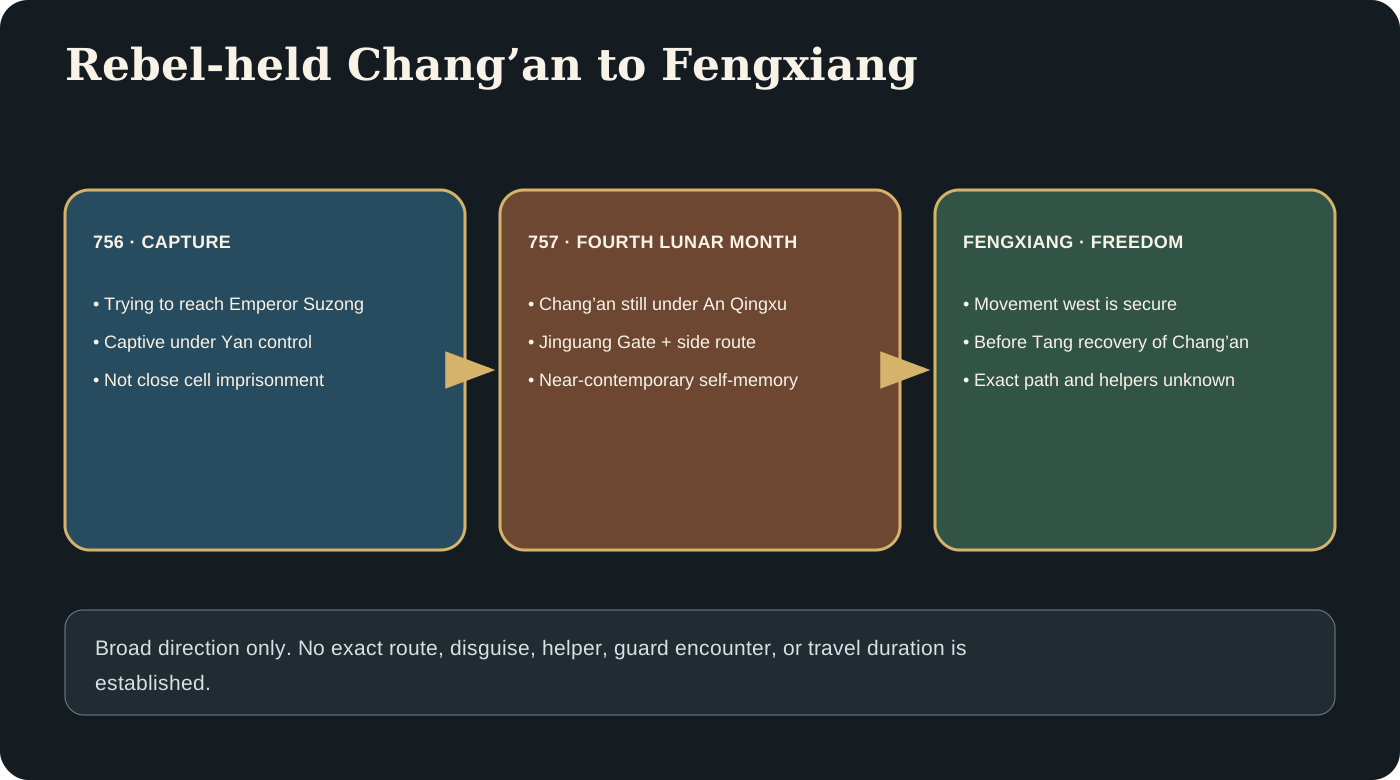
The evidence fixes the broad movement west while leaving the exact route, helpers, and day unknown.