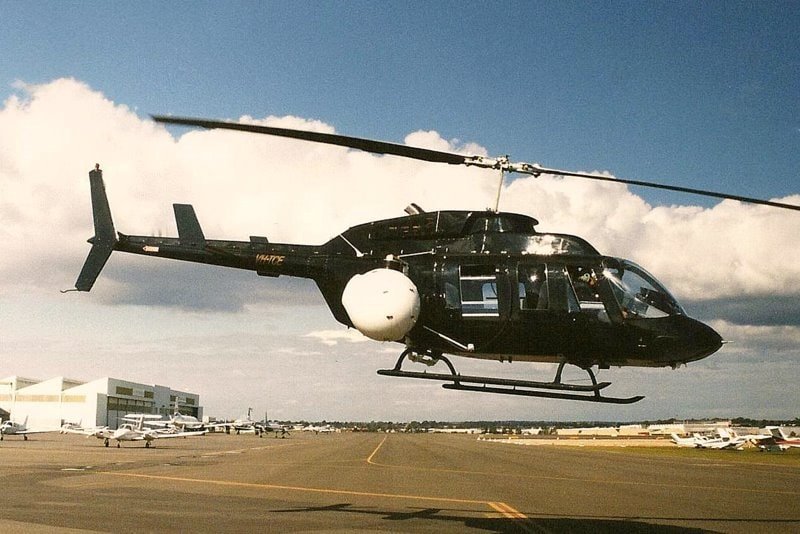
On 30 December 1996, four imprisoned members of the Frente Patriótico Manuel Rodríguez escaped one of Chile's most secure prison units by air. A hijacked civilian helicopter appeared above the Cárcel de Alta Seguridad in Santiago, gunfire drove or kept guards under cover, and a suspended basket was lowered into the prisoners' exercise yard. Within roughly a minute, the four men were outside the prison perimeter.
The FPMR called the operation Vuelo de Justicia. Chilean newspapers and broadcasters quickly turned it into the "fuga del siglo" — the escape of the century. Both labels carry interpretation. The FPMR presented the action as the liberation of political prisoners; Chilean courts had convicted the men for serious violent offenses, several under terrorism-related law, including the assassination of Senator Jaime Guzmán and the kidnapping of Cristián Edwards.
The physical extraction is exceptionally well documented. The deeper plan is harder to reconstruct because later accounts combine judicial investigation, participants' memoirs, a television investigation, prison officials' recollections, and the FPMR's own retrospective narrative. Those sources agree on the broad sequence while disagreeing on important details: exactly who flew the helicopter after it was seized, how much gunfire came from each side, who was fully inside the basket, and whether the famous "58 seconds" should be 58 or 59.
At a Glance
- Date: 30 December 1996
- Place: Cárcel de Alta Seguridad (CAS), Santiago, Chile
- Escapees: Mauricio Hernández Norambuena, Ricardo Palma Salamanca, Pablo Muñoz Hoffmann, and Patricio Ortiz Montenegro
- Organization: Frente Patriótico Manuel Rodríguez, autonomous armed current
- Method: Armed aerial extraction using a seized Bell 206 LongRanger-type civilian helicopter and a suspended basket
- Duration over the prison: About one minute; later reconstructions give 58 or 59 seconds
- Landing after extraction: Parque Brasil, in the southern Santiago area, most consistently identified with La Granja
- Casualties during the extraction: No deaths or serious injuries were reported
- Political effect: Immediate national security crisis and intense scrutiny of Gendarmería and the Frei government
- Central source problem: The operation's broad sequence is secure; fine tactical details and some participant identities come from later testimony and partisan reconstruction
Four prisoners in a new democracy
The escape happened six years after Chile returned to elected civilian government. That timing is essential.
The FPMR had emerged in the 1980s as an armed organization fighting Augusto Pinochet's dictatorship. After the transition, an autonomous current continued clandestine armed activity rather than accepting that electoral politics had made such tactics obsolete.
The four men extracted in 1996 were therefore not being held simply for opposition to the dictatorship.
Mauricio Hernández Norambuena and Ricardo Palma Salamanca were serving extremely long sentences connected to the 1991 assassination of Senator Jaime Guzmán and the kidnapping of newspaper executive Cristián Edwards. Pablo Muñoz Hoffmann and Patricio Ortiz Montenegro had also been convicted in serious violent cases arising in the early 1990s.
Supporters of the FPMR continued to call them political prisoners. Chilean authorities and courts classified their offenses as criminal and, in several proceedings, terrorist. A serious reconstruction has to preserve both the political character of the organization and the legal fact that the prisoners had been convicted of violence committed after the democratic transition.
The Cárcel de Alta Seguridad
The CAS had opened in the mid-1990s as a specialized high-security unit associated with Santiago's larger penitentiary complex. It was intended in large part for prisoners convicted under anti-terrorism, arms, and internal-security laws.
Its physical and administrative design made a conventional escape difficult. Later participant accounts emphasized that the unit sat inside or beside additional prison barriers, making an ordinary wall or tunnel route unattractive.
That did not mean the system was invulnerable.
Claudio Martínez, who was director of Gendarmería when the escape occurred, later argued that the prison's original restrictive regime had gradually been softened after protests by prisoners, relatives, parliamentarians, and human-rights advocates. His account is not neutral: he resigned after the escape and defended the security model he had wanted to preserve. Yet it illustrates one of the political disputes the breakout exposed. Critics blamed bad intelligence and inadequate preparation for aerial attack; others blamed policy decisions that had relaxed aspects of the prison regime.
A special session of Chile's Chamber of Deputies in January 1997 showed how quickly the escape became a dispute about the democratic state's capacity to manage political violence. Legislators argued over whether officials had received warnings, whether aerial escape had ever been anticipated, and whether the government had minimized the continuing threat from armed groups.
Planning an escape from above
The FPMR's own retrospective history says the operation was conceived roughly a year before it was carried out. A 2006 investigative television report reconstructed a long external preparation process involving surveillance, logistical support, foreign participants, false identities, and a replacement helicopter pilot.
Those details should be read with caution. The FPMR's account is openly partisan, while television reconstructions relied partly on anonymous participants who had not been identified by the courts.
The broad strategic choice is nevertheless well supported: an outside team concluded that the prison was more vulnerable from the air than through its walls.
The aircraft was a civilian Bell 206 LongRanger-family helicopter used for private or tourist flights. Later court reporting commonly identifies it as a Bell LongRanger 206 B1. Model labels vary slightly in press accounts, but the aircraft family is not in serious doubt.
The extraction device was a suspended basket or cage intended to lift the prisoners without requiring the helicopter to land in the small yard.
The civilian pilot was a hostage, not the extraction pilot
Many short retellings say that helicopter pilot Daniel Sagredo was held at gunpoint and forced to fly the entire prison escape.
Sagredo's own detailed account says otherwise.
Sagredo, then a Carabineros captain who also flew civilian helicopters, said he accepted what appeared to be a tourist flight on his day off. Six supposed tourists boarded. During the trip, the group induced a landing and then forcibly restrained him. Sagredo identified Raúl Escobar Poblete as the man who held a pistol to his head.
The group later moved Sagredo, blindfolded, in the helicopter. At a location in the Rapel area he was handed over to people who kept him bound while the aircraft left. Sagredo said another Chilean man presented himself as the pilot and took control of the machine.
This first-person testimony is more precise than later shorthand saying Sagredo personally flew the helicopter over the prison under threat. The aircraft was seized and Sagredo was kidnapped, but the strongest direct evidence says a replacement pilot performed the extraction flight.
That distinction also explains why the outside team needed specialized aviation experience rather than merely access to a helicopter.
The helicopter over the CAS
In mid-afternoon, the helicopter reached the prison.
Sources disagree over the exact clock time. Contemporary and later reports place the arrival variously around 15:00, 15:35, or 15:45. That variation matters less than the secure sequence.
Armed members of the outside team fired from the helicopter toward or around guard positions. The guards' response is disputed. Gendarmería-linked accounts said officers fired many rounds at the aircraft; FPMR-aligned accounts later claimed the guards mostly took cover and did not mount an effective response.
The evidence supports the more limited statement that gunfire occurred and that the armed aerial attack suppressed effective interference with the extraction. No deaths or serious injuries were reported.
The basket was lowered into the yard where the four prisoners were waiting.
Not all four fitted cleanly inside. Participant-aligned accounts usually place Ricardo Palma Salamanca and Pablo Muñoz Hoffmann in the basket, Patricio Ortiz partly inside or hanging, and Mauricio Hernández Norambuena clinging outside. Some later journalistic summaries swap one of those positions. The secure fact is that at least two men left the prison only partly supported by the basket, making the short flight from the CAS physically dangerous.
Fifty-eight seconds—or fifty-nine?
The number became part of the legend almost immediately afterward.
A later television reconstruction gave 58 seconds over the prison. Claudio Martínez said an audio recording made by an inmate allowed investigators to calculate 59 seconds.
There is no need to manufacture precision where the sources differ by one second. The defensible historical figure is roughly one minute.
That minute mattered because the prison response never had time to become coordinated. The helicopter approached, gunfire began, the basket dropped, four prisoners attached themselves to it, and the aircraft cleared the walls before the institution could create an effective counteraction.
This was not proof that the CAS lacked security in every sense. It was evidence that its security doctrine had not successfully met this particular form of surprise aerial attack.
From the prison yard to Parque Brasil
After clearing the prison complex, the helicopter flew south across Santiago.
The aircraft came down at a football field in Parque Brasil. Most contemporary and later Chilean reporting locates the landing in La Granja, though an FPMR institutional page has described it as San Joaquín. Because the park sits in Santiago's southern urban area and the historical reporting is not perfectly uniform about municipal boundaries, the case should not build conclusions on the comuna label.
Vehicles and additional helpers were waiting. The four escapees dispersed into clandestine networks and eventually left Chile.
The seized helicopter was abandoned. Sagredo, meanwhile, remained restrained elsewhere until he freed himself and obtained help later that evening.
The immediate state response was enormous. Borders and airports were put on alert, police resources were mobilized, and the escape dominated national political debate.
Why the operation shocked Chile
The extraction was more than a spectacular prison failure.
The Frei government was governing a country still negotiating the institutional legacy of dictatorship. Augusto Pinochet remained commander in chief of the army. Civilian leaders were trying to establish democratic authority while also demonstrating that armed political violence could no longer dictate public life.
The helicopter escape suggested that a clandestine organization thought to be greatly weakened could still carry out a complex armed operation in the capital. It also produced competing political stories.
For the FPMR and its supporters, the operation demonstrated organizational survival and loyalty to imprisoned comrades. For the government and much of the political establishment, it showed a dangerous intelligence and prison-security failure. Families and victims connected to the prisoners' crimes saw men convicted of killings and kidnapping evade sentences imposed under democratic institutions.
Those perspectives cannot be collapsed into the operation's celebratory name.
"Vuelo de Justicia" is historically important because it was the FPMR's name for the action. It is not a neutral judgment that the escape itself constituted justice.
The four paths after the escape
The operation succeeded in its immediate objective: all four prisoners remained out of Chilean custody for years.
Mauricio Hernández Norambuena was arrested in Brazil in 2002 after participating in the kidnapping of advertising executive Washington Olivetto. He served a long Brazilian sentence and was extradited to Chile in 2019, becoming the only one of the four to return to Chilean prison custody through extradition.
Ricardo Palma Salamanca eventually surfaced in France. French authorities granted him refugee status in 2018 despite Chile's attempt to extradite him, a decision the Chilean government publicly criticized.
Patricio Ortiz Montenegro reached Switzerland and sought protection there. Swiss proceedings blocked his return to Chile and eventually allowed him to remain.
Pablo Muñoz Hoffmann remained the least traceable of the four for decades. He appeared in Bolivia in January 2025, but Chile's Supreme Court concluded that the relevant extradition request was no longer procedurally available because the offenses and penalties at issue had prescribed.
Their later histories turned a one-minute extraction into a legal problem lasting decades.
What the evidence actually supports
The hard core of the story is unusually strong.
On 30 December 1996, an outside FPMR-linked team seized a civilian Bell 206 LongRanger-family helicopter. Daniel Sagredo was kidnapped during that seizure, but his own account says another pilot flew the aircraft onward. The helicopter reached the CAS, armed occupants fired, a basket was lowered, and four convicted FPMR members were extracted in roughly one minute. The aircraft then landed at Parque Brasil, where the fugitives dispersed.
The uncertainties belong mostly to the deeper logistics and the precise seconds of the extraction. Later participants and the FPMR have described reconnaissance, training, false identities, detailed prison models, specialized equipment, and the exact division of jobs. Judicial reporting confirms some participants and allegations, but not every memoir-level detail has the same evidentiary weight.
The same caution applies to the gunfire. Claims that the guards offered no response conflict with later official accounts of rounds fired from the prison. The escape succeeded because the response was ineffective, not necessarily because no guard fired at all.
That distinction captures the operation better than its mythology does. Vuelo de Justicia was a real, armed, highly organized helicopter extraction from Chile's highest-profile security prison. Its success is documented. The legend grew in the spaces where the records remain incomplete.
Evidence discipline
What the record supports
Status labels distinguish secure conclusions from uncertainty and rejected claims. Color is never the only signal.
WELL-SUPPORTED
The FPMR itself called the operation 'Vuelo de Justicia.'
The name appears in FPMR retrospective material and later Chilean reporting explicitly attributes the label to the organization. 'Fuga del Siglo' was the more neutral/popular press label.
Sources: SRC-003, SRC-007MYTH
Daniel Sagredo was forced at gunpoint to pilot the helicopter over the prison.
Sagredo says he was kidnapped and transported under restraint, but was left under guard away from the prison while another Chilean pilot took control of the aircraft.
Sources: SRC-004, SRC-005DISPUTED
The helicopter remained over the prison for exactly 58 seconds.
Multiple later sources say 58 seconds, while former Gendarmería director Claudio Martínez says analysis of an inmate's audio recording produced 59 seconds. 'About one minute' is the defensible canonical value.
Sources: SRC-003, SRC-006DISPUTED
The prison guards did not fire at all.
FPMR-aligned accounts say guards largely took cover and offered no effective response, while Gendarmería-linked and other reporting says substantial return fire occurred. The secure point is that the response failed to stop the helicopter.
Sources: SRC-003, SRC-007MYTH
All four prisoners rode fully inside the extraction basket.
Multiple participant and journalistic accounts agree that at least two men were partly outside or hanging from the basket as the helicopter cleared the prison.
Sources: SRC-003, SRC-006, SRC-007MYTH
The four men were universally recognized as political prisoners.
The FPMR and supporters used political-prisoner language, while Chilean courts had convicted the men of serious violent criminal or terrorism-related offenses. U.S. human-rights reporting also noted the prisoners' political-prisoner claims while stating there were no reported political prisoners in Chile.
Sources: SRC-001, SRC-008DISPUTED
The detailed planning story is fully established by contemporary judicial records.
Some logistics and participants were developed through later investigation, testimony, and judicial proceedings, but other details come from anonymous participants or the FPMR's own retrospective accounts and are not equally corroborated.
Sources: SRC-005, SRC-006, SRC-007Evidence diagram
A high-level six-stage extraction chain
The documented sequence is shown without prison geometry, flight tactics, weapon placement, or reusable security detail.
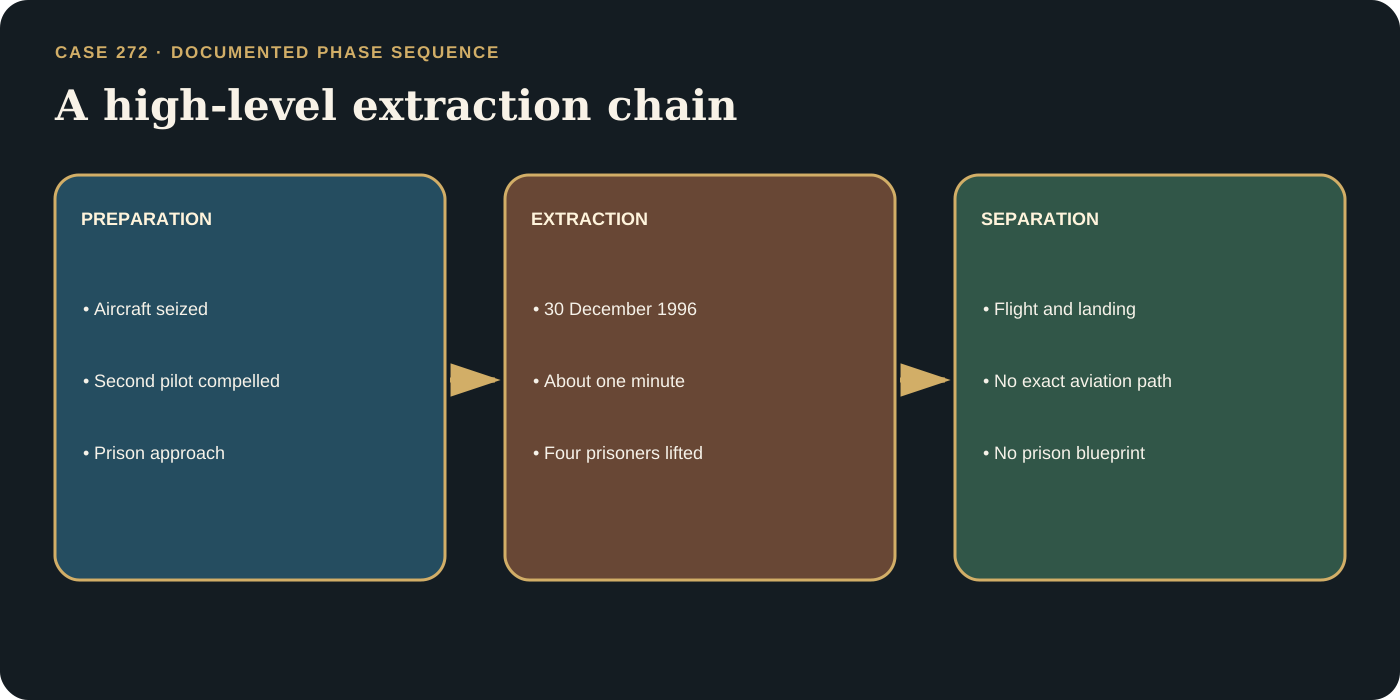
The documented sequence is shown without prison geometry, flight tactics, weapon placement, or reusable security detail.