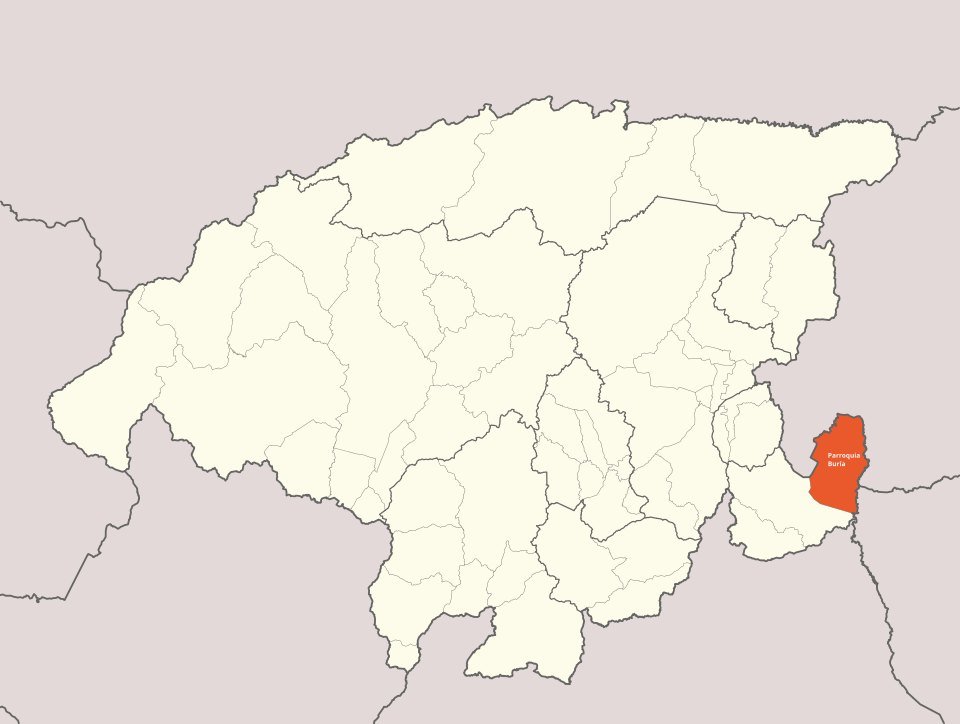
Miguel de Buría's break from slavery was the beginning of a much larger uprising. In the gold-mining district of Buría, in the Spanish Province of Venezuela, an overseer tried to punish an enslaved man named Miguel. Early colonial chronicles say Miguel reached a sword, resisted the punishment, and fled into the mountains.
The exact date is less certain than later retellings suggest. One modern Venezuelan chronology places his individual flight in late November 1552, with other enslaved workers joining him soon afterward. Fundación Empresas Polar's historical dictionary instead places the flight and uprising at the beginning of 1553. Reinaldo Rojas treats the conflict as spanning December 1552 and the first months of 1553. The most defensible formulation is therefore late 1552–early 1553.
What followed transformed an individual escape into an organized challenge to colonial slavery. Miguel persuaded other enslaved workers to leave the mines, helped create a fortified settlement in the mountains, drew Indigenous allies into the movement, and was remembered in the colonial chronicles as a king with a court, a queen named Guiomar, and a young prince.
The surviving record is unusually rich for a sixteenth-century maroon leader—but it is also unusually biased. Nearly every early narrative was produced by men connected to the colonial society Miguel fought against.
At a Glance
- Escape: Late 1552–early 1553
- Place: Buría gold-mining district, near Nueva Segovia in the Province of Venezuela
- Status: Enslaved mine worker
- Immediate trigger: Threatened corporal punishment according to the early chronicle tradition
- Broad method: Resist the overseer, flee into the mountains, and recruit other enslaved workers
- After escape: Attack on the mining settlement, growth of a maroon community, alliance with Indigenous fighters, and armed conflict with Spanish settlements
- Political form: Early chronicles describe Miguel being acclaimed as king and Guiomar as queen
- Outcome: Miguel was killed during the suppression of the rebellion; many surviving followers were captured and re-enslaved
- Major evidence problem: Colonial records agree on the broad uprising but differ on date, numbers, origin, political detail, and Miguel's death
Gold at Buría
The uprising grew out of a new colonial mining frontier. Spanish settlers had discovered gold in the Buría region in the early 1550s. The mining district was connected to Nueva Segovia, the settlement that would eventually move and develop into Barquisimeto.
Mining required a large coerced labor force. Fundación Empresas Polar says about eighty enslaved Black workers were transferred to the Buría mines toward the end of 1552. Other sixteenth-century documents give larger totals, sometimes referring to roughly two hundred enslaved people associated with the mining settlement and their families.
Those figures may not count the same population. Jean-Pierre Tardieu notes the possibility that the smaller figure represented mine laborers while larger totals included a broader enslaved community. The exact number is less important than the system itself: gold extraction depended on coerced labor, and overseers enforced production through physical violence.
Miguel was one of those workers.
Where did Miguel come from?
Even Miguel's origin is disputed. Juan de Castellanos, writing later in the sixteenth century, called him a criollo of San Juan, Puerto Rico. That phrase has supported the long-standing Venezuelan and Puerto Rican tradition that Miguel was born or raised in Puerto Rico before reaching the Venezuelan mainland.
But one of the earliest surviving archival testimonies points in another direction. Tardieu reproduces a witness in a 1560s probanza describing the rebel leader as a "negro biafara." In sixteenth-century usage, that label pointed toward the Biafra or Guinea region of West Africa.
Those descriptions cannot be reconciled confidently. Miguel may have had West African family origins and passed through Puerto Rico, or one witness may simply have been mistaken. The secure conclusion is narrower: Miguel had a strong connection to San Juan before Buría and spoke Spanish well enough for colonial writers to describe him as ladino.
The first break
The best-known version of Miguel's escape comes from Pedro de Aguado. Aguado says a mine overseer working for Pedro del Barrio intended to punish Miguel severely. Miguel refused to submit, found a sword within reach, defended himself, and fled into the mountains. Pedro Simón later repeated a similar sequence.
These writers used openly hostile language toward enslaved resistance. Aguado described freedom itself as something Miguel had wrongfully taken. That wording is evidence of colonial ideology, not a neutral judgment about the escape.
Even so, the core sequence is consistent across the early narrative tradition: threatened punishment, armed resistance, and flight. The sword should therefore be treated as well-supported, while the exact choreography remains unrecoverable.
From fugitive to organizer
Miguel did not remain alone in the mountains. The chronicles say he contacted enslaved workers at the mines and urged them to leave. One later reconstruction says about twenty joined him in an early group, while administrative records soon describe a much larger uprising.
Some sixteenth-century documents refer to around eighty enslaved people in the rising. A service record associated with Diego Fernández de Serpa speaks of approximately two hundred enslaved people at the mines and roughly 150 rebels. An anonymous mid-1550s relation gives a still larger figure.
The numbers cannot be harmonized cleanly. What is secure is that the movement expanded far beyond one man's escape. Enslaved Africans and Afro-descended workers left the mines, and Indigenous people from the surrounding region also participated in the anti-colonial fighting.
That alliance is not merely a later patriotic invention. Sixteenth-century Spanish documentation itself refers to Indigenous fighters appearing alongside the Black rebels during attacks on Nueva Segovia.
The attack on the mines
After building a following in the mountains, Miguel's movement struck the mining settlement. The broad event appears in both later chronicles and earlier administrative testimony. The rebels attacked the real de minas, destroyed or seized property, obtained weapons and supplies, and killed members of the colonial population.
Colonial chroniclers later elaborated the violence in ways that frequently portrayed the rebels as exceptionally cruel while minimizing the violence inherent in slavery. A modern reconstruction should acknowledge lethal violence without automatically accepting every atrocity story produced to justify repression.
The attack had a strategic function as well as a retaliatory one. It disrupted the mine, allowed additional enslaved workers to leave, and supplied the fugitives with material needed to survive beyond Spanish control.
A fortified maroon community
The group withdrew into more defensible mountain terrain. Aguado and later writers describe a fortified settlement protected by palisades and trenches. Castellanos independently describes a strong palisade in rugged country.
This was more than a temporary hiding place. The community fits the broader history of marronage: enslaved people escaping and attempting to establish autonomous settlements outside colonial control. Venezuelan sources often use the term cumbe; wider Spanish-American scholarship frequently uses palenque.
The scale remains disputed. Castellanos describes about 150 Black fighters. Later cultural traditions sometimes raise the force into the hundreds or thousands. The sixteenth-century evidence does not justify the largest figures.
A careful reconstruction should therefore describe scores to perhaps more than one hundred organized followers, not a fixed grand total.
Was there really a Kingdom of Buría?
The royal structure is one of the most famous parts of the story. Early colonial chroniclers say Miguel was proclaimed king. They name his companion Guiomar as queen and their young son as prince. They also describe royal officers and a religious official treated as a bishop.
There is enough agreement across early sources to reject the idea that the kingship was invented entirely by twentieth-century nationalist memory. But the details require caution.
Aguado, Simón, and José de Oviedo y Baños wrote from within a slaveholding colonial culture and often mocked the Black court as imitation, madness, illegitimate tyranny, or farce. Tardieu's source criticism shows how each chronicler expanded and reshaped the story through literary conventions and racial stereotypes.
The evidence supports the conclusion that Miguel and his followers created an autonomous political order that colonial observers understood as kingship. Exact ceremonies, court offices, architecture, and religious practices cannot all be accepted literally.
Nueva Segovia and the widening revolt
The rebels did not limit themselves to remaining hidden. Sixteenth-century testimony says they attacked Nueva Segovia accompanied by Indigenous allies. Fighting reached the town itself, and colonial records describe buildings being burned and several people killed.
Spanish defenders drove them back. The authorities then organized a more determined pursuit. Forces from Nueva Segovia and El Tocuyo became involved, and later narratives attach names such as Diego de Losada, Diego García de Paredes, Diego Fernández de Serpa, Diego de Ortega, and Diego de Escorcha to the suppression.
Those records compete for credit. Service petitions were written partly so Spanish officers could prove their usefulness to the Crown and win rewards. Each therefore had an incentive to magnify his own role.
That is why the identity of the man who killed Miguel cannot be selected simply by choosing the most dramatic story.
The death of Miguel
Miguel was eventually killed during the Spanish destruction of the organized maroon movement. The mechanics of his death are disputed.
Juan de Castellanos gives an elaborate battle scene in which Diego de Escorcha kills Miguel with a projectile from a crossbow. Aguado instead describes Miguel dying from a sword thrust by an unnamed soldier. Fundación Empresas Polar gives particular weight to participant Diego de Ortega's statement that Diego García de Paredes killed Miguel.
No version is secure enough to identify one killer or weapon as certain.
Once Miguel fell, Spanish forces broke the organized resistance. Surviving rebels were killed, captured, scattered, or returned to enslavement. Colonial chronicles say Guiomar and the couple's son were among those captured and re-enslaved.
What the earliest records actually prove
The strongest corrective comes from separating administrative evidence from literary storytelling. The 1561 information prepared by Nueva Segovia and the service records of Diego Fernández de Serpa were not neutral documents, but they are much closer to the events than later narrative retellings.
They establish a substantial uprising among enslaved mine workers, a Black leader called Miguel, attacks on the mining settlement and Nueva Segovia, Indigenous participation, and a Spanish counteroffensive. They also expose how unstable the numbers are.
Rather than choosing the largest force estimate, the case treats the uprising as large enough to threaten colonial settlements but too poorly documented for a precise headcount.
The date problem
The same discipline is needed for the year. Modern public histories often say 1553. Fundación Empresas Polar's dictionary entry places Miguel's flight with companions at the beginning of that year.
But the Fundación Polar chronology places his individual escape around late November 1552, followed by a larger flight soon afterward. Reinaldo Rojas describes the conflict as beginning in December 1552 and continuing into the first months of 1553. Tardieu's study likewise treats the uprising across the 1552–1553 transition.
These are not radically different histories. They describe an uprising unfolding around the turn of the year. The evidence therefore supports late 1552–early 1553, while the exact initial day remains disputed.
Escape as the beginning, not the whole story
Miguel de Buría belongs in an escape archive because his rebellion began with escape from slavery. But the case should not be reduced to a single flight into the woods.
His escape succeeded in the immediate sense. He left direct control of the mine and did not return voluntarily to enslavement. He then converted personal flight into collective marronage, recruited others, helped form a fortified autonomous community, and challenged Spanish control of the region.
The longer outcome was tragic. Colonial forces defeated the movement, killed Miguel, and re-enslaved many survivors.
That does not make the initial escape a failure. For a brief period, people whom the colonial economy treated as property created a political and military community outside that system. The sources that condemned them preserved enough evidence to show that the challenge was real.
Evidence diagram
Miguel de Buría: escape and collective resistance
Broad sequence is supported by early colonial records; date, origin, numbers, and many court details remain disputed.
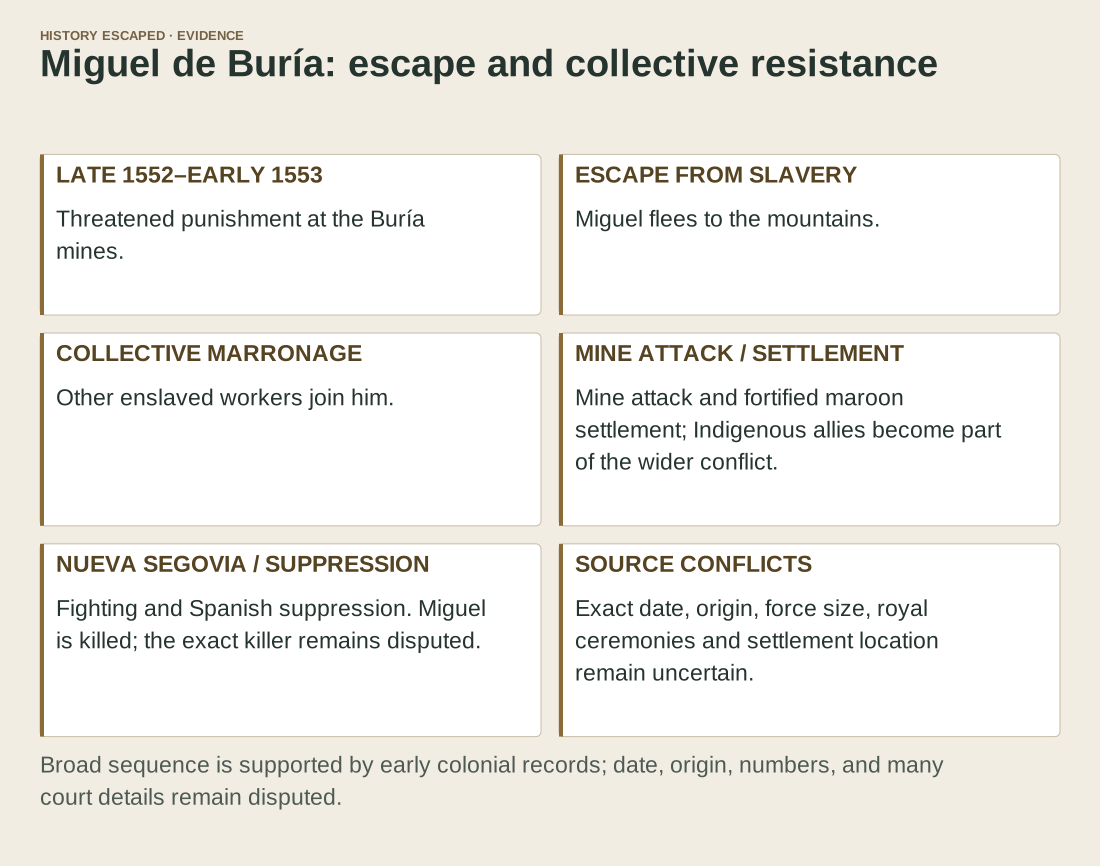
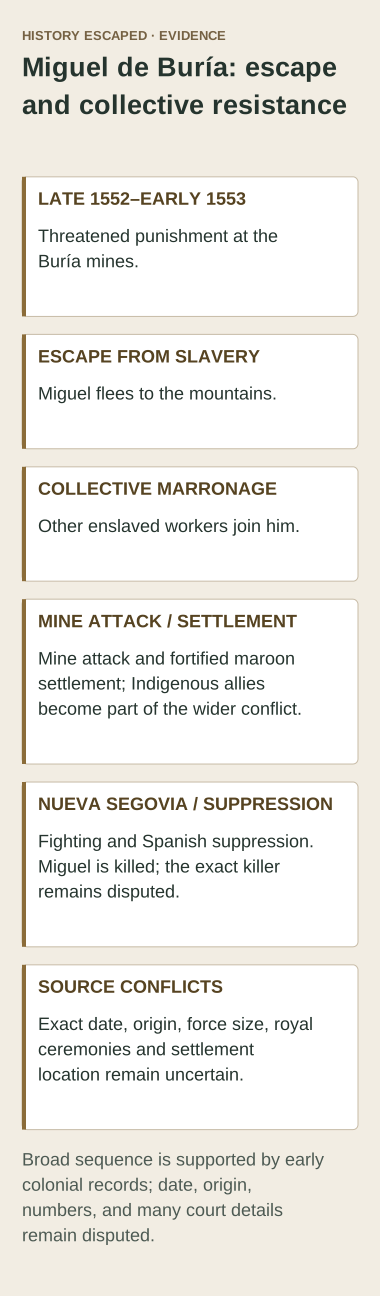
Broad sequence is supported by early colonial records; date, origin, numbers, and many court details remain disputed.
Problem → response
Escape was a sequence of problems
Each response solved a practical obstacle while often creating the next one.
- 01→
Obstacle
Violent mine discipline
Colonial overseers used corporal punishment to enforce forced labor and production.
Response
Miguel resisted threatened punishment and fled rather than submit.
- 02→
Obstacle
Dependence on collective escape
A single fugitive remained vulnerable while the mining system continued around him.
Response
Miguel recruited other enslaved workers and transformed individual flight into collective marronage.
- 03→
Obstacle
Colonial military pursuit
Spanish settlements organized armed forces to suppress the expanding maroon movement.
Response
The rebels fortified a mountain settlement and fought with Indigenous allies, but were ultimately defeated.
The final accounting
Outcome
Miguel escapes slavery
Miguel leaves direct control of the Buría mining operation and does not return voluntarily to enslavement.
Collective maroon community forms
The escape expands into a fortified autonomous settlement of fugitives and allies.
Movement defeated
Spanish forces kill Miguel and destroy the organized resistance; many survivors are killed, dispersed, captured, or returned to slavery.
Selected chronology
Selected chronology
Buría mining expands
Gold extraction intensifies and enslaved laborers are concentrated in the Buría mining district.
Miguel escapes
After threatened punishment, Miguel resists and flees from the mine into the mountains; sources disagree over the exact year boundary.
Larger flight and mine attack
Other enslaved workers join Miguel and the rebels attack the mining settlement.
Maroon community and wider revolt
The fugitives maintain a fortified settlement, ally with Indigenous fighters, and attack Nueva Segovia.
Spanish suppression
Colonial forces defeat the movement; Miguel is killed and many survivors are killed, captured, scattered, or re-enslaved.
Evidence discipline
What the record supports
Status labels distinguish secure conclusions from uncertainty and rejected claims. Color is never the only signal.
DISPUTED
Miguel's escape can be dated exactly to 30 November 1552.
A Fundación Polar chronology gives a late-1552 date, while its dictionary entry and other scholarship place the escape/uprising in early 1553 or across the year boundary.
Sources: SRC-001, SRC-005DISPUTED
Miguel was definitely born in Puerto Rico.
Castellanos calls him a criollo of San Juan, while an early archival witness describes him as Biafara. His Puerto Rico connection is strong, but exact birthplace/origin is not secure.
Sources: SRC-002, SRC-004WELL-SUPPORTED
Miguel escaped after resisting threatened corporal punishment with a sword.
The sequence is preserved by Aguado and repeated by Simón, though neither was an eyewitness.
Sources: SRC-002, SRC-003MYTH
The Kingdom of Buría was invented entirely by twentieth-century nationalist memory.
Early colonial sources already describe Miguel as king and record a fortified autonomous community, though later writers embellished its ceremonies and scale.
Sources: SRC-002, SRC-004MYTH
Miguel commanded a securely documented army of thousands.
The earliest records give inconsistent figures in the dozens to low hundreds; much larger later counts are not secure.
Sources: SRC-002DISPUTED
The exact Spanish soldier who killed Miguel is known with certainty.
Castellanos credits Diego de Escorcha with a projectile; Aguado gives an unnamed swordsman; Fundación Polar favors Diego de Ortega's account naming Diego García de Paredes.
Sources: SRC-001, SRC-002MYTH
Colonial chroniclers provide neutral descriptions of Miguel's motives and government.
Their language repeatedly frames escape from slavery as illegitimate, demonic, ridiculous, or tyrannical; modern source criticism treats those descriptions as ideologically shaped evidence.
Sources: SRC-002, SRC-003