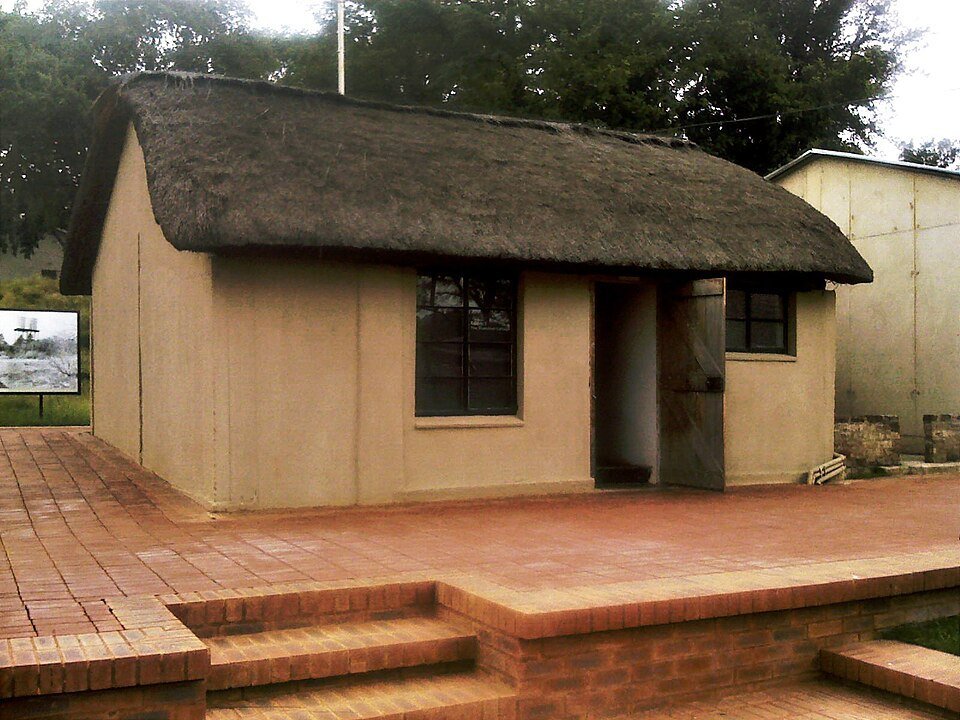
The Marshall Square escape was not a spectacular breach of walls or bars. Four anti-apartheid detainees walked out of Johannesburg police custody because a young constable agreed to leave the way open.
That simplicity is deceptive. The 11 August 1963 escape came only a month after the police raid on Liliesleaf Farm, during a period when the apartheid state was trying to dismantle the underground leadership of the African National Congress, the South African Communist Party and Umkhonto we Sizwe. Arthur Goldreich, Harold Wolpe, Moosa “Mosie” Moolla and Abdulhay “Charlie” Jassat had reached Marshall Square through different arrest histories, but all four understood that continued detention could lead to prolonged imprisonment, prosecution, or further abuse.
Their first idea was more conventional. AnnMarie Wolpe smuggled hacksaw blades and other small items into the police station in food and clothing, and the detainees considered cutting their way out. That plan failed.
The successful plan depended instead on Constable Johannes Greeff, a young Afrikaner policeman whose cooperation the prisoners cultivated over time. A promised cash payment turned sympathy or susceptibility into active assistance. In the early hours of 11 August, Greeff left internal and external doors unlocked. The four men walked out.
The escape itself took minutes. Staying free took weeks, and the routes quickly diverged.
At a Glance
- Date: 11 August 1963
- Place: Marshall Square Police Station, Johannesburg
- Correct institutional description: police station and holding cells, not a conventional prison
- Escapees: Arthur Goldreich, Harold Wolpe, Moosa “Mosie” Moolla, Abdulhay “Charlie” Jassat
- Inside assistance: Constable Johannes Greeff
- Earlier plan: hacksaw blades smuggled into custody by AnnMarie Wolpe
- Successful mechanism: bribed officer left doors unlocked
- Immediate complication: the planned getaway car was no longer waiting when the escape occurred
- First split: Moolla and Jassat headed west toward Fordsburg; Wolpe and Goldreich moved north toward Hillbrow
- Goldreich/Wolpe route: Johannesburg safe houses → Swaziland → Bechuanaland Protectorate → Tanganyika
- Moolla/Jassat route: poorly documented in contemporary press; both eventually reached exile
- Historical correction: later press and archival traditions disproportionately centered Goldreich and Wolpe and marginalized Moolla and Jassat
Marshall Square Was Not a Prison
The phrase “Marshall Square Prison Escape” is embedded in South African memory, but it is technically inaccurate. Marshall Square was the Johannesburg police headquarters, with holding cells used for people under arrest or detention. Historian Vusumuzi Kumalo makes the distinction explicit: this was an escape from police custody rather than a prison break.
That matters because the building’s function shaped the opportunity. The detainees were not inside a purpose-built high-security prison with multiple secure perimeters. They were in a police station where cell access, corridor movement and officer routines created vulnerabilities that could be exploited. The distinction also helps explain why a single cooperative constable could make the decisive difference.
Four Men, Four Paths into Custody
The four escapees did not all arrive at Marshall Square through the Rivonia raid. Arthur Goldreich was arrested at Liliesleaf Farm on 11 July 1963 when police raided the clandestine meeting place used by underground activists. His arrest placed him directly within the network that would soon produce the Rivonia prosecution.
Harold Wolpe was not captured in the raid. He went into hiding and tried to leave South Africa, but police arrested him near the Bechuanaland border and brought him back to Johannesburg.
Mosie Moolla had already been detained under the new ninety-day detention law. South African History Online describes him as one of the first activists held under that power in May 1963.
Abdulhay Jassat had been arrested in April with other activists. He was tortured during interrogation, later acquitted on the charges then before the court, and immediately detained again under the ninety-day law.
The four therefore shared custody but not a single arrest event. That correction is important because later shorthand sometimes says all four were “Rivonia raid prisoners.” Goldreich was. Wolpe was connected to the Rivonia underground and later captured while fleeing. Moolla and Jassat had separate detention histories.
Torture and the Ninety-Day Law
The escape cannot be understood only as an adventure. Jassat’s later testimony to South Africa’s Truth and Reconciliation Commission described severe abuse during interrogation, including being held by the feet at a window while police simulated throwing him out. Other detainees from the same crackdown described beatings, electric shocks and suffocation.
Moolla and Jassat had both experienced the coercive machinery that surrounded detention without trial. The ninety-day law allowed police to hold detainees without ordinary access to courts and legal protections for extended periods. It became one of the apartheid state’s most important tools for isolating activists and extracting information.
Against that background, escape meant more than avoiding a future courtroom. It meant getting beyond a system in which continued detention itself could be physically dangerous.
The First Plan: Cut the Bars
AnnMarie Wolpe became one of the key outside participants in the escape effort. She was allowed to bring food, clothing and other items to Harold. Accounts from her family and later interviews describe her hiding tungsten or hacksaw blades in bread, food and clothing deliveries. Tiny written messages were also concealed in garments moving between the police station and home.
The detainees tried to use the blades to create a physical exit. The plan did not work.
Later retellings sometimes preserve the blade-smuggling but blur the distinction between planning and execution, creating the impression that the four eventually sawed through bars. They did not. The actual escape required a person with keys.
Johannes Greeff
Constable Johannes Greeff was young—later accounts commonly describe him as about eighteen—and he worked around the Marshall Square holding cells. The prisoners built a relationship with him over time. Sources differ on the exact progression. Some accounts emphasize small favors, gifts and friendliness; others stress that Moolla and Jassat played a particularly important role in cultivating him. The 2021 scholarly reassessment of the escape is especially important here because it warns against the older narrative in which Goldreich and Wolpe appear to devise everything while their Indian comrades fade into the background.
What is not seriously disputed is the central bargain. Greeff agreed to facilitate the escape in exchange for a promised payment.
Kumalo’s reconstruction gives the promised amount as R3,000. Other later retellings give different figures, including amounts derived from older currency conventions or remembered payments. Because the source tradition is inconsistent, the evidence securely supports a substantial promised cash bribe, not one universally settled amount.
Greeff did not receive the promised payment at the time. Kumalo reports that he was traced and paid after South Africa became democratic in 1994.
The Night of 10–11 August
The plan called for outside support. A getaway car was positioned near Marshall Square, but the timetable slipped. When the detainees failed to emerge around the expected time, the car was withdrawn.
That could have destroyed the escape. Instead, once Greeff left the relevant doors unlocked, the four men got out and adapted. They did not stay together.
Moolla and Jassat moved west toward Fordsburg, an area where Indian South Africans lived and where they could more readily disappear into sympathetic or familiar surroundings. Wolpe and Goldreich headed north toward Hillbrow. This split is one of the most important details in the case because later reporting followed the two white fugitives much more closely than the two Indian fugitives.
An Accidental Meeting in Hillbrow
Kumalo’s reconstruction, drawing on oral-history material, preserves one of the escape’s strangest moments. With their planned transport gone, Wolpe and Goldreich were moving through Hillbrow in the early morning. They encountered a man near a tree and decided to approach him.
The man was theatre director Barney Simon. Simon belonged to the broader circle of sympathizers who could potentially assist political fugitives. His appearance gave the two men a way back into an organized support network.
From there, Wolpe and Goldreich were hidden in safe houses as police began a major manhunt. The story is memorable because it looks like luck. In practice it worked only because the anti-apartheid underground had already created networks of people willing to supply shelter, transport, money and false cover.
The Manhunt
The police reaction was immediate and intense. Contemporary newspapers described a huge search and published reward notices. Families and associates came under pressure. AnnMarie Wolpe was arrested and interrogated after the escape, and the authorities also targeted people suspected of knowing where the fugitives had gone.
Marshall Square had been one of the state’s own central police facilities. Four high-profile political detainees walking out under the nose of the security system was an institutional humiliation.
Greeff was arrested for his role. Later sources disagree about the precise sentence he served. Popular summaries variously describe a two-year sentence or a longer sentence of which only part was served. Without the original judgment, no exact imprisonment term can be stated securely. The broader result is certain: the officer who enabled the escape paid a substantial personal price.
Goldreich and Wolpe Leave South Africa
The flight of Goldreich and Wolpe is comparatively well documented because journalists followed it. After days in hiding, underground supporters moved them toward Swaziland. Liliesleaf’s current interpretation says they crossed concealed in the boot of a car. Once in Swaziland they received help from Reverend Charles Hooper and others.
They then adopted clerical disguises. Sources describe Goldreich and Wolpe posing as priests as arrangements were made to move them onward. From Swaziland they were flown into the Bechuanaland Protectorate, where their presence became public.
South African History Online fixes their emergence there on 28 August 1963. The escape then widened from a domestic police embarrassment into an international political episode. Their onward flight became entangled with British protectorate administration, aircraft arrangements, press attention and the broader refugee pipeline through southern Africa.
Eventually they reached Tanganyika, the East African state that had become one of the principal centers for southern African liberation movements in exile. Their escape had succeeded not merely because they left a police station, but because they crossed multiple political jurisdictions faster than South African authorities could recover them.
Moolla and Jassat Disappear from the Press
Moolla and Jassat also got away. But if the story is reconstructed from contemporary newspapers, they seem almost to vanish after Fordsburg.
Kumalo’s 2021 study makes this disappearance the central historiographical problem of the Marshall Square escape. White-owned and even liberal anti-apartheid newspapers concentrated on Wolpe and Goldreich, tracking their movements, disguises, aircraft problems and international reception. Moolla and Jassat received far less sustained attention.
One newspaper even inaccurately placed Moolla with Wolpe and Goldreich in Swaziland. The stronger later record says that Moolla and Jassat did not travel through Swaziland with their two comrades. Their exact routes out of South Africa remain much less securely documented in public sources.
Both eventually reached exile. Moolla made his way to Dar es Salaam and later served the ANC internationally. Jassat also went to Dar es Salaam and worked full-time for the ANC before later settling in London.
But a historian cannot honestly reconstruct their border crossings with the same detail available for Wolpe and Goldreich. That gap is itself part of the history.
Why the Record Became Unequal
Kumalo argues that the imbalance cannot be dismissed as random. South African newspapers in 1963 operated inside a racialized society. White fugitives with professional status, access to well-connected support networks and journalists following their movements became more visible subjects. Indian activists in the same escape were far more easily reduced to names in the initial headline and then dropped.
That imbalance was later reproduced by archives built partly from newspaper clippings. The result is circular: reporters covered Wolpe and Goldreich more heavily, archives preserved more of that coverage, and later historians found more material about Wolpe and Goldreich. Oral histories and post-apartheid archival projects began to challenge that pattern.
This does not require diminishing Goldreich or Wolpe. Both took extraordinary risks and played major roles in the underground struggle. The correction is to restore Moolla and Jassat as equal participants in the escape itself.
Who Planned the Escape?
The simplest popular version says Harold Wolpe organized the escape. There is evidence that Wolpe pushed the idea strongly and used outside contacts. AnnMarie’s blade-smuggling and communications were also crucial.
But the actual operation was collective. Moolla and Jassat had already developed access to Greeff and, in several later accounts, played a direct role in persuading him. Goldreich’s underground connections helped make money and onward support possible. Outside organizers prepared transport and safe houses. Greeff supplied the essential act inside the station.
No single “mastermind” label accurately captures that network. A better reconstruction separates four functions:
Inside relationship-building: especially Moolla, Jassat and the other detainees’ interactions with Greeff.
Outside communication and tools: AnnMarie Wolpe and other supporters.
Financial and organizational backing: underground ANC/SACP/MK networks.
Physical release: Greeff leaving the doors open.
The escape succeeded because those pieces converged.
The Date Error
One official-looking source creates an unnecessary problem. A later Truth and Reconciliation Commission regional summary says Jassat escaped Marshall Square on 12 July 1963. That date is wrong.
The overwhelming documentary and commemorative tradition gives 11 August 1963. The July date is also inconsistent with the known chronology surrounding the aftermath of the 11 July Liliesleaf raid and the subsequent arrest and detention of Wolpe.
The TRC passage remains valuable for Jassat’s torture testimony, but its escape date should be treated as a clerical or transcription error rather than balanced against the much stronger August evidence. This is a useful reminder that even authoritative institutions can reproduce isolated mistakes.
What the Escape Changed
The escape did not rescue the Rivonia defendants who remained in custody. Nor did it stop the state’s crackdown.
The Rivonia Trial began later in 1963 and ended with life sentences for Mandela and several co-defendants in June 1964. The underground inside South Africa suffered devastating disruption.
Yet the escape mattered. It denied the state custody of four experienced activists. It gave the liberation movement a rare morale victory at a moment of intense repression. It demonstrated that the detention system was vulnerable to the same human relationships and logistical weaknesses as other institutions.
The escape also preserved political careers that continued in exile. Moolla went on to represent the ANC internationally and later served democratic South Africa as a diplomat. Jassat continued ANC work in Tanzania and London. Wolpe became an influential scholar of South African society and apartheid. Goldreich built a career in Israel while remaining associated with the anti-apartheid struggle. Their later lives diverged, just as their escape routes had.
The Historical Meaning of Marshall Square
Marshall Square itself was later demolished and replaced in Johannesburg’s policing landscape by the new central police headquarters that became known as John Vorster Square. The older building survives mostly in photographs, archives and memory. The 1963 escape therefore has two histories.
The first is operational: blades that did not work, a constable who agreed to help, unlocked doors, a missing getaway car, four men splitting into pairs, and underground networks carrying fugitives toward exile. The second is archival: who was remembered, who was followed by reporters, whose route was reconstructed in detail, and whose experiences disappeared into gaps. Both histories belong together.
Calling it simply “the Great Escape” risks turning it into a polished legend. Reconstructing Marshall Square carefully reveals something more useful: a collective escape whose success depended on interracial political networks—and whose later telling exposed the racial inequalities of the society those networks were fighting.
Evidence diagram
One escape, two recorded routes
The difference in detail reflects the archive, not different levels of participation in the escape.
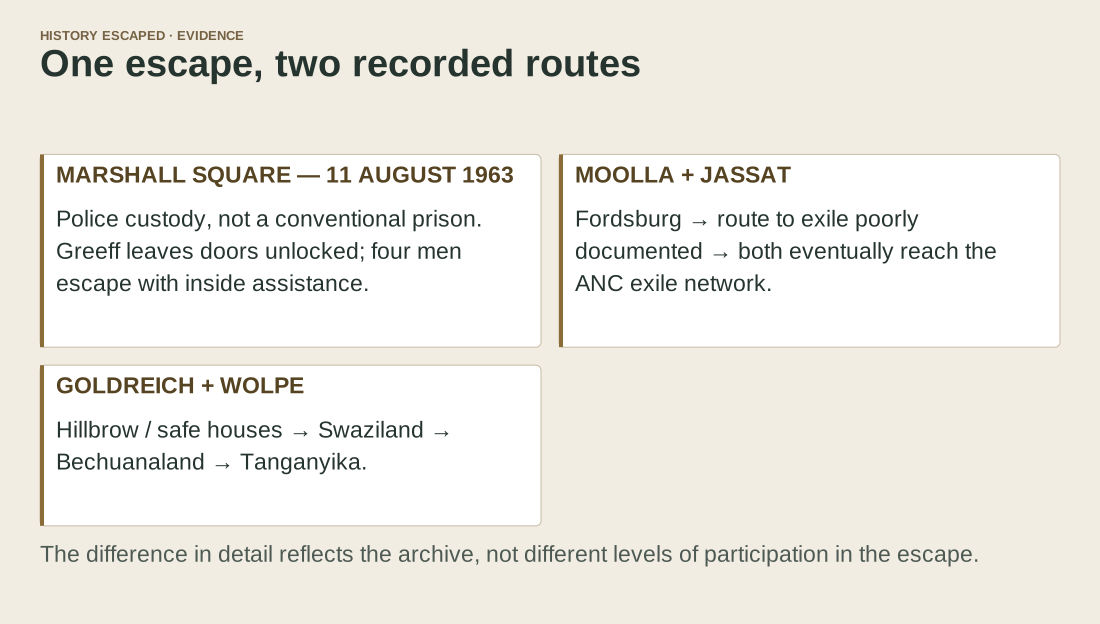
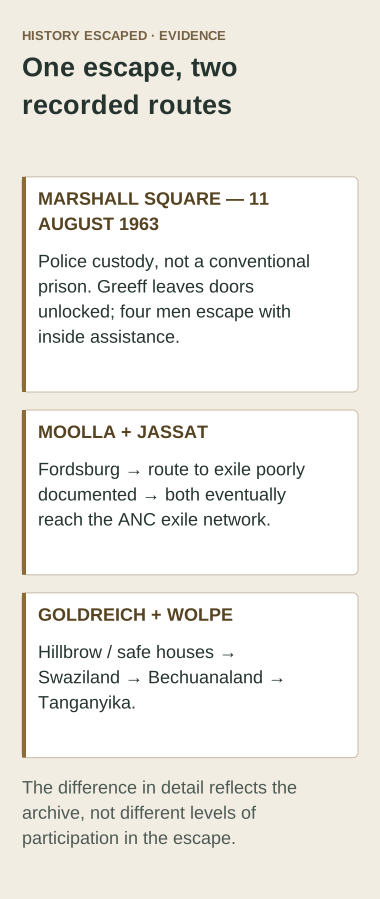
The difference in detail reflects the archive, not different levels of participation in the escape.
Problem → response
Escape was a sequence of problems
Each response solved a practical obstacle while often creating the next one.
- 01→
Obstacle
Police custody and security-police surveillance
The four were inside a central police facility during an intense political crackdown.
Response
They shifted from an unsuccessful physical-barrier plan to inside assistance from a constable with keys.
- 02→
Obstacle
Lost getaway vehicle
The planned car was withdrawn when the escape did not occur at the expected time.
Response
The escapees separated and moved on foot toward areas where they could reconnect with supporters.
- 03→
Obstacle
Nationwide manhunt
Authorities launched a major search, offered rewards, and pressured relatives and supporters.
Response
Underground networks moved the fugitives through safe houses and, for Goldreich and Wolpe, across multiple borders.
- 04→
Obstacle
Racialized visibility in the historical record
Contemporary newspapers followed Wolpe and Goldreich in detail while giving Moolla and Jassat little sustained coverage.
Response
Later oral-history and archival projects recovered Moolla and Jassat's roles and identified the imbalance itself as part of the case's historiography.
The final accounting
Outcome
Successful escapees
All four men got out of Marshall Square and avoided immediate recapture.
Documented escape pairs after departure
Moolla/Jassat and Wolpe/Goldreich took different initial routes after leaving the police station.
Known recaptures after the Marshall Square escape
None of the four was returned to South African custody as a result of the 1963 manhunt.
Selected chronology
Selected chronology
Jassat arrested
Jassat is arrested with other activists, tortured during interrogation, later acquitted on charges and then detained under the ninety-day law.
Moolla detained under ninety-day law
Moolla becomes one of the early political detainees held under the new detention power.
Liliesleaf raid
Police raid Liliesleaf Farm and arrest Goldreich and several other underground activists.
Wolpe captured while fleeing
After evading the Liliesleaf raid, Wolpe is arrested near the Bechuanaland border and brought to Marshall Square.
Marshall Square escape
Greeff leaves doors unlocked and Goldreich, Wolpe, Moolla and Jassat escape from police custody.
Escapees split
Moolla and Jassat head toward Fordsburg while Goldreich and Wolpe move toward Hillbrow and reconnect with supporters.
Goldreich and Wolpe surface in Bechuanaland
After passing through Swaziland, they appear in the Bechuanaland Protectorate and become the focus of international press attention.
All four remain in exile
Moolla and Jassat eventually reach exile as well; exact route details are far less complete in contemporary records.
Evidence discipline
What the record supports
Status labels distinguish secure conclusions from uncertainty and rejected claims. Color is never the only signal.
MYTH
Marshall Square was a conventional prison.
It was a police station with holding cells; the event is more precisely an escape from police custody.
Sources: SRC-001MYTH
The four escaped by sawing through the bars with smuggled blades.
Blades were smuggled in and a cutting plan was attempted, but the successful escape occurred after Greeff left doors unlocked.
Sources: SRC-006, SRC-011MYTH
Goldreich and Wolpe alone masterminded the escape.
Recent scholarship identifies a collective operation and specifically critiques the archival erasure of Moolla and Jassat.
Sources: SRC-001MYTH
Moolla and Jassat followed Goldreich and Wolpe through Swaziland.
Kumalo's source review says Moolla and Jassat did not accompany the two white fugitives through Swaziland; their own routes were poorly reported.
Sources: SRC-001MYTH
The escape occurred on 12 July 1963.
A later TRC regional summary contains this date, but the overwhelming specialist and contemporaneous chronology fixes the escape to 11 August 1963.
Sources: SRC-001, SRC-002, SRC-003, SRC-009DISPUTED
Exactly R3,000 was the universally agreed bribe amount.
Kumalo gives R3,000, while other later summaries preserve different figures and currency framings. The secure fact is that Greeff was promised a substantial payment.
Sources: SRC-001, SRC-010DISPUTED
Greeff's exact custodial sentence is settled in the public secondary record.
Later sources variously report a two-year term or a longer sentence partly served; the original judgment should control before a precise sentence is published.
Sources: SRC-010