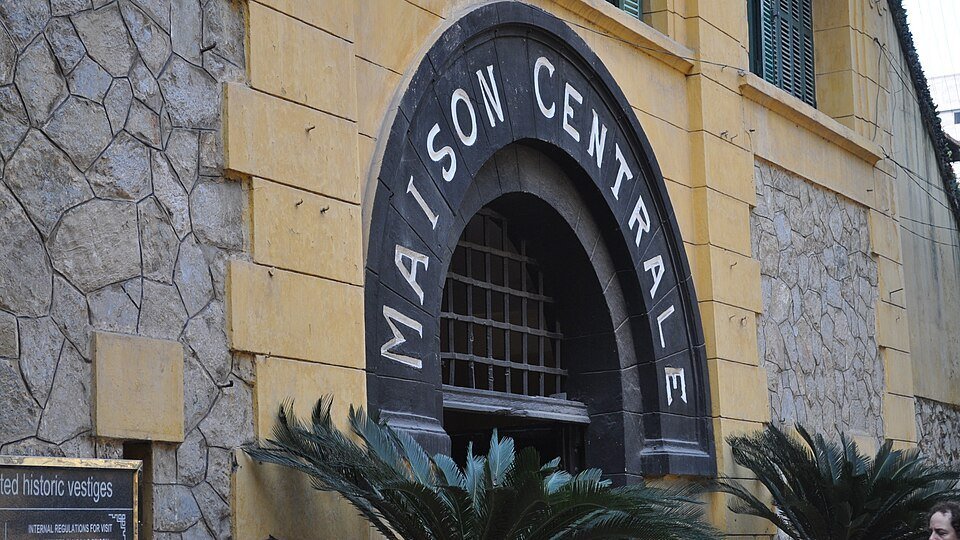
The March 1945 escape from Hỏa Lò was not one breakout. It was a wave.
Within days of Japan overthrowing the French colonial administration in Indochina on March 9, political prisoners at Hanoi’s Hỏa Lò Prison exploited a sudden collapse in routine, supervision and authority. Some climbed the prison walls using improvised ropes made from blankets. Others crawled through the underground sewer system. Several women and some men later changed into civilian clothes and mingled with visitors leaving through the main gate.
More than one hundred political prisoners escaped through the sewer route alone according to the strongest Hỏa Lò institutional accounts. A later Nhân Dân reconstruction gives a broader total of nearly 150 political prisoners escaping by all methods. Those figures should not be treated as interchangeable.
The same is true of the dates. The wall escape is firmly tied to the night of March 11. The strongest later institutional reconstruction places the first organized sewer breakout at 19:30 on March 12 and says 29 prisoners went out in the first wave. An older Hỏa Lò article, however, gives the sewer breakout as March 11. The weight of the source record favors March 12 for the first sewer wave.
The entire escape episode belongs to a narrow political window created by the Japanese coup. French guards and administrators had lost control. Japanese troops had taken the prison but had not yet imposed a stable replacement system. Political prisoners who had spent years organizing, studying and maintaining underground networks recognized that the disorder might last only briefly. They were right.
At a Glance
- Trigger: Japan’s coup against French colonial rule on March 9, 1945.
- Escape wave: March 11–20, 1945 is the best-supported range for the organized escapes.
- Main methods: Wall climbing, sewer escape and disguise among visitors leaving through the gate.
- Wall escape: Night of March 11.
- First major sewer wave: Best supported as 19:30 on March 12.
- First sewer group: 29 political prisoners.
- Sewer total: More than 100 political prisoners over the following nights.
- Broader total: A Nhân Dân retrospective gives nearly 150 political prisoners escaping by all methods.
- Women’s escape: An initial wall attempt failed; several women later escaped in civilian clothes among visitors.
- Major later figures among the escapees: Trần Tử Bình, Trần Đăng Ninh, Đỗ Mười, Lê Trọng Nghĩa, Vũ Kỳ and Phạm Thị Vân, later known as Hoàng Ngân.
- Historical consequence: Numerous escapees returned rapidly to revolutionary activity during the months preceding the August Revolution.
A prison built for political control
Hỏa Lò was built by the French colonial administration in Hanoi in the late nineteenth century. The French called it the Maison Centrale. It became one of the central sites for incarcerating Vietnamese nationalists, communists and other political opponents of colonial rule.
The prison was designed to make escape difficult. Its walls were high, guarded and topped with deterrents. Prisoners moved through layers of locked compartments and segregated sections. Political prisoners and ordinary criminal prisoners were normally kept apart.
But Hỏa Lò also became an organizational space. Political prisoners built internal committees, conducted study sessions, shared political information and maintained discipline. Some had been senior underground organizers before arrest. Others gained experience inside prison that later shaped their work outside it.
By 1944 and early 1945, the desire to escape was not merely personal. The war was changing rapidly. Germany was retreating in Europe. Japan’s strategic position was weakening. Vietnamese revolutionaries increasingly expected a crisis in colonial authority and believed experienced organizers would be needed outside prison when it came.
The prisoners were waiting for a breach in the system. On March 9, it arrived.
Japan removes the French
Japan had occupied French Indochina during the Second World War while leaving much of the French colonial administration in place. That arrangement ended abruptly on March 9, 1945.
Japanese forces moved against French military and administrative institutions across Indochina, disarming or interning French personnel and replacing the colonial system with direct Japanese control and new local political arrangements. In Hanoi, the transition created immediate confusion.
Prisoner memoirs preserved by the Hỏa Lò memorial describe gunfire, power outages, hurried movement and French prison personnel suddenly stripped of authority. French officials and guards who had previously controlled prisoners were themselves disarmed or confined. Japanese troops took over Hỏa Lò.
They inherited a prison full of experienced political opponents whose internal organization had not disappeared.
The prisoners decide not to wait
Accounts from former prisoners consistently describe the same strategic conclusion. The Japanese had taken control, but their prison administration was not yet settled. Rules that had previously controlled movement between sections were suddenly being applied loosely or not at all. Some doors remained open. Prisoners could move or mingle in ways that would have been impossible only days earlier.
Japanese officers reportedly told prisoners that the new regime had overthrown the French and suggested releases might follow. The political prisoners did not trust that promise enough to wait.
Their internal leadership concluded that the confusion itself was the opportunity. If the Japanese reorganized the prison, reinforced guard routines and restored normal separation between sections, the escape window would close.
The general principle became decentralized. Anyone with a workable opportunity should use it. Prisoners facing long or severe sentences were given priority. Money accumulated within the prisoner organization was distributed so escapees could travel and reconnect with outside networks.
The result was not one master plan. It was several overlapping escape plans unfolding inside the same unstable prison.
March 11: over the walls
The first major route was upward.
Political prisoners needed access to the area holding ordinary prisoners, where supervision had become looser. Trần Đăng Ninh and others moved out of stricter confinement, in some accounts using the infirmary and the disorder between prison sections to reposition themselves.
Blankets were torn and twisted into improvised ropes. Prisoners climbed onto roofs and toward the outer walls. The walls themselves were hazardous. Broken glass and protected sections had been intended to stop exactly this kind of attempt. Accounts describe blankets being used to cover dangerous surfaces and lines.
On the night of March 11, the plan worked for a limited number of men. Among those consistently named as getting out by the wall route were Trần Đăng Ninh, Lê Trọng Nghĩa, Lê Tất Đắc and Vũ Kỳ. Other institutional accounts also name Vũ Tuân, Nguyễn Văn Kha, Nguyễn Trần Châu, Trần Ngọc Chi, Nguyễn Văn Ngọc and Hoàng Minh Chính among the men who escaped during the wall operation.
The route did not stay open. Ordinary prisoners began moving toward it in greater numbers. Noise increased on the roof. Japanese guards detected the activity and fired warning shots.
The wall escape had succeeded for some. For everyone still inside, it was effectively closed.
The women try the same route
Women political prisoners had been organizing separately. After learning of the escape plan, fifteen women prepared a wall attempt of their own. They divided into groups and improvised ropes and protective coverings in much the same way as the men.
The first group did not get out. Bùi Thị Kim Nhạn later recalled reaching the top of a second wall and seeing the street beyond before Japanese guards discovered the attempt. The women were forced back and returned to confinement.
The failed wall attempt did not end their escape effort. In the following days, Japanese authorities permitted larger numbers of relatives and visitors to enter the prison. Movement around the gate became confused.
Women prisoners arranged for civilian clothes to be brought in. Several then abandoned prison clothing, blended into groups of visitors and walked out through the gate.
Phạm Thị Vân, later known as Hoàng Ngân, was among the women who escaped in this way. Trương Thị Mỹ and Phạm Thị Lê Hải are also named in Hỏa Lò institutional accounts.
The March escape therefore had no single gendered method. Men and women adapted separately to the same breakdown in control.
A manhole in Camp J
After the wall route was exposed, the remaining political prisoners needed another way out. Trần Tử Bình became central to that effort.
He had already moved from stricter political confinement into the area holding ordinary prisoners. Near Camp J, the juvenile section, he noticed a square concrete cover with an iron ring. It appeared to open into the prison sewer system.
The idea was obvious and uncertain at the same time. A sewer had to lead somewhere beyond the prison. It might also narrow, dead-end, be blocked, or emerge inside another guarded area.
Several prisoners investigated before committing the larger group. Nguyễn Huy Hòa and Trần Văn Cử are consistently identified as the men who crawled into the sewer to scout the route while Phan Lang, also called Vân in the source tradition, remained above to watch.
They eventually found signs that the line reached a public street. They returned to the prison and reported that the route could work.
March 12 is the stronger sewer date
This part of the chronology contains the case’s clearest documentary conflict. An older Hỏa Lò retrospective says that Trần Tử Bình ordered the manhole opened at 19:30 on March 11.
Later Hỏa Lò material, the memorial’s detailed sewer-escape article, the account centered on Đỗ Mười, the 2025 Hanoi culture commemoration, Nhân Dân reporting and other witness-based summaries all give March 12.
The March 12 chronology also fits the sequence better. The wall breakout occurred on the night of March 11. The next day, prisoners continued searching for another method, tested the sewer, organized the first group and began the mass breakout that evening.
The case therefore uses March 12 as the first major sewer-escape date. The March 11 version is preserved as a genuine source conflict rather than silently corrected away.
The first 29
By late afternoon on March 12, the first group had assembled near Camp J. The Hỏa Lò memorial’s later reconstruction gives 29 prisoners in this first sewer wave. Earlier planning had contemplated roughly thirty, with priority given to prisoners carrying heavy sentences.
At about 19:30, the manhole was opened. The first advance group included Trần Tử Bình, Nguyễn Tuân and Phan Lang. The fourth name varies across institutional retellings: later material often identifies Nguyễn Huy Hòa, while some Hỏa Lò text prints Trần Quang Hòa or a similar variant.
The variation is worth noting because it shows how even a heavily commemorated event can accumulate editorial inconsistencies. What is stable is the role of Nguyễn Huy Hòa and Trần Văn Cử in scouting the sewer and the role of Trần Tử Bình in organizing the breakout.
Đỗ Mười followed in a later group with Trần Văn Cử and Nguyễn Cao Đàm. One by one, the prisoners crawled through the underground channel and emerged beyond the prison wall.
All 29 in that first organized wave are reported as reaching the outside.
The sewer was not one-night escape
The most important numerical correction is that the famous sewer breakout did not consist of one group of more than one hundred prisoners moving through the drain on a single night.
The first wave numbered 29. More groups followed.
Nhân Dân places the sewer escape series across the nights from March 12 through March 20. Hỏa Lò’s own later material says that prisoners remaining inside continued to use the same route over subsequent days and that the total who escaped through the sewer exceeded one hundred.
This explains why the manhole became the defining physical object of the episode. It was not merely the exit point for one dramatic crawl. It functioned as a recurring escape route during a short interval before prison control stabilized.
That distinction also matters when asking how many people escaped overall.
More than 100, or nearly 150?
Two totals dominate later commemorative accounts. The most securely supported minimum is more than 100.
Hỏa Lò’s official history and Hanoi cultural authorities repeatedly use that figure for the mass escape. The detailed sewer account specifically says more than one hundred political prisoners escaped through the underground route.
A 2015 Nhân Dân reconstruction gives a larger figure: nearly 150 political prisoners escaped successfully and returned to the revolutionary movement.
Those figures can both be plausible because they are not necessarily measuring the same thing. The sewer alone carried more than one hundred. Wall climbers had already escaped. Women and some men later passed through the gate in civilian clothing.
A total approaching 150 across all methods therefore fits the narrative structure, but there is no surviving consolidated manifest in the reviewed source base that proves an exact final number.
The most responsible conclusion is: more than 100 definitely escaped; the broader total may have approached 150. Exact total: unknown.
Leaving prison was only the first problem
The escapees were not simply free once they reached a Hanoi street. They needed shelter, clothes, transport, food and contact with political organizations that had themselves been operating underground.
The sewer plan anticipated this. Prisoners were divided into small groups and instructed to disperse rather than remain together. They were expected to reconnect with outside party and Việt Minh networks independently.
Some first-wave escapees reached Vạn Phúc in Hà Đông, where regional revolutionary leadership had operated. Đỗ Mười returned toward his home area south of Hanoi and soon resumed organizing in Hà Đông. Trần Đăng Ninh returned to political activity in northern Vietnam. Trần Tử Bình resumed regional leadership and later participated directly in the August seizure of power in Hanoi.
The freedom created by the escape was therefore immediately political.
From Hỏa Lò to August
The five months after March 1945 transformed Vietnam. Japanese authorities had eliminated the old French colonial administration but could not create a stable political order before Japan’s surrender in August. Việt Minh networks expanded rapidly, especially as famine, wartime disruption and collapsing imperial authority reshaped the countryside and cities.
Former Hỏa Lò prisoners entered that environment with organizational experience and existing political connections. Not every escapee became a senior leader, and the August Revolution cannot be reduced to one prison break.
But for several named individuals, the connection is direct. Đỗ Mười returned to revolutionary work in Hà Đông and participated in the seizure of power there. Trần Tử Bình became involved in leadership of the Hanoi uprising. Lê Trọng Nghĩa returned to political activity in the capital and was given sensitive missions during the August crisis. Phạm Thị Vân, later Hoàng Ngân, resumed women’s revolutionary organizing.
The mass escape did not cause the August Revolution. It returned a large cadre pool to the movement at exactly the moment political authority across northern Vietnam was becoming fluid.
Why the Japanese did not simply release them
A common misunderstanding comes from the collapse of French authority. Because Japanese officers talked about ending French rule and apparently suggested that prisoners might soon be freed, later summaries sometimes blur escape and release.
They were not the same. Some political prisoners remained in Hỏa Lò after the March escape wave and were only released months later as revolutionary pressure intensified in August.
The men and women who left in March did so without waiting for a formal legal release. They climbed walls, crawled through sewers or disguised themselves as civilians.
That is why the event belongs in an escape archive rather than merely in the history of wartime prisoner releases.
Three methods, one opportunity
The March Hỏa Lò escape is most accurately understood as three methods exploiting the same political opening.
The wall route worked first and briefly. The sewer route became the mass channel and remained usable across several nights. The gate-disguise route took advantage of visitor traffic and was particularly important for women whose wall attempt had failed.
There was no need for every group to follow one central script. That flexibility was one of the escape wave’s defining strengths.
It also makes later storytelling harder, because a clean single-night narrative is easier to remember than a rolling series of departures. The evidence does not support that cleaner story.
The surviving manhole
The physical object most closely associated with the escape survives at the Hỏa Lò Prison Historical Relic.
A modern photograph on Wikimedia Commons shows the underground sewer door displayed at the site and identifies it as the opening used by prisoners in the 1945 escape. The current museum narrative likewise identifies the sewer opening in front of Camp J as the route used in the mass breakout.
That makes the manhole unusually valuable surviving physical evidence. It is not a reconstruction of the escape; it is the surviving object around which multiple witness traditions converge.
The prison itself was largely demolished in the 1990s, though part of the complex remains preserved as a memorial museum. The sewer door now sits above ground, labeled.
In March 1945, it represented the opposite possibility.
What can be stated securely
Japan overthrew the French administration on March 9, 1945 and took control of Hỏa Lò during the resulting confusion.
Political prisoners immediately began exploiting the breakdown in prison routines. On March 11, Trần Đăng Ninh and a limited group of other prisoners escaped over the walls using improvised blanket ropes. A parallel attempt by women prisoners failed.
On March 12, according to the strongest chronology, Trần Tử Bình and other prisoners initiated the organized sewer breakout after Nguyễn Huy Hòa and Trần Văn Cử had helped scout the route. Twenty-nine prisoners escaped in the first sewer wave. More groups followed through approximately March 20.
More than one hundred political prisoners escaped through the sewer route in total. Other prisoners, including women such as Phạm Thị Vân and Trương Thị Mỹ, escaped in civilian clothes through the gate.
A later retrospective places the total across all methods near 150, but the exact final number remains unresolved. Many of the escapees returned immediately to revolutionary activity.
Why Hỏa Lò belongs in the Flagship tier
The scale alone would make the event notable. The evidence problems make it more important.
The March escape was not one prison break but a sequence of distinct methods, nights and prisoner groups. The evidence requires distinguishing a minimum count from a broader retrospective estimate, preserving a date conflict within the institution that commemorates the event, and restoring women’s escape activity to a story often dominated by famous male leaders.
Most importantly, the event sits at a hinge in Vietnamese history. On March 9, the political system holding the prisoners changed in a matter of hours.
The prisoners recognized that instability before a new prison system could close around them. They turned it into freedom.
Evidence diagram
Hỏa Lò: a rolling escape, not one breakout
March 11 and March 12 belong to a disputed, multi-wave chronology. No exact sewer route or prison layout is reconstructed.
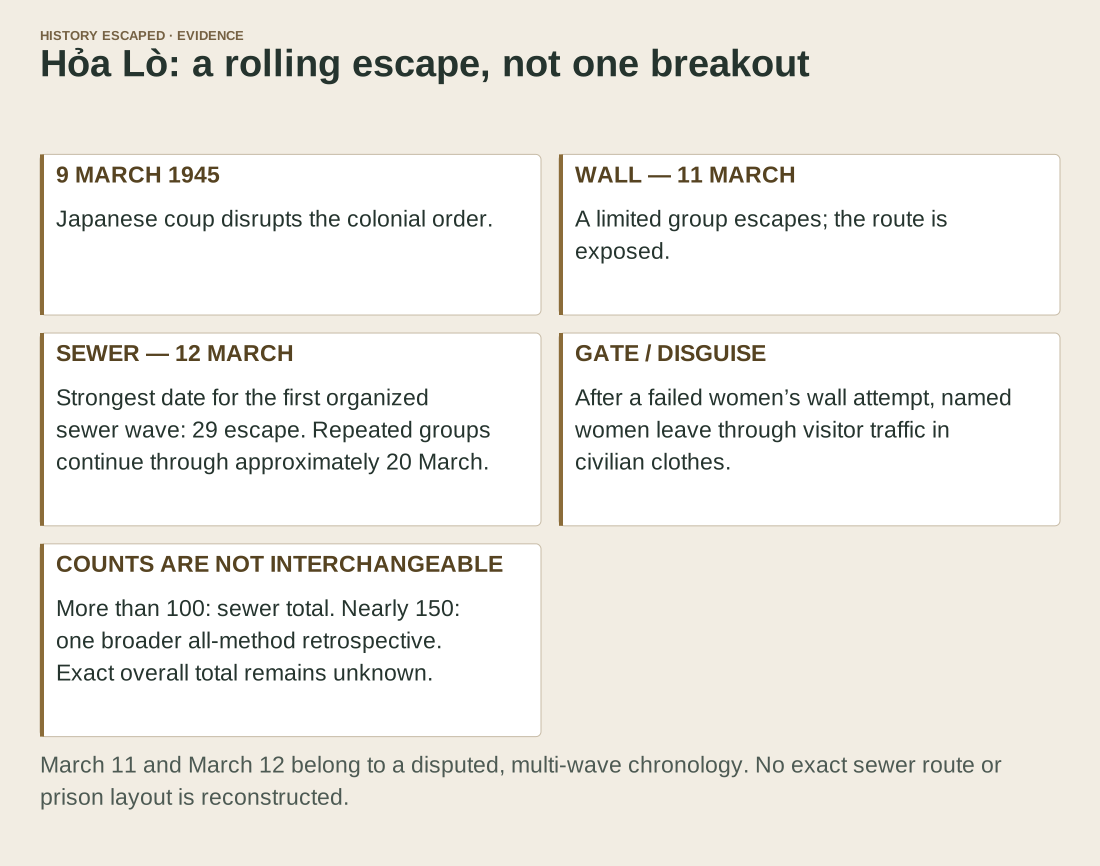
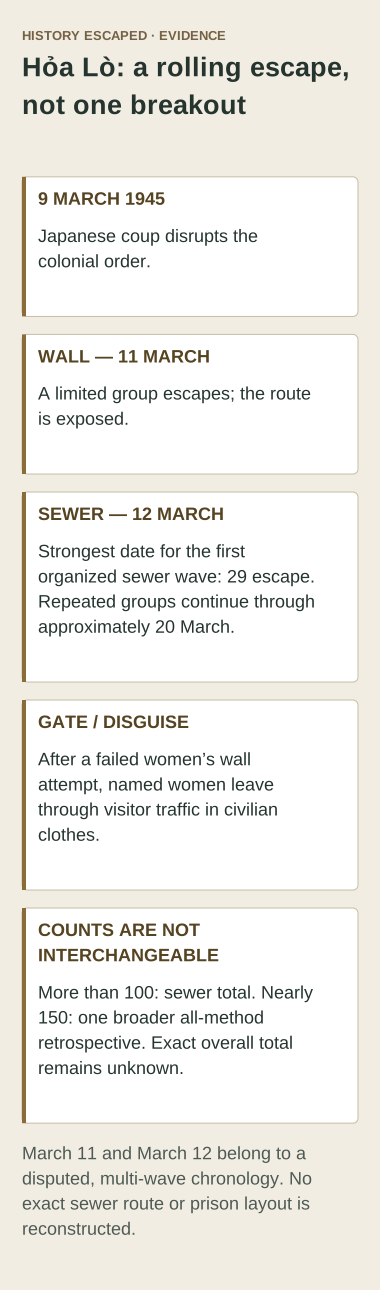
March 11 and March 12 belong to a disputed, multi-wave chronology. No exact sewer route or prison layout is reconstructed.
Problem → response
Escape was a sequence of problems
Each response solved a practical obstacle while often creating the next one.
- 01→
Obstacle
High fortified walls
Hỏa Lò had high walls, guard towers and anti-escape features designed to make external access difficult.
Response
The first escape group used roof access and improvised blanket ropes during the temporary collapse of routine guarding.
- 02→
Obstacle
Segregation of political prisoners
Political prisoners normally had fewer opportunities for movement and access to weak points than ordinary prisoners.
Response
The Japanese takeover temporarily loosened internal control, allowing political prisoners to move or disguise themselves within less-controlled sections.
- 03→
Obstacle
Wall route exposed
Noise and crowding during the March 11 wall attempt alerted Japanese guards and ended that method.
Response
Remaining prisoners shifted to sewer and gate-disguise methods.
- 04→
Obstacle
Uncertain sewer path
Prisoners did not initially know whether the underground drain reached the street or whether it was passable.
Response
Nguyễn Huy Hòa and Trần Văn Cử reconnoitered the route before the first mass wave.
- 05→
Obstacle
Need to disappear after exit
Large groups of escaped political prisoners remaining together would have been easy to detect.
Response
The plan sent prisoners out in small groups and instructed them to disperse toward political contacts.
The final accounting
Outcome
First sewer-wave escapees
All 29 in the first organized wave are reported as reaching the outside.
Sewer-route political prisoners escaped
More than 100 over the March escape wave; an exact integer is not securely documented.
Broader political-prisoner escape total
More than 100 securely; one major retrospective gives nearly 150 across wall, sewer and gate methods.
Selected chronology
Selected chronology
Japan overthrows the French administration
Japanese forces move against French authorities across Indochina and take control of Hỏa Lò amid disorder.
Prison discipline temporarily loosens
Political prisoners gain greater freedom of movement between some sections and begin converting the disorder into escape opportunities.
Wall escape
Trần Đăng Ninh and a limited group of prisoners escape over the wall before guards discover the route and shut it down.
Women's wall attempt fails
A group of female political prisoners attempts the wall route but is discovered and forced back.
Sewer route is prepared
Prisoners scout the drain from Camp J and assemble 29 heavily sentenced prisoners for the first wave.
First mass sewer breakout
The strongest chronology places the first organized sewer escape here; an older Hỏa Lò retrospective gives March 11.
Escape wave continues
More political prisoners leave through the sewer in small groups; women and others also exploit visitor traffic and civilian disguises.
August Revolution succeeds in Hanoi
Several named Hỏa Lò escapees had returned to revolutionary organizing and participated in the broader struggle that culminated in the Hanoi uprising.
Evidence discipline
What the record supports
Status labels distinguish secure conclusions from uncertainty and rejected claims. Color is never the only signal.
MYTH
The March 1945 Hỏa Lò escape was one single sewer breakout.
The escape unfolded through at least three methods: wall climbing, repeated sewer waves and civilian disguise through the gate.
Sources: SRC-001, SRC-002, SRC-003DOCUMENTED
The March 11 wall escape occurred before the mass sewer operation.
Hỏa Lò and Nhân Dân accounts consistently place the wall breakout on March 11 and the dominant sewer chronology on March 12.
Sources: SRC-002, SRC-003, SRC-004WELL-SUPPORTED
The first organized sewer breakout began on March 12, 1945.
Later detailed Hỏa Lò material, the Đỗ Mười account, the 2025 Hanoi commemoration and Nhân Dân all give March 12. An older Hỏa Lò article gives March 11.
Sources: SRC-001, SRC-003, SRC-004, SRC-005, SRC-006WELL-SUPPORTED
The first organized sewer wave contained 29 prisoners.
The detailed Hỏa Lò reconstruction and Nhân Dân agree on 29 in the first completed wave, though planning references sometimes say about thirty.
Sources: SRC-001, SRC-003WELL-SUPPORTED
More than 100 political prisoners escaped through the sewer route.
Repeated Hỏa Lò and Hanoi cultural-institution accounts state that subsequent groups continued using the sewer and pushed the total above one hundred.
Sources: SRC-001, SRC-004, SRC-011DISPUTED
Exactly 150 political prisoners escaped in March 1945.
Nhân Dân gives 'nearly 150' across the broader escape episode, while institutional Hỏa Lò sources more conservatively use 'more than 100.' No complete consolidated list was located.
Sources: SRC-003, SRC-004MYTH
All March escapees used the sewer.
Some men escaped over the walls and several women and men later escaped through the gate disguised as civilians.
Sources: SRC-002, SRC-003MYTH
The women prisoners abandoned escape after their wall attempt failed.
Several women later obtained civilian clothing and escaped by blending with visitors at the gate.
Sources: SRC-002, SRC-009MYTH
Japanese authorities formally released the March escapees.
The escapees left without formal release; other political prisoners remained confined and were released only later as the August political crisis developed.
Sources: SRC-002, SRC-003, SRC-004WELL-SUPPORTED
Former Hỏa Lò escapees later played roles in the August Revolution.
Named escapees including Trần Tử Bình, Đỗ Mười, Lê Trọng Nghĩa and Phạm Thị Vân returned to revolutionary activity in the months before August 1945.
Sources: SRC-009, SRC-010, SRC-011, SRC-014