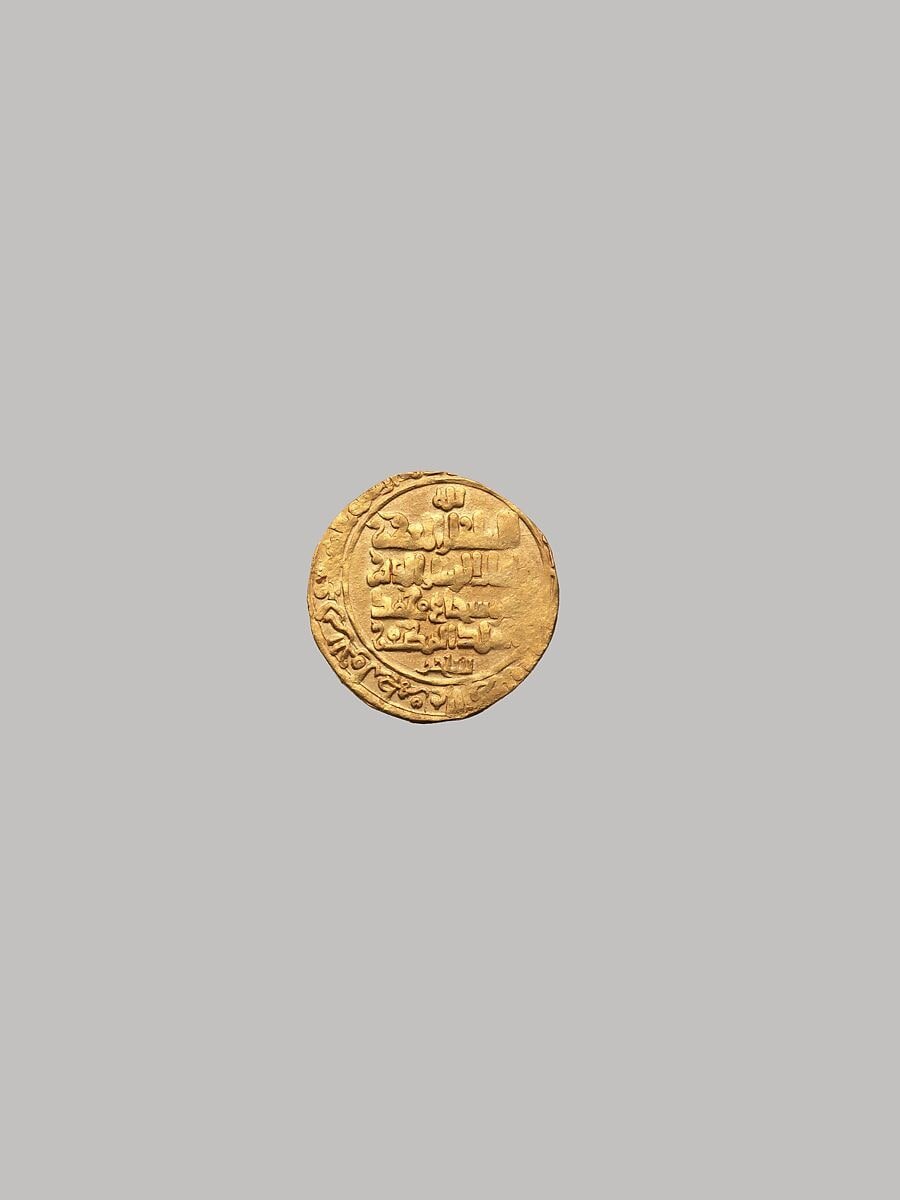
Sultan Ahmad Sanjar escaped from captivity in the autumn of 1156, but the word "escape" hides a medieval source problem. The broad event is secure: the Oghuz Turkmens had defeated and captured the Great Seljuq ruler in 1153, held him until his escape in 551 AH/1156. Sanjar reached Tirmidh, crossed back toward Khorasan, and returned to Merv.
The mechanics are less uniform. One Persian chronicle tradition credits Sanjar's former mamluk and commander Moʾayyed Ay-Aba with approaching the place of captivity, deceiving the guards with a promised stipend, and taking the sultan away. Ibn al-Athir, writing in Arabic several decades later, says more simply that Sanjar escaped with several emirs and went to the fortress of Tirmidh. Other traditions credit the ruler of Tirmidh with sending a rescue force or describe Sanjar slipping away during a hunt.
The case is therefore a documented escape with disputed rescue mechanics—not a single cinematic breakout preserved identically by every chronicler.
At a Glance
- Capture: 548 AH / 1153
- Escape: Ramadan 551 AH, corresponding to roughly 18 October–16 November 1156
- Captors: Oghuz Turkmens, often called Ghuzz or Ḡozz in older sources
- Principal escape helper in one strong Persian tradition: Moʾayyed Ay-Aba
- First secure refuge after escape: Tirmidh, on the Oxus
- Return: Sanjar subsequently crossed back into Khorasan and returned to Merv
- Captivity length: Source-conflicted; Ibn al-Athir’s chronology runs from 30 July 1153 into Ramadan 551 AH, while other Persian chronicle traditions give shorter totals
- Long-term outcome: Sanjar regained personal freedom but not his former empire; he died in Merv in 1157
- Central source conflict: Whether the escape was engineered chiefly by Ay-Aba, by forces connected to Tirmidh, or by Sanjar during a hunting opportunity
Defeat by people from the Seljuq world
Sanjar had ruled the eastern Seljuq lands for decades and had become the dominant political figure in Khorasan. The Oghuz who destroyed that position were not foreign invaders in a simple modern sense. The Seljuq dynasty itself was of Oghuz Turkic origin, while the groups confronting Sanjar in 1153 were pastoral Oghuz communities who had moved into the Balkh and Tukharistan region and clashed with the administration over taxation, pasture, and political control.
By the early 1150s tensions had become military. Local officials attacked Oghuz communities around Balkh, and the conflict widened. According to Ibn al-Athir, the Oghuz attempted to placate Sanjar with offers of tribute and submission, but the sultan advanced against them.
The resulting campaign was disastrous. Sanjar's army was defeated in 1153, and after further fighting and retreat he fell into Oghuz hands. Modern scholarship treats the defeat as the decisive collapse of Great Seljuq authority in Khorasan.
The capture did not immediately look like the imprisonment of an ordinary defeated enemy. Ibn al-Athir says the Oghuz leaders initially continued to treat Sanjar ceremonially as sultan, standing before him and professing allegiance. The contradiction was stark: he retained the symbols of sovereignty while his captors exercised the power.
A captive sultan
The ceremonial language did not make the captivity unreal. Sanjar could not freely leave, command his former state, or halt what happened to Khorasan.
Encyclopaedia Iranica’s Sanjar biography summarizes the captivity as lasting about three and a half years and describes Sanjar and his queen as humiliated prisoners. Ibn al-Athir places the captivity from 6 Jumada I 548 AH, which his modern translator equates with 30 July 1153, until Ramadan 551 AH in the autumn of 1156. A separate Iranica article on Moʾayyed Ay-Aba, however, transmits Persian chronicle traditions giving two years or two and a half years. The capture in 1153 and escape in 1156 are secure; the duration formula is not uniform across the surviving tradition.
During those years, Oghuz forces devastated major centers of Khorasan. Merv, Nishapur, Tus, and other places suffered repeated plunder and killing. D. G. Tor's modern study of Khorasan argues that the catastrophe should be understood as a political and human-made collapse following Sanjar's capture rather than as a long environmental decline.
The political vacuum also produced rival centers of authority. Commanders who had served Sanjar tried to preserve parts of the Seljuq order. One of the most important was Moʾayyed Ay-Aba, a former mamluk who established himself at Nishapur and ruled in Sanjar's name while fighting Oghuz forces.
That matters because the eventual escape was not simply one old ruler finding an unguarded door. Sanjar still had loyal military clients, regional allies, and men whose own legitimacy benefited from presenting themselves as his servants and rescuers.
What Moʾayyed Ay-Aba is said to have done
The clearest detailed rescue mechanism appears in the Persian historiographical tradition summarized by Encyclopaedia Iranica's biography of Moʾayyed Ay-Aba.
According to that reconstruction, Ay-Aba reached the place near Balkh where Sanjar was being held. He induced the Oghuz guards to cooperate by promising them a stipend or payment. He then removed Sanjar from captivity and carried him away across the Oxus toward his former domains.
That account is supported by several Persian chronicles cited together by Iranica, including Nishapuri, Ravandi, Rashid al-Din, Mostawfi, and later authors. It is therefore more than a detail from one isolated retelling.
Yet the exact choreography cannot be treated as contemporary eyewitness testimony. These works were written at different distances from the event and often drew upon earlier historical traditions that no longer survive independently. The promised stipend is a plausible and repeatedly transmitted mechanism, but the sources do not give a modern operational record of guards, numbers, exact locations, or timing.
Even the identity of the rescuing force is not perfectly stable across the tradition.
Tirmidh and the alternative rescue tradition
Ibn al-Athir provides the strongest independent chronological anchor. Under the year 551 AH, he says Sanjar escaped from Oghuz captivity with several emirs and went to the fortress of Tirmidh. There he took measures to defend himself against the Oghuz.
That version does not name Ay-Aba in the escape passage. It concentrates on the result: Sanjar was free, accompanied by loyal emirs, and had reached a defensible position beyond immediate Oghuz control.
A Central Asian historical tradition, drawing on Juwayni, gives another attribution. It says Ahmad ibn Abu Bakr, ruler of Tirmidh and a descendant of the local commander Qumaj, sent a large mounted force that rescued Sanjar and brought him to Tirmidh. The figure of one thousand horsemen belongs to that tradition and should not be treated as a securely cross-checked count.
These versions are not necessarily impossible to reconcile. Ay-Aba could have helped compromise or negotiate past the immediate guards while forces connected to Tirmidh secured the route or reception. But the surviving evidence does not prove such a synthesis.
The most defensible reconstruction therefore stops at a higher level: Sanjar's escape was assisted, the helper network was connected to surviving Seljuq commanders and Tirmidh, and the fugitive sultan reached Tirmidh before attempting to restore authority in Khorasan.
The hunting story
A different version became prominent in older modern histories. In The Heart of Asia, published in 1899, Francis Henry Skrine and Edward Denison Ross wrote that Sanjar refused earlier opportunities to escape while his wife remained a captive and fled only after her death, taking advantage of a hunting expedition.
That story is memorable because it supplies motive, loyalty, and a clean moment of action. It is also much harder to control against the more source-critical reconstruction.
Modern Encyclopaedia Iranica confirms that Sanjar's queen shared his captivity but does not make the hunting episode central to the escape. Its article on Ay-Aba instead gives an assisted rescue based on a cluster of Persian chronicles. Ibn al-Athir likewise says only that Sanjar escaped with several emirs and reached Tirmidh.
The hunting story therefore belongs in the history of the escape tradition, not in the secure mechanical core. It may preserve a genuine circumstance of movement outside close confinement, but the evidence used here does not justify narrating a specific hunt as established fact.
Across the Oxus
Once at Tirmidh, Sanjar had achieved the decisive objective: he was outside direct Oghuz custody and inside a defensible political space.
Ibn al-Athir says he then moved from Tirmidh toward the Oxus with the intention of crossing back into Khorasan. The regional balance had shifted while he was captive. Khwarazmshah Atsiz and Sanjar's Qarakhanid nephew Mahmud were fighting the Oghuz, while Ay-Aba controlled territory around Nishapur. Other Turkic groups recalculated their loyalties as the Oghuz coalition fragmented.
Sanjar crossed back and returned to Merv in Ramadan 551 AH. The capital he recovered bore little resemblance to the center of power he had lost in 1153.
The Oghuz had sacked Merv repeatedly. Across Khorasan, administrative institutions, religious establishments, urban populations, and political networks had been badly damaged. Personal escape could not reverse that destruction.
This is the central historical irony of the case. The man who had once commanded the most powerful state in the eastern Islamic world recovered his physical liberty only after the political structure that made him sultan had largely ceased to function.
Freedom without restoration
Sanjar attempted to resume authority after his return. The effort had severe limits.
His name still possessed symbolic weight. Commanders, tribal groups, and regional rulers could rally to a restored Seljuq sultan in ways they could not rally to an ordinary fugitive. Ibn al-Athir records groups turning back toward him as he moved from Tirmidh and crossed the Oxus.
But the practical foundations of his rule were fractured. Ay-Aba had developed his own territorial base. Oghuz groups still controlled important places. Khwarazm, Qarakhanid rulers, Ghurids, and local commanders were all pursuing their own interests.
Sanjar survived his return only briefly. He died at Merv in the spring of 1157. Modern scholarship consequently treats his death as the effective end of Great Seljuq power in eastern Iran and Khorasan.
His mausoleum at Merv survived as the most visible monument attached to his name. UNESCO describes it as one of the outstanding architectural achievements of the Seljuq period and a central monument within the World Heritage site of Ancient Merv.
What can be reconstructed securely
For a twelfth-century escape, the evidentiary base is unusually good in one sense and limited in another.
The broad chronology is strong. Multiple traditions agree that Sanjar was captured by the Oghuz in 1153, escaped in 1156, reached Tirmidh, and returned to Merv, but they do not preserve one uniform captivity-duration count. Ibn al-Athir narrows the escape to Ramadan 551 AH, corresponding approximately to 18 October through 16 November 1156.
The exact mechanics are weaker. The Ay-Aba tradition gives bribed or induced guards. The Tirmidh tradition gives a rescue force. The older hunting tradition gives a moment of opportunity after the queen's death. None should be erased, and none should be silently fused into a detailed scene the sources never actually preserve.
The most defensible conclusion is also the most historically useful one. Sultan Ahmad Sanjar did not regain freedom through a formal Oghuz release. He escaped from captivity with assistance, reached Tirmidh, and crossed back toward his ruined capital. The uncertainty lies in who deserves primary credit and exactly how the captors' control was broken—not in whether the escape occurred.
Evidence discipline
What the record supports
Status labels distinguish secure conclusions from uncertainty and rejected claims. Color is never the only signal.
DISPUTED
Sanjar was held for exactly three and a half years in every surviving tradition.
Ibn al-Athir’s date range implies more than three years and one Iranica synthesis summarizes roughly three and a half years, while the Iranica article on Moʾayyed Ay-Aba transmits Persian-chronicle durations of two or two and a half years. The escape in 1156 is secure; the stated duration is not uniform.
Sources: SRC-001, SRC-002, SRC-003MYTH
Sanjar was formally released by the Oghuz in 1156.
The principal traditions describe escape or rescue, not an agreed political release. Ibn al-Athir explicitly says Sanjar escaped.
Sources: SRC-001, SRC-003WELL-SUPPORTED
Moʾayyed Ay-Aba personally engineered Sanjar's escape by promising payment to the guards.
Encyclopaedia Iranica identifies this as the account preserved across several Persian chronicles. Ibn al-Athir confirms the escape and Tirmidh refuge but does not name Ay-Aba in the escape passage, so the precise helper attribution remains less secure than the escape itself.
Sources: SRC-002, SRC-003LATER CLAIM
Ahmad ibn Abu Bakr of Tirmidh sent exactly one thousand horsemen who rescued Sanjar.
This appears in a Juwayni-derived Central Asian tradition but is not corroborated by the stronger independent accounts at the same level of detail.
Sources: SRC-007DISPUTED
Sanjar escaped during a hunting expedition after refusing earlier chances while his queen remained captive.
The story appears prominently in older modern history drawing on later Persian chronicles, but modern source-critical summaries instead foreground an assisted escape and do not establish the hunting scene as the secure mechanism.
Sources: SRC-001, SRC-002, SRC-008MYTH
Sanjar was held continuously in one fixed prison at Balkh for the entire three-year captivity.
The Oghuz captivity was politically and geographically mobile; sources describe Sanjar being taken through Oghuz-controlled Khorasan and retaining ceremonial royal status at points. Balkh is important to the capture and final rescue traditions, not proof of one continuous prison site.
Sources: SRC-001, SRC-003, SRC-005MYTH
Sanjar's escape restored the Great Seljuq Empire in Khorasan.
He returned to Merv and briefly recovered personal authority, but Khorasan remained fragmented and his death in 1157 marked the effective end of Great Seljuq power there.
Sources: SRC-001, SRC-002, SRC-004, SRC-006Evidence diagram
Three traditions and one secure route to freedom
Medieval accounts disagree about the mechanism and duration, then converge on Tirmidh, the Oxus, and Merv.
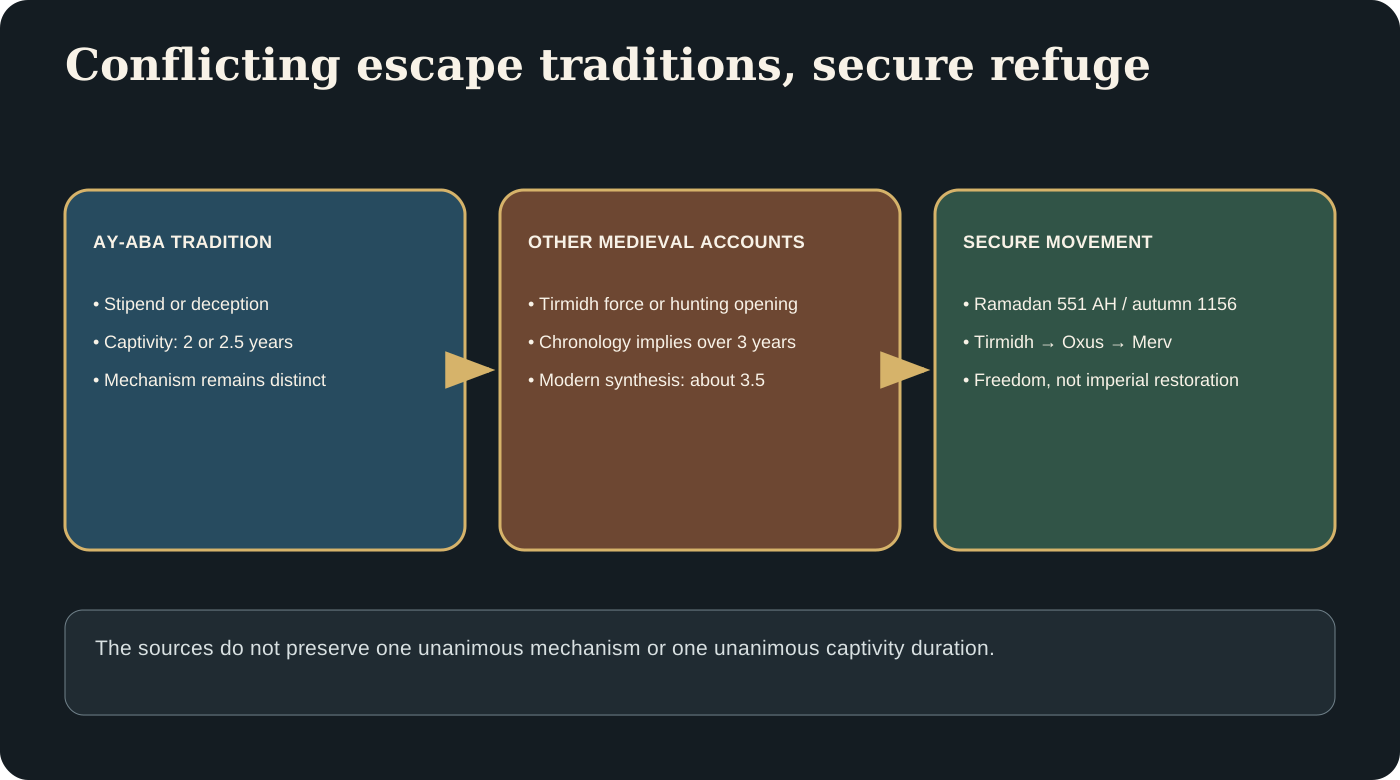
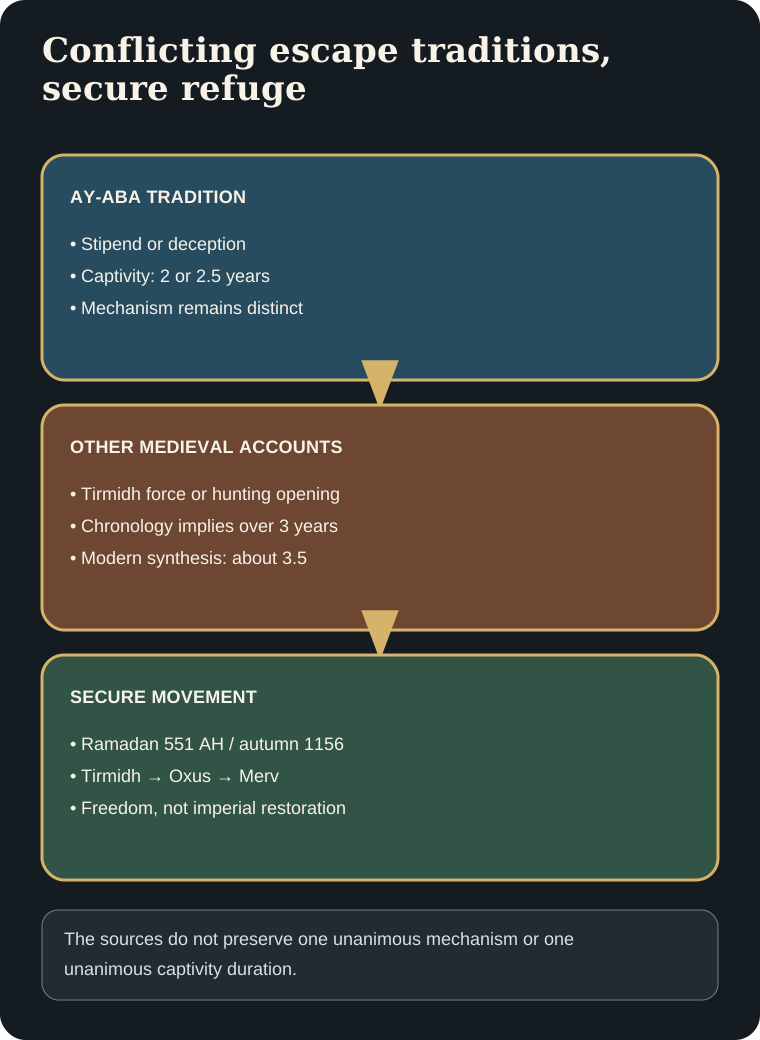
Medieval accounts disagree about the mechanism and duration, then converge on Tirmidh, the Oxus, and Merv.