James VI recovered his freedom from the Ruthven lords on 27 June 1583, ten months after a coalition of Scottish nobles had seized control of his person and government. The episode was not a prison break in the usual sense. James had spent much of his captivity moving among royal and noble residences, attending councils, receiving ambassadors, and continuing to appear publicly as king. What he lacked was the ability to choose his advisers and direct his government without the approval of the men who had taken him.
That form of royal captivity made the escape possible. By the summer of 1583, James had persuaded his captors that he could be allowed a hunting progress to Falkland. From there he moved toward St Andrews, where supporters were gathering beyond the Ruthven faction’s control.
Sir James Melville, who was involved in the counter-move, remembered the seventeen-year-old king meeting allies at Dairsie and becoming visibly elated. In Melville’s words, James believed himself free “like a bird flown out of a cage.” The phrase captures the political meaning of the escape more accurately than later stories that reduce it to a dramatic dash through the gates of St Andrews Castle.
At a Glance
- Seizure: August 1582, in the episode known as the Raid of Ruthven
- Principal captor: William Ruthven, 1st Earl of Gowrie, with allied nobles
- First detention site: Ruthven Castle, now Huntingtower Castle, near Perth
- Nature of captivity: control of the king’s person, household, advisers, and government rather than continuous cell imprisonment
- Escape date: 27 June 1583
- Departure point: Falkland
- Key intermediate point: Dairsie, where James met supporters
- Secure endpoint: St Andrews
- Important source correction: Melville says James initially lodged in an open inn at St Andrews before arrangements were made to secure him in the castle
- Immediate outcome: the Ruthven regime collapsed and James began reorganizing government under his own authority
The Raid of Ruthven
James had been king since infancy, but by 1582 he had begun to exercise greater personal authority. Two men dominated his court: Esmé Stuart, Duke of Lennox, a French-born cousin and royal favorite, and James Stewart, Earl of Arran.
Their influence alarmed a coalition of nobles. Lennox’s French connections and suspected Catholic sympathies made him especially objectionable to hard-line Protestants and to men who favored a close relationship with England. Arran had accumulated enemies through his own aggressive political rise.
On 22 or 23 August 1582, while James was in Perthshire for hunting, William Ruthven and allied nobles maneuvered the young king into Ruthven Castle. David Moysie’s near-contemporary chronicle uses 23 August; some later reconstructions use the previous day. What followed is not seriously disputed: James was no longer free to leave or to choose the men surrounding him.
Historic Environment Scotland describes the event as the Ruthven Raid and states plainly that James was held against his will for about ten months. The Lords Enterprisers removed Lennox and Arran from effective influence and governed through possession of the royal person.
More than a religious coup
Religion was central to the crisis, but it was not the only motive. The Ruthven coalition drew heavily from nobles and ministers hostile to Lennox and supportive of the Reformed Kirk. The General Assembly approved the political change, and Lennox was eventually forced out of Scotland. English policy also mattered because the new regime was more congenial to Elizabeth I than a court dominated by a French favorite.
Modern archival work complicates that familiar explanation. Historian Steven J. Reid argues that William Ruthven’s financial position deserves much more weight than earlier accounts allowed. As royal expenditure increased under Lennox, Gowrie was exposed to substantial crown debts for which he could be held responsible. Control of the king also gave the new regime the ability to cut expenditure and protect Gowrie from that liability.
The coup therefore combined religious, diplomatic, personal, and financial interests. Describing it simply as Protestant nobles rescuing a young king from Catholic influence reproduces the raiders’ own justification more readily than it explains their full political calculation.
A king under guard
After Ruthven Castle, James did not remain in one locked chamber. He moved through Perth, Stirling, Holyrood and other royal residences while the coalition governed around him.
That mobility sometimes created the appearance that the king had accepted the new arrangement. Official proclamations claimed that he was not being detained against his will. The claim served an obvious political purpose: government by nobles who openly admitted abducting their sovereign would have been difficult to legitimize.
Other evidence shows the limits of James’s freedom. The best-known story describes the king trying to leave at Stirling and being physically blocked, after which the Master of Glamis supposedly remarked that it was better for a child to weep than for grown men to suffer. The anecdote appears in later historical traditions and should not carry more weight than the broader documentary evidence.
The broader point is secure without it. The lords controlled access to James, removed the advisers they opposed, and used his authority while preventing him from recovering independent command.
Their greatest success was the removal of Lennox. James’s favorite was forced to leave Scotland and died in France in May 1583. The king never forgot the connection between the Ruthven regime and Lennox’s exile.
James begins to create an opening
The regime weakened during the first half of 1583. Elizabeth I did not give the Ruthven lords all the money or political backing they hoped to receive. French diplomacy meanwhile gave James another source of leverage. Reid’s research emphasizes that the king himself played an active role in exploiting these divisions rather than waiting passively for rescue.
James gradually altered his behavior toward his captors. Instead of openly resisting at every opportunity, he appeared more cooperative. That made it easier for the lords to believe that the immediate danger of losing control over him had diminished.
He also cultivated nobles outside the core Ruthven faction. Among the men who would support his recovery of power were the earls of Huntly, Argyll, Crawford and others whose political interests placed them against Gowrie’s dominance.
By May and June, the king was able to expand his movements through a royal progress and hunting trip that brought him to Falkland Palace in Fife.
The Falkland opening
Falkland was the decisive staging point. Accounts transmitted through Sir James Melville describe James planning for friendly nobles to assemble at St Andrews while avoiding advance notice to the most dangerous members of the Ruthven party.
Melville later said he regarded the plan as risky because the excluded lords could discover what was happening and gather armed supporters faster than some of James’s allies could arrive. James proceeded anyway.
An invitation associated with his great-uncle Robert Stewart, Earl of March, provided an ordinary reason to move toward St Andrews. Later retellings embellish the invitation with a feast and provisions that supposedly had to be eaten before they spoiled. The useful historical point is less theatrical: travel, hunting and hospitality were normal parts of a royal progress, and James could exploit that normality.
On 27 June he left Falkland.
Dairsie: the moment James believed he was free
Melville’s memoir supplies the most vivid early description of what followed. James had the Earl of March, the provost of St Andrews and other supportive barons meet him at Dairsie.
Once he joined them, Melville wrote, the king considered himself at liberty and showed extraordinary relief. He continued toward St Andrews while hawking. The episode matters because it identifies the escape as a transfer of political control rather than a single physical barrier crossed at Falkland.
James was free when enough loyal force surrounded him that the Ruthven lords could no longer dictate his movement. Dairsie was therefore an important threshold even though St Andrews became the public center of the counter-revolution.
This also explains why accounts that say James simply “escaped into St Andrews Castle” compress the story too far.
The St Andrews Castle problem
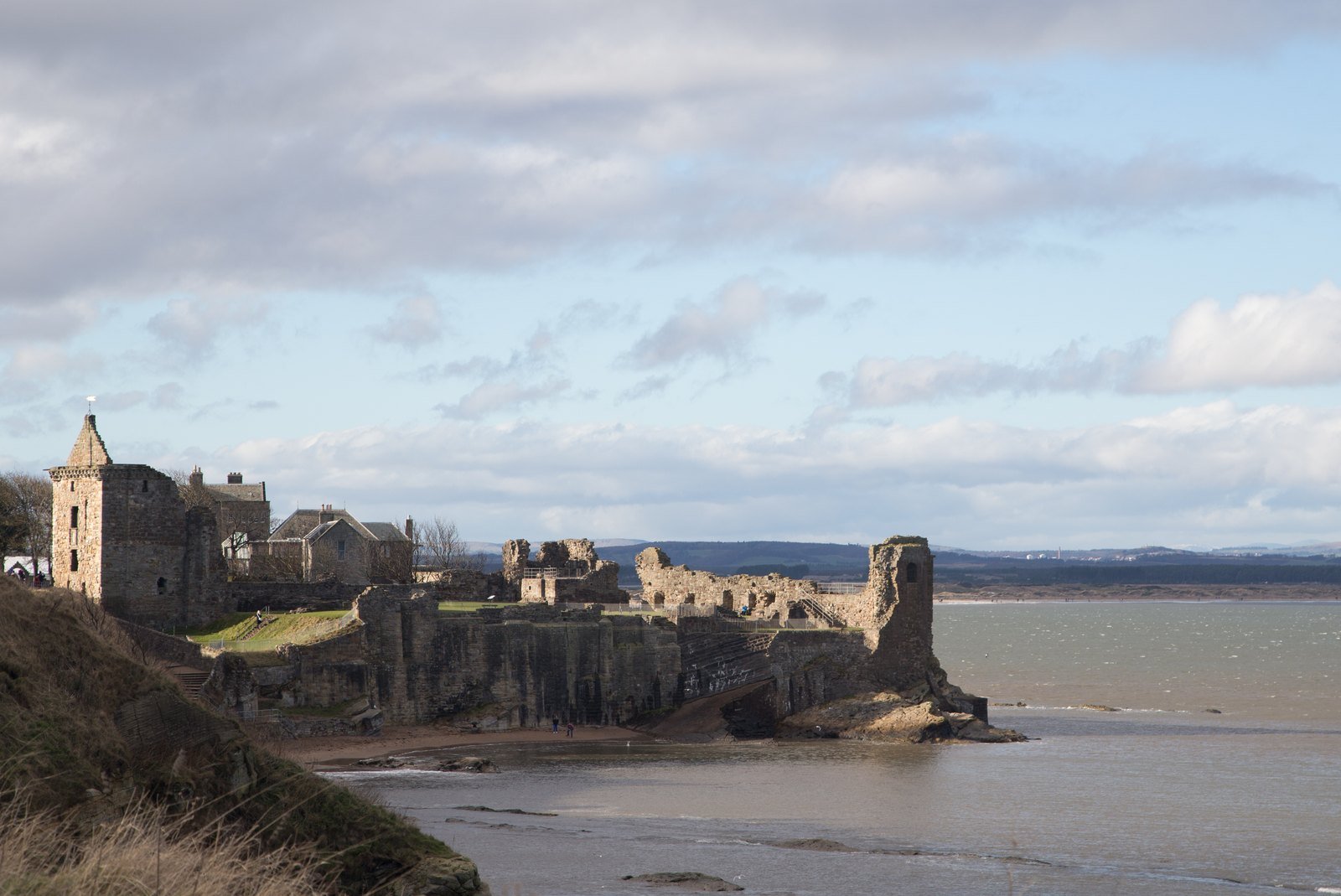
The most common modern version has James ride directly into St Andrews Castle and order the gates shut behind him. Melville remembered a less tidy sequence.
According to his memoir, James first lodged in an old inn at St Andrews whose defenses were poor. Melville was alarmed by the weakness of the position. He asked the provost what dependable force was available in the town, then approached the bishop controlling St Andrews Castle and arranged for the fortress to be ready to receive the king.
That sequence does not make the castle unimportant. St Andrews Castle provided the defensible center James needed once his move became openly political. It does mean that the image of a single dramatic gate-closing moment should be treated as later compression rather than the only secure reconstruction.
The escape had already succeeded politically before James was safely established behind castle walls.
The Ruthven lords lose control
News of the move spread rapidly. Nobles associated with both factions began moving toward St Andrews. James now had enough support to prevent the Ruthven leaders from simply surrounding him and restoring their earlier control. Orders limited how large a retinue nobles could bring to court, reducing the risk that St Andrews would become the site of an armed reversal.
The Earl of Gowrie himself came to the king and sought reconciliation. Sources differ over whether Gowrie had quietly tolerated James’s move, realized too late that control had been lost, or tried to regain influence once the counter-revolution was underway.
James initially chose conciliation. Gowrie received a pardon, and in December a formal remission under the Great Seal covered his role in the Ruthven Raid.
That temporary clemency did not erase James’s resentment or end factional conflict. When another crisis involving the former Ruthven lords developed in 1584, Gowrie was arrested, tried and executed. Those later reprisals belong to the political aftermath rather than to the mechanics of the 1583 escape.
What changed on 27 June
James’s freedom did not immediately produce stable personal rule. Arran soon returned to favor, and the political settlement after Ruthven generated new conflict with Presbyterian ministers and nobles. James would continue to navigate factional coups and challenges for several more years.
Even so, 27 June was a major dividing line. Before that day, a coalition of nobles governed because it controlled access to the king. Afterward, James could decide which nobles entered his presence, summon his own supporters, and reorganize the council. The person of the monarch had once again become the center from which political authority flowed rather than the prize held by one faction.
Recent scholarship treats the episode as evidence of James’s political agency. He was only seventeen, yet his recovery of liberty depended on timing, deception, coalition-building and an ability to exploit divisions among much older nobles and foreign diplomats.
What the sources actually support
The secure outline is straightforward. James VI was seized against his will during the Ruthven Raid in August 1582. The coalition led by Gowrie controlled his person and government for about ten months, forced Lennox from political power and eventually out of Scotland, and publicly insisted that the king approved their actions.
James used the weakening of that coalition to widen his freedom of movement. At Falkland he arranged a move toward St Andrews. On 27 June 1583 he met supportive nobles at Dairsie, believed himself beyond his captors’ power, and continued to St Andrews.
The exact dramatic endpoint is less certain than later summaries imply. Sir James Melville says the king first lodged in an inadequately defended inn and that the castle was prepared afterward. Later histories often collapse those stages into a direct ride through the castle gates.
That difference is worth keeping. James VI did not recover his liberty because one door closed behind him. He recovered it because the political balance around his person changed faster than the Ruthven lords could reverse it.
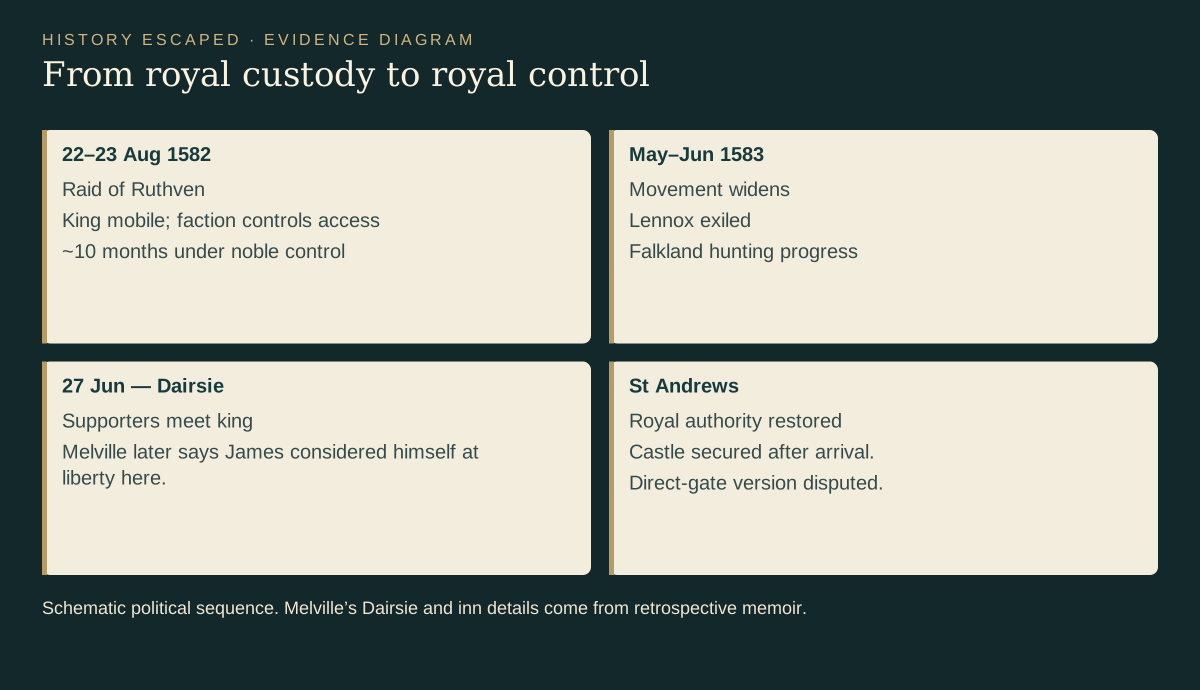
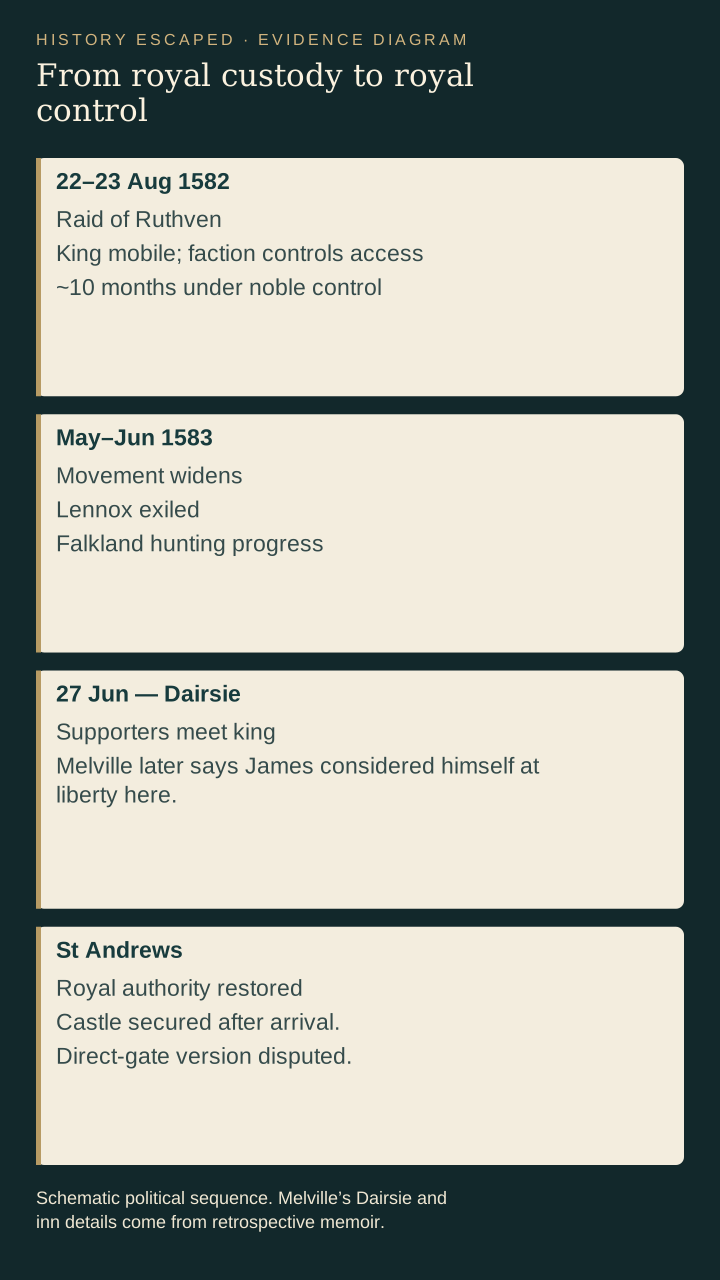
Evidence diagram
From royal custody to royal control
Schematic political sequence. Melville’s Dairsie and inn details come from retrospective memoir.
- 01
Broaden movement under Ruthven supervision
James used the weakening of the Ruthven coalition to secure greater freedom for a progress and hunting activity around Falkland. WELL-SUPPORTED. Sources: SRC-002, SRC-005.
- 02
Prepare support at St Andrews
James arranged for nobles outside the core Ruthven faction to gather in the St Andrews area while limiting advance warning to hostile lords. WELL-SUPPORTED. Sources: SRC-003, SRC-005.
- 03
Leave Falkland
On 27 June James moved from Falkland toward St Andrews under the ordinary cover of royal travel and hunting. DOCUMENTED. Sources: SRC-003, SRC-004.
- 04
Meet supporters at Dairsie
Melville records James meeting the Earl of March, the provost of St Andrews and other barons at Dairsie, after which the king believed himself at liberty. LATER CLAIM. Sources: SRC-003.
- 05
Establish control at St Andrews
James reached St Andrews, where Melville helped arrange use of the castle as a defensible royal base and supporters prevented the Ruthven faction from reasserting custody. WELL-SUPPORTED. Sources: SRC-003, SRC-004, SRC-006.
Schematic political sequence. Melville’s Dairsie and inn details come from retrospective memoir.
Selected chronology
Selected chronology
Raid of Ruthven
James was seized at Ruthven Castle by Gowrie and allied nobles; Moysie gives 23 August, while some modern chronologies use 22 August.
Lennox forced from power
The Ruthven regime removed James’s favorite Esmé Stuart, Duke of Lennox, from effective influence and pressed for his departure from Scotland.
Lennox leaves Scotland
Lennox departed for France, where he died in May 1583.
James expands his freedom of movement
The king arranged a wider royal progress and hunting activity as the Ruthven coalition weakened.
Escape from Ruthven control
James left Falkland, met supporters in Fife, and moved to St Andrews beyond the Ruthven lords’ effective custody.
Counter-revolution consolidated
The Ruthven lords were ordered away from court or required to approach without large armed followings, while James reorganized his advisers.
Gowrie receives formal remission
A remission under the Great Seal covered Gowrie and his servants for their role in the Ruthven Raid.
Evidence discipline
What the record supports
Status labels distinguish secure conclusions from uncertainty and rejected claims. Color is never the only signal.
MYTH
James VI was voluntarily cooperating with the Ruthven regime throughout 1582–83.
The raiders publicly claimed the king was not detained against his will, but modern scholarship and institutional histories describe a forcible captivity in which the coalition controlled his person and government.
Sources: SRC-001, SRC-002, SRC-009MYTH
The Ruthven Raid was motivated only by Protestant opposition to Catholic influence.
Religious and Anglo-French politics were important, but Steven Reid’s archival research emphasizes Gowrie’s exposure to royal debt and the regime’s financial interests as another major motive.
Sources: SRC-002DISPUTED
James escaped directly from Falkland into St Andrews Castle and had the gates immediately shut behind him.
Later summaries often compress the escape this way. Sir James Melville instead says James first reached St Andrews and lodged in an inadequately defended inn; Melville then arranged for the castle to receive him.
Sources: SRC-003, SRC-010LATER CLAIM
Dairsie was an important threshold in the escape.
Melville’s memoir states that James met the Earl of March, the St Andrews provost and other barons at Dairsie and there believed himself at liberty.
Sources: SRC-003, SRC-007DISPUTED
The exact seizure date in August 1582 is uncontested.
David Moysie gives 23 August; some modern chronologies use 22 August. The difference does not affect the secure 27 June 1583 escape date.
Sources: SRC-009, SRC-002MYTH
James’s escape was merely a rescue organized by older nobles around him.
Recent scholarship argues that James actively manipulated the weakening Ruthven coalition, foreign diplomacy, his own behavior and the arrangement of supporters to negotiate and create his route to freedom.
Sources: SRC-002, SRC-005