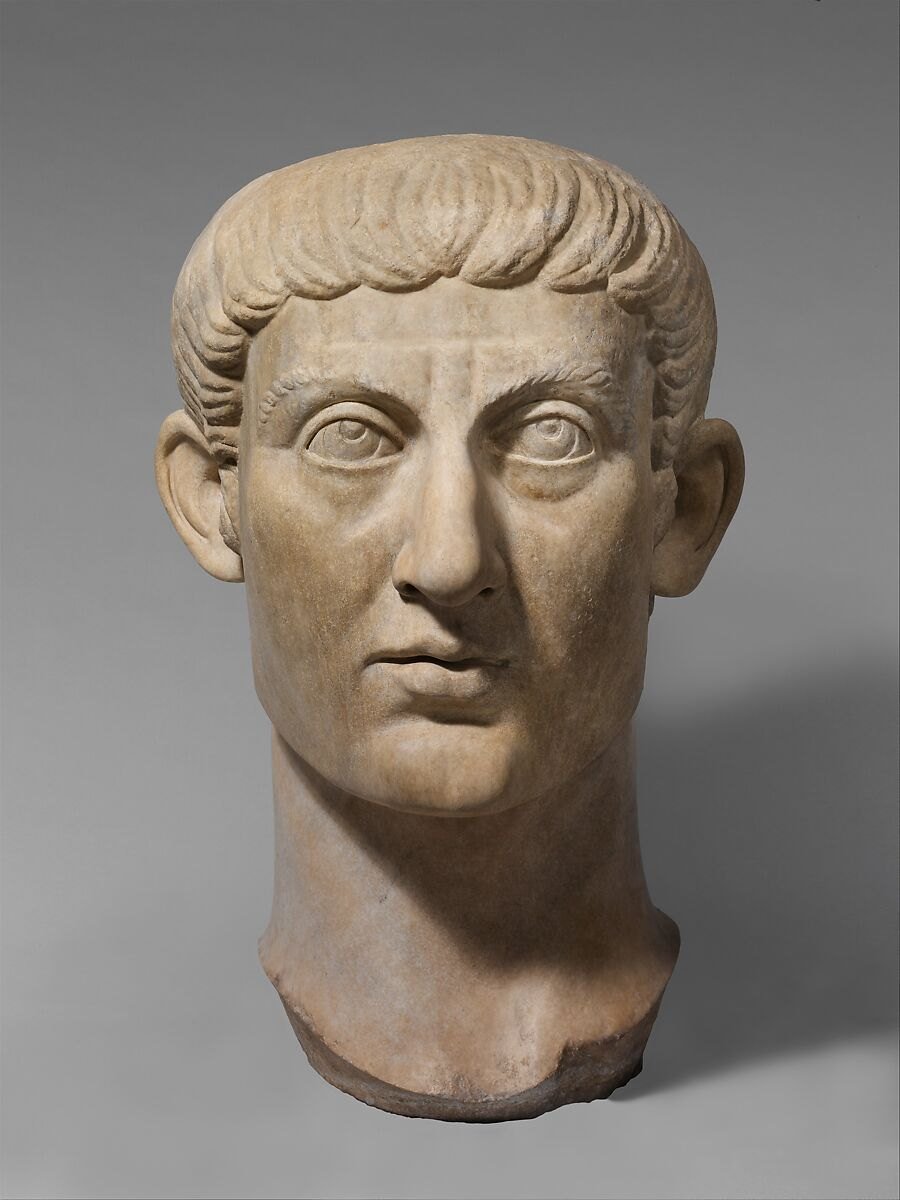
Constantine’s flight from the court of Galerius belongs to the small class of ancient escape stories that may have changed the succession of an empire. It is also a story in which nearly every dramatic detail has been argued over.
The basic sequence is secure. Constantine, the adult son of the western emperor Constantius, had spent years in the eastern imperial establishment under Diocletian and Galerius. When Diocletian and Maximian abdicated on 1 May 305, Constantius became senior Augustus in the West—but Constantine was passed over for promotion. Instead, Severus and Maximinus Daia became the new Caesars. At some point afterward, Constantius asked that his son be allowed to join him.
Constantine left Galerius’s orbit, traveled west with exceptional speed, joined his father in Gaul, crossed to Britain, and was present when Constantius died at York on 25 July 306. The army then acclaimed Constantine.
What is disputed is how to describe the departure itself.
Lactantius, writing only a few years later and strongly hostile to Galerius, says Galerius finally gave Constantine permission to leave one evening but intended to reverse the decision the next morning. Constantine recognized the danger and departed immediately. Lactantius says he deprived the main post stations of their horses so that pursuit would fail. A later source, the Origo Constantini Imperatoris, likewise says Constantine moved with great speed and disabled post horses behind him, but presents Galerius as having sent him back to his father.
That difference—permission followed by evasive flight, or a legitimate transfer later dramatized into an escape—lies at the center of the modern argument.
At a Glance
- Subject: Constantine I, later Constantine the Great
- Political setting: the Second Tetrarchy after the abdications of 1 May 305
- Controller: Galerius, senior eastern Augustus
- Constantine’s status: high-ranking imperial officer and dynastic son; called a “hostage” by some ancient sources, but the legal and political meaning of that term is disputed
- Departure date: disputed between later 305 and 306; a strong recent reassessment supports 306
- Destination: his father Constantius in Gaul
- Meeting point: Bononia, modern Boulogne-sur-Mer, in the Origo and a 310 panegyric
- British phase: Constantine accompanied his father to Britain
- Constantius’s death: 25 July 306 at Eboracum, modern York
- Immediate political result: Constantine was acclaimed emperor by his father’s troops
- Famous detail: disabling or removing imperial post horses to frustrate pursuit
- Evidence status of horse-killing/hamstringing: later and source-dependent; the broader idea of frustrating pursuit through the post system is better supported than one exact method
Constantine at the Eastern Court
Constantine did not begin this episode as an ordinary captive.
He was the son of Constantius, one of the four rulers created under Diocletian’s Tetrarchy, and he had served under the eastern emperors in a highly visible military career. The Origo Constantini Imperatoris calls him an obses—a hostage—at the courts of Diocletian and Galerius. Later Christian tradition also emphasized that he lived among the “tyrants” while remaining distinct from them.
Modern historians have been more cautious.
A Roman dynastic son could be both honored and constrained. Constantine held rank, campaigned with emperors, and was close enough to the center of power to have plausible expectations of advancement. At the same time, keeping him in the East also kept the adult son of Constantius away from his father’s army and political base in Gaul and Britain.
That dual condition explains why “hostage” cannot simply be translated into “prisoner.” There is no evidence that Constantine was held in a cell or under ordinary guard. His restraint was political, dynastic, and court-centered.
It also explains why the question mattered so much after 305.
The Succession of 305
On 1 May 305, Diocletian and Maximian abdicated. Constantius and Galerius became Augusti. The vacancies beneath them went not to Constantine or Maxentius, son of Maximian, but to Severus and Maximinus Daia.
Lactantius presents the decision as Galerius’s triumph over hereditary expectation. He portrays Constantine as the obvious candidate whom Galerius deliberately pushed aside. Modern scholarship agrees that the succession excluded the emperors’ adult sons, but not every historian accepts Lactantius’s explanation of who manipulated whom.
Byron Waldron has emphasized that the Tetrarchic succession of 305 should not be reduced to a simple Galerian conspiracy. Diocletian’s system had repeatedly resisted straightforward father-to-son inheritance, and the selection of Severus and Daia can be understood within that larger political program.
That does not mean Constantine had nothing to fear.
The succession left him outside the imperial college while his father had become one of its two senior members. If Constantine joined Constantius, he would gain direct access to the western armies and to a dynastic claim that the formal Tetrarchic system had just denied him.
Galerius had strong reasons to care about whether that happened.
Was Constantine Really in Danger?
The most dramatic ancient accounts say yes.
Lactantius claims Galerius repeatedly exposed Constantine to lethal danger under the guise of military exercises and combat. The Origo also says Galerius subjected him to dangerous tasks, including operations against the Sarmatians. Eusebius later shaped the entire period into a religious narrative in which Constantine, like Moses, escaped from rulers who feared and plotted against him.
These stories cannot be used literally without caution.
Lactantius wrote On the Deaths of the Persecutors as a Christian polemic in which persecuting emperors receive deserved punishment. Eusebius wrote after Constantine had become the dominant Christian emperor and openly designed his Life of Constantine to praise the emperor’s piety. Both had powerful reasons to turn Galerius into the persecuting tyrant from whom Constantine had to be saved.
The underlying political problem is nevertheless real. Constantine had been excluded from the succession. Constantius wanted him in the West. Galerius controlled whether he could travel safely through the imperial system.
A modern reconstruction therefore does not need to accept lion fights, deliberate death traps, or every providential detail to conclude that Constantine’s position had become dangerous.
Constantius Asks for His Son
Lactantius says Constantius requested Constantine more than once and Galerius resisted.
Eventually, according to Lactantius, Galerius yielded. One evening he gave Constantine authorization to depart and ordered him to leave the next morning with official dispatches.
Then the story becomes an escape.
Lactantius says Galerius intended either to invent a reason to keep Constantine after all or to send orders ahead so that Severus could stop him on the road. Constantine understood that risk. Instead of waiting until morning, he left after supper while Galerius slept.
This is why “escape” remains a defensible word even though Lactantius says permission had technically been granted.
Constantine was not necessarily breaking out against an explicit written prohibition. He was using a narrow window of authorization before it could be withdrawn and traveling in a manner designed to make recall impossible.
The Origo gives a different emphasis. It says Galerius finally sent Constantine to his father and then describes Constantine crossing the Alps at extreme speed, disabling the post horses behind him so that he could avoid Severus.
Both traditions preserve the same underlying shape: Constantine’s departure had to happen fast, and he did not trust the imperial system behind him.
The Post Horses
No detail is more famous than the post horses.
Lactantius says Constantine took away the horses maintained at the principal stations of the public post. When Galerius tried to organize pursuit the next day, the horses were gone.
The Origo, written later, intensifies the image. Its Latin describes Constantine moving rapidly and damaging or killing the post horses behind him. Later translations have rendered the action as killing, hamstringing, or disabling them.
These are not identical claims.
The strongest reconstruction is that the story tradition associated Constantine’s flight with deliberate interference in the imperial relay system so that pursuers could not follow at equal speed. Lactantius’s version—the earliest surviving detailed account—requires no mass slaughter of horses. The bloodier “hamstrung horses” image belongs to the later tradition.
That distinction matters because the horse story is often repeated as if every ancient author gave the same detail. They do not.
The imperial post itself is historically plausible. A senior officer and member of the imperial household could travel quickly through official relay stations. The same network that made rapid travel possible could also make rapid pursuit possible if Constantine left usable mounts behind.
305 or 306?
For much of modern scholarship, the major argument was not whether Constantine traveled west but when.
A military diploma dated 7 January 306 calls Constantius and Galerius Britannici maximi II. Historians interpreted that title as proof that Constantius had already won a second British victory in 305. A panegyric delivered to Constantine in 310 says Constantine suddenly joined his father in Gaul as Constantius was preparing to sail to Britain. Put together, those pieces seemed to require Constantine’s arrival in Gaul during the campaigning season of 305.
That became a powerful modern reconstruction.
It also weakened the escape story. If Constantine joined his father in 305, remained with him for many months, and did so without an obvious political rupture, then Lactantius’s last-minute flight to a dying father looked like later propaganda.
Timothy Barnes and many other modern historians adopted versions of that 305 chronology. A 2023 study by Adrastos Omissi reopened the case.
Omissi argues that the military diploma is much weaker evidence than scholars have assumed. The same diploma contains demonstrable errors in imperial titulature, its original editors warned against placing too much confidence in the second British victory title, and later evidence fails to corroborate the iteration.
Omissi also points out an internal problem in the 305 reconstruction. The 310 panegyric says Constantine joined his father suddenly, at the point of embarkation, and frames the reunion close to Constantius’s death. If Constantius had already campaigned successfully in Britain in 305 and Constantine had then spent roughly a year with him, the panegyric’s silence about that great victory and long companionship becomes difficult to explain.
His conclusion is that Constantine probably left Galerius late in Constantius’s life, in 306, joined him in Gaul, crossed to Britain, and was with him only briefly before the emperor died.
This does not make 306 an uncontested fact. It restores 306 as a serious historical possibility and makes it unsafe to publish 305 as settled chronology.
The 310 Panegyric
The anonymous panegyric delivered to Constantine at Trier in 310 is especially important because it predates the major surviving Christian biographies of the emperor.
The speaker praises Constantine’s sudden arrival just as his father was preparing to cross to Britain. The rhetoric says he seemed almost to have flown rather than merely traveled by the public post.
The speech does not say that Constantine fled Galerius.
That silence once counted heavily against the escape story. But political context matters. Galerius was still alive in 310. Constantine’s position within the imperial system was not yet secure enough for an official court speaker to celebrate an open rupture with the senior eastern Augustus.
Omissi argues that the speech’s very attention to sudden arrival and public-post travel may preserve the outline of the same rapid journey without naming its politically dangerous cause.
That is an interpretation, not proof. Still, it is stronger than treating the panegyric’s silence as evidence that no conflict existed.
The Origo and the Meeting at Bononia
The Origo Constantini Imperatoris, probably composed in late antiquity from earlier material, gives the clearest destination. After describing Galerius as finally returning Constantine to his father, it says Constantine crossed the Alps with great speed and came to Constantius at Bononia, the Gallic port now known as Boulogne-sur-Mer.
The 310 panegyric also places the reunion at the moment Constantius was preparing to sail for Britain. This is one of the strongest points of agreement in the tradition: Constantine reached his father on the Channel coast, rather than first meeting him in York.
The Origo adds that Constantine was trying to avoid Severus as he passed through Italy. Lactantius instead suggests Galerius might send orders ahead to Severus to have Constantine detained. Those versions do not match exactly, but both cast Severus as a potential obstacle between Constantine and his father.
No surviving source gives a reliable road-by-road itinerary.
The broad line—east or central imperial territory to Italy, across the Alps, through Gaul to Bononia—is sufficient. A precise map would imply evidence that does not exist.
Britain and the Death of Constantius
Constantine crossed to Britain with his father.
The military campaign that followed is another reason the chronology is contested. Some modern reconstructions place a substantial Pictish campaign in 305. Omissi argues that the campaign in 306 was minor enough to explain why contemporary panegyrics do not celebrate a great victory.
What does not depend on that dispute is the end point.
Constantius died at Eboracum, York, on 25 July 306. Constantine was there.
His father’s troops acclaimed him emperor.
Lactantius says Constantius had recommended his son to the soldiers. The Origo says the troops unanimously made Constantine Caesar. Other traditions describe an acclamation as Augustus. Galerius refused to accept the highest title and instead recognized Constantine as Caesar while elevating Severus.
The escape therefore did not instantly give Constantine uncontested rule. It gave him something more basic: physical access to the army and court that could make his dynastic claim real.
Why the Journey Mattered
Had Constantine remained under Galerius’s control, the succession after Constantius’s death could have looked very different.
That statement should not be turned into inevitability. Severus already held the rank of Caesar and had a place in the Tetrarchic succession. Galerius had demonstrated that natural sons did not automatically inherit. Constantine’s later dominance was not prewritten.
But presence mattered enormously in Roman imperial politics. An emperor’s son physically standing beside a dying Augustus in front of the western army had a political opportunity that the same son living hundreds of miles away at another emperor’s court did not.
The journey west placed Constantine where acclamation was possible.
Within months, Maxentius would also seize power at Rome. The orderly succession imagined in 305 was breaking apart. Constantine’s move was one of the first events that exposed the weakness of the Tetrarchic attempt to suppress dynastic politics.
Hostage, Heir, or Both?
The source conflict is often framed as a choice: either Constantine was a hostage who escaped, or he was a trusted heir who was legitimately transferred.
The evidence may support something between those extremes.
The Origo explicitly uses the word obses. Aurelius Victor’s tradition likewise treats Constantine as held under eastern control. Omissi argues that Galerius’s wider dynastic policy gives real political meaning to that status: keeping Constantine away from Constantius helped keep a natural son away from hereditary succession.
Barnes has emphasized a different aspect of the evidence. Constantine was a prominent court figure, experienced soldier, and plausible crown prince. If he left in 305 with permission and spent a long period with his father, the language of hostage and escape becomes much less convincing.
Those positions are not completely irreconcilable.
An honored dynastic hostage can still be honored. A potential heir can also be kept close precisely because he is politically important. Roman court politics did not require chains to make movement dependent on imperial permission.
“Hostage-like dynastic custody” best describes the evidence without imagining either a dungeon or complete freedom.
The Propaganda Problem
Nearly every narrative source had an agenda.
Lactantius wanted persecuting emperors to appear wicked and divinely punished. Eusebius wanted Constantine’s life to resemble a providential story in which the future Christian emperor escaped tyrants as Moses escaped Pharaoh. The Origo is later and preserves its own dynastic distortions. Court panegyrics praised Constantine and omitted politically inconvenient details.
Modern historians do not solve this by choosing one ancient author and discarding the others.
The better method is to identify points where traditions overlap.
Constantine remained in the eastern imperial system after his father became Augustus. Constantius wanted him to come west. Constantine did go west. The journey was remembered as sudden and exceptionally rapid. Imperial post horses became part of multiple versions of the tradition. He reached his father in time to cross to Britain and was present before Constantius died. His soldiers then acclaimed him.
The disputed layer begins with motive and choreography: how reluctant Galerius was, whether permission was sincere, whether Constantine was in immediate danger, exactly how horses were disabled, and whether this happened in 305 or 306.
That is enough to make the event historically real without pretending that every cinematic detail is secure.
What the Escape Actually Established
Constantine did not break out of a prison.
He escaped—or, at minimum, strategically outran—the political control of the eastern court.
The distinction is essential. Lactantius’s own story says Constantine had received permission before leaving early. The Origo says Galerius sent him back. Yet both accounts preserve a journey conducted with unusual haste and with measures intended to prevent interception.
That is why the event belongs in escape history.
Its stakes were not merely personal liberty. They were dynastic succession.
Constantine reached the western army before his father’s death. On 25 July 306, that army transformed him from an excluded imperial son into a ruler whom Galerius had to recognize in some form.
Later Constantinian propaganda magnified the story. Christian writers gave it providential meaning. Modern historians then pushed back so hard that many treated the 306 flight as fiction.
The latest scholarship makes a simpler conclusion possible.
The flight was probably real. The exact date remains disputed. The post-horse sabotage is partly layered tradition. “Hostage” describes a political condition better than a prison regime. And the journey mattered because Constantine got to the one place in the Roman Empire where, at that moment, proximity to his father’s soldiers could change his future.
Evidence diagram
What do the sources actually agree on?
The departure city and road itinerary are unknown. Both 305 and 306 remain scholarly positions.
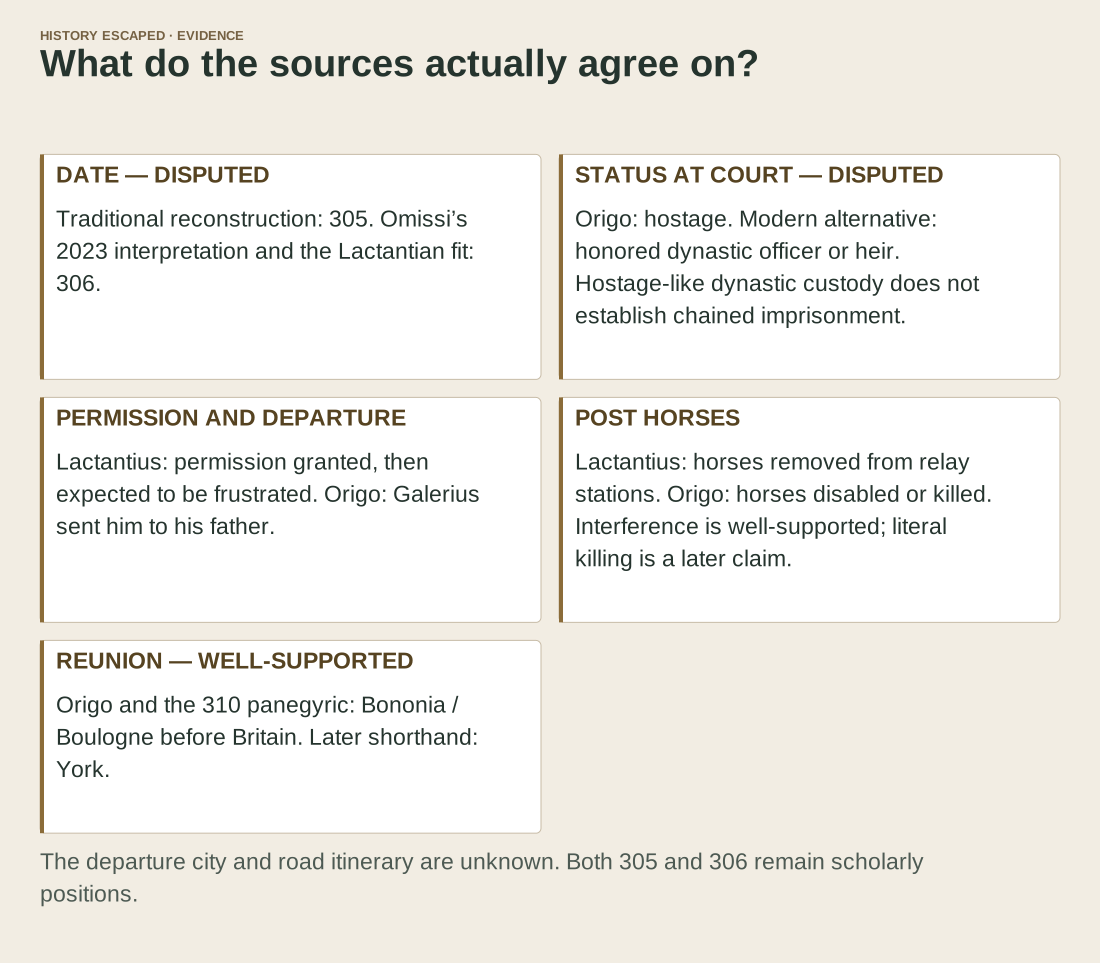
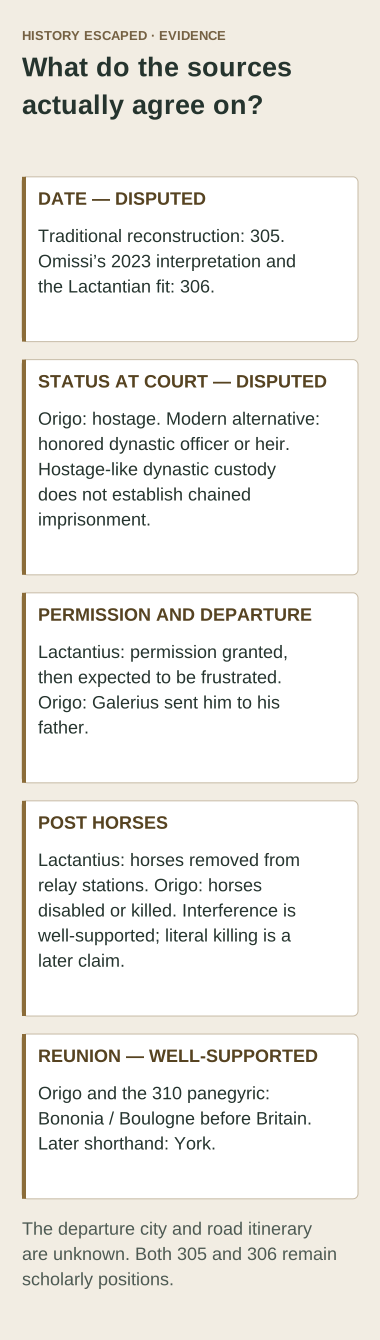
The departure city and road itinerary are unknown. Both 305 and 306 remain scholarly positions.
Material evidence
Tools of Escape
The objects used in an escape reveal how a plan worked under constraint.
- 01Central to both the speed of the journey and the escape tradition
Imperial post horses
Relay animals of the cursus publicus enabled unusually rapid long-distance travel. Ancient traditions say Constantine also made horses behind him unavailable to pursuers.
Problem → response
Escape was a sequence of problems
Each response solved a practical obstacle while often creating the next one.
- 01→
Obstacle
Galerius’s political control
Constantine’s movement depended on the senior eastern emperor’s permission and occurred within a succession system that had just excluded hereditary sons.
Response
Constantine left immediately once an opening existed and made recall or interception difficult.
- 02→
Obstacle
Possible interception by Severus
Lactantius and the Origo both connect Severus to the danger of interception, though they frame his role differently.
Response
Constantine moved quickly through or around territory in which Severus could have acted.
- 03→
Obstacle
Distance across the empire
The journey from Galerius’s sphere to the Channel coast required exceptionally rapid movement over Roman roads and relay stations.
Response
Constantine used the imperial post network and, according to the source tradition, denied equivalent mounts to pursuers.
The final accounting
Outcome
Successful reunion with Constantius
Constantine reached his father before Constantius’s death and was not returned to Galerius’s court.
Imperial acclamation after reunion
After Constantius died at York, his army acclaimed Constantine.
Selected chronology
Selected chronology
Second Tetrarchy begins
Diocletian and Maximian abdicate; Constantius and Galerius become Augusti; Severus and Maximinus Daia become Caesars.
Constantius seeks Constantine’s return
Ancient accounts say Constantius asks Galerius to let Constantine join him in the West.
Constantine leaves Galerius’s court
Constantine departs rapidly for the West. Modern scholarship remains divided between a 305 transfer and a later 306 escape chronology.
Reunion at Bononia
Constantine reaches Constantius in Gaul as the western emperor prepares to cross to Britain.
Constantius dies at York
The western emperor dies at Eboracum with Constantine present.
Army acclaims Constantine
Constantius’s soldiers proclaim Constantine; Galerius later recognizes him only at the rank of Caesar.
Evidence discipline
What the record supports
Status labels distinguish secure conclusions from uncertainty and rejected claims. Color is never the only signal.
MYTH
Constantine was an ordinary prisoner in Galerius’s custody.
He was a high-ranking imperial son and military officer. Some ancient sources call him a hostage, but his restraint was political and dynastic rather than ordinary imprisonment.
Sources: SRC-002, SRC-004, SRC-006DISPUTED
Constantine’s status as a hostage is completely certain.
The Origo and other ancient traditions use hostage language, and Omissi argues that Galerius’s dynastic policy gives it real meaning. Other modern historians have emphasized Constantine’s legitimate court role and heir-like status.
Sources: SRC-002, SRC-004, SRC-006DISPUTED
Constantine definitely escaped in 305 and then spent about a year with his father.
This became the dominant modern chronology, but Omissi argues that the military diploma used to anchor it is error-prone and that the panegyric evidence better supports a late journey in 306.
Sources: SRC-004, SRC-006DISPUTED
Constantine definitely escaped in 306.
The 306 chronology is strongly defended in recent scholarship and fits Lactantius’s last-minute flight narrative, but the 305 reconstruction remains influential.
Sources: SRC-004, SRC-006MYTH
Galerius gave Constantine no permission at all before he fled.
Lactantius explicitly says Galerius granted a warrant to depart before Constantine left early. The dispute concerns whether Galerius intended to revoke or frustrate that permission and whether the journey therefore became an escape in practice.
Sources: SRC-001LATER CLAIM
Constantine killed or hamstrung every post horse behind him.
Lactantius says Constantine removed the horses from the main relay stations; the later Origo intensifies the story into killing or disabling them. The exact method cannot be locked.
Sources: SRC-001, SRC-002MYTH
Constantine joined his father first in York.
The Origo places the reunion at Bononia in Gaul, and the 310 panegyric says Constantine arrived as Constantius was preparing to cross to Britain.
Sources: SRC-002, SRC-003UNKNOWN
The exact eastern city from which Constantine began the decisive journey is securely known.
Later retellings often say Nicomedia, but the controlling escape texts do not securely establish the precise departure city for the final journey.
Sources: SRC-001, SRC-002, SRC-004LATER CLAIM
Galerius repeatedly tried to murder Constantine with staged military dangers.
Lactantius, Eusebius, and the Origo preserve hostile stories of deliberate danger, but their polemical and pro-Constantinian purposes prevent treating every episode as secure fact.
Sources: SRC-001, SRC-002, SRC-007